Marx’s story: Master, Disciple and the Disintegration of Theory


Marx was a great fabulist. He could weave a story in a theory and a theory in a story. Here is one, which provides a great lesson in the critique of theoretical form. It is a story that can serve well in reminding many Marxists about what they are doing to Marx’s theory.

“With the master what is new and significant develops vigorously amid the “manure” of contradictions out of the contradictory phenomena.  The underlying contradictions themselves testify to the richness of the living foundation from which the theory itself developed.  It is different with the disciple.  His raw material is no longer reality, but the new theoretical form in which the master had sublimated it.  It is in part the theoretical disagreement of opponents of the new theory and in part the often paradoxical relationship of this theory to reality which drive him to seek to refute his opponents and explain away reality.  In doing so, he entangles himself in contradictions and with his attempt to solve these he demonstrates the beginning disintegration of the theory which he dogmatically espouses.”

मज़हब और उसकी आलोचना: मतलब और मक़सद (Marx on the meaning of religion and its criticism)


गैर-मज़हबी आलोचना का आधार है: मनुष्य मज़हब को बनाता है, मज़हब मनुष्य को नहीं बनाता।  मज़हब, वास्तव में, उस मनुष्य की आत्म-चेतना और आत्म-सम्मान है जिसने या तो अभी तक खुद को नहीं जीता है, या खुद को फिर से खो दिया है। लेकिन मनुष्य कोई अमूर्त प्राणी नहीं है जो संसार से बाहर बैठा हुआ है। मनुष्य मनुष्य की दुनिया है —  राज्य, समाज। यह राज्य और यह समाज  मज़हब का निर्माण करते हैं, जो दुनिया की एक उलटी चेतना है, क्योंकि वे एक उलटी दुनिया हैं।  मज़हब इस संसार का सामान्य सिद्धांत है, इसका विश्वकोश है, इसका लोकप्रिय रूप में तर्क है, इसका आध्यात्मिक प्रतिष्ठा बिंदु है, इसका उत्साह है, इसका नैतिक अनुमोदन है, इसका गंभीर पूरक है, और सांत्वना और औचित्य का सार्वभौमिक आधार है। यह मानव सार का तरंगी अहसास है क्योंकि मानव सार ने कोई सच्ची वास्तविकता हासिल नहीं की है। इसलिए, मज़हब के विरुद्ध संघर्ष अप्रत्यक्ष रूप से उस दुनिया के विरुद्ध संघर्ष है जिसकी आध्यात्मिक सुगंध  मज़हब है।

मज़हबी पीड़ा, एक ही समय में, वास्तविक पीड़ा की अभिव्यक्ति और वास्तविक पीड़ा के प्रति विरोध है।  मज़हब उत्पीड़ित प्राणी की आह है, हृदयहीन संसार का हृदय है और निष्प्राण स्थितियों की आत्मा है। यह लोगों की अफ़ीम है। 

लोगों की भ्रामक खुशी के रूप में मज़हब का उन्मूलन उनकी वास्तविक खुशी की मांग है। उनसे अपनी स्थिति के बारे में भ्रम त्यागने का आह्वान करना, उनसे उस स्थिति को त्यागने का आह्वान करना है जिसमें भ्रम की आवश्यकता होती है। इसलिए, मज़हब की आलोचना, भ्रूण रूप में, आंसुओं की उस घाटी की आलोचना है जिसका आभामंडल  मज़हब है।

आलोचना ने ज़ंजीर पर लगे काल्पनिक फूलों को इसलिए नहीं तोड़ा है कि मनुष्य बिना किसी कल्पना या सांत्वना के उस ज़ंजीर को झेलता रहेगा, बल्कि इसलिए कि वह ज़ंजीर को उतार फेंकेगा और जीवित फूल को तोड़ेगा।  मज़हब की आलोचना मनुष्य का मोहभंग करती है, ताकि वह उस व्यक्ति की तरह सोचे, कार्य करे और अपनी वास्तविकता को गढ़े, जिसने अपने भ्रम को त्याग दिया है और अपनी इंद्रियों को पुनः प्राप्त कर लिया है, ताकि वह अपने स्वयं के सच्चे सूर्य के रूप में अपने चारों ओर घूम सके।  मज़हब केवल वह मायावी सूर्य है जो मनुष्य के चारों ओर तब तक घूमता रहता है जब तक वह अपने चारों ओर नहीं घूमता।

इसलिए, जब एक बार सत्य का पर-लोक लुप्त हो जाता है, तो इह-लोक की सच्चाई को स्थापित करना इतिहास का कार्य है। मानवीय आत्म-अलगाव के पवित्र रूप को एक बार बेनकाब करने के बाद उसके अपवित्र रूपों में आत्म-अलगाव को उजागर करना इतिहास की सेवा में दर्शन का तात्कालिक कार्य है। इस प्रकार, स्वर्ग की आलोचना पृथ्वी की आलोचना में बदल जाती है,  मज़हब की आलोचना कानून की आलोचना में और  मज़हबी-शास्त्र की आलोचना राजनीति की आलोचना में बदल जाती है।

(from Karl Marx. A Contribution to the Critique of Hegel’s Philosophy of Right [1843-44])

Two versions of the Eleventh Thesis


It is perfectly true, as philosophers say, that life must be understood backwards. But they forget the other proposition, that it must be lived forwards. (Søren Kierkegaard, 1843)

The philosophers have only interpreted the world, in various ways. The point, however, is to change it. (Karl Marx, 1845)

राजनीति में “व्यावहारिक-आलोचनात्मक” दृष्टिकोण की जरूरत


IMHO नागपुर के साथियों की इजाजत से पोस्ट कर रहे हैं उनके द्वारा IMHO शिकागो कंवेंशन 2022 के लिए तैयार की गई प्रस्तुति

 १. “दार्शनिकों ने विभिन्न तरीकों से दुनिया की केवल व्याख्या ही की है, लेकिन सवाल दुनिया को बदलने का है।“

तथाकथित वामपंथियों के बीच फायरबाख पर मार्क्स के ग्यारहवें थीसिस का खूब प्रचलन रहा है। परंतु इस गूढ़ सैद्धांतिक थीसिस को उन्होंने पूर्णतः सिद्धांत-विरोधी मतलब देकर अपनी व्यावहारिक अवसरवादिता के समर्थन में कुतर्क करने का साधन बना दिया है, जबकि यह थीसिस मूलतः व्यावहारिक-आलोचनात्मक अथवा क्रांतिकारी क्रियाशीलता को सूत्र-बद्ध करता है। यह थीसिस सिद्धांत और व्यवहार, समझ और गतिविधि के द्वन्द्वात्मक सामंजस्य की ओर इंगित करता है जिसके बगैर पूंजीवाद-विरोधी क्रांतिकारी गतिविधियों की कल्पना असंभव है। इस सामंजस्यता की कमी आज के वामपंथी आंदोलन की सबसे बड़ी कमजोरी है जिसकी वजह से हम पूंजीवादी रिश्तों के नए नए स्वरूपों में पैदा होने के महज साधन हो गए हैं। पूंजी को लेकर व्यावहारिक-आलोचनात्मक दृष्टिकोण न होने के कारण वामपंथी गतिविधियां महज पूंजीवादी विकल्पों के बाजार के ग्राहक हो गई हैं।

२. पूंजी की सत्ता ने आज बहुत ही विकराल रूप ले लिया है और परिस्थितियाँ भयानक हो गई हैं। वर्चस्वकारी शक्तियां वैश्विक और राष्ट्रीय स्तरों दोनों पर प्रतिस्पर्धा करती हुईं पूरी दुनिया को आज बारूद और विनाश की बलिवेदी तक पहुंचाने में लगी हुई हैं। व्यक्तिकरण, प्रतिस्पर्धा और अलगाव आज सामाजिकता के मौलिक मानवतावादी तत्वों को ही नष्ट करने पर उतारू हैं। यही कारण है कि मार्क्स के मौलिक व्यावहारिक-आलोचनात्मक नजरिए को एक बार फिर स्थापित कर हमारे दैनिक संघर्षों में अंतर्निहित पूंजी-विरोधी तत्वों को बारम्बार उभारते हुए साम्यवादी सामाजिकता की ओर अग्रसर होना हमारी तात्कालिक आवश्यकता हो गई है।

३. रूस-यूक्रेन युद्ध पूंजीवाद के इसी घिनौने स्वरूप का ही निष्कर्ष है। अधिवेशन के मसौदे में वाजिब ही इस युद्ध पर व्यापक और अच्छी चर्चा की गई है। हमारी समझ में इस युद्ध का उद्देश्य मूलतः सैन्य-औद्योगिक परिसर को वैश्विक आर्थिक पुनः प्रवर्तन के रणनीति के केंद्र में लाने की कोशिश है। इसमें अमरीका और रूस प्रतिद्वंद्वी के साथ-साथ सहयोगी भी है। इसके लिए विश्व पूंजीवाद के दो प्रमुख आर्थिक पावर-हाउस – चीन और जर्मनी, जो इस रणनीति के प्रति हमेशा ही उदासीन थे, की सम्मति की आवश्यकता है। रूस-यूक्रेन युद्ध बहुत हद तक ऐसा करने में कामयाब हो गया है। इसी प्रकार अमरीका अपनी वैश्विक नेतृत्व को सुरक्षित भी रख सकता है। भारत में भी इस युद्ध ने सैन्यवादी सर्वसम्मति को विकसित करने में मदद किया है। इस सिलसिले में रोजा लक्ज़ेम्बर्ग का एक कथन उद्धरणीय है — 

“जो चीज सेना की आपूर्ति को, उदाहरण के लिए, सांस्कृतिक उद्देश्यों (स्कूलों, सड़कों, आदि) पर राज्य के व्यय की तुलना में, अधिक लाभदायक बनाती है, वह है सेना का निरंतर तकनीकी नवाचार और इसके खर्चों में लगातार वृद्धि।”

हम आशा करते हैं कि युद्ध के मामले पर सम्मेलन में और व्यापक चर्चा होगी।       

४. दक्षिण एशियाई देशों में आज पूंजीवादी व्यवस्था और राजसत्ता ने मानव-विरोधी, विनाशक और तानाशाह स्वरूप अख्तियार कर लिया है। अगर एक तरफ अफगानिस्तान में अमरीका-संरक्षित भ्रष्ट जनतंत्र को हटाकर तालिबान का शासन फिर से बहाल हुआ है, तो दूसरी तरफ पाकिस्तान में इमरान खान सरकार को हटाकर पारंपरिक दलों का गठजोड़ लौटा है जिसके पीछे अवश्यंभावी अंतर्राष्ट्रीय गठजोड़ों की राजनीति है। भारत में अति-राष्ट्रवादी सर्वसम्मति (जिसमे वामपंथ भी शामिल है) भारतीय राजसत्ता पर काबिज धुरदक्षिणपंथ नेतृत्व को वैश्विक साम्राज्यवाद के गठजोड़ में खुल के जगह बनाने में मदद कर रहा है, जो कि भारतीय उपमहाद्वीप में अपने उप-साम्राज्यवाद को पक्का करने के हिसाब से चीन के खिलाफ लगातार छोटे-मोटे दुस्साहसी कारनामों को अंजाम दे रहा है। वह अपने आप को दक्षिण एशिया में इसराएली शासन का प्रतिरूप बनाने की कोशिश कर रहा है। इस प्रक्रिया में भारतीय समाज में इस्लाम-विरोधी साम्प्रदायिकरण एक अहम हथियार है। हाँ, श्रीलंका के हाल के घटनाक्रम इस परिस्थिति में भय और उम्मीद दोनों जगा रहे हैं। भय क्योंकि वहाँ पूंजीवादी संकट ने लोगों के जीवन को पूर्णरूपेण अस्त-व्यस्त कर दिया है, मगर लोगों का संप्रदायों और राष्ट्रीयताओं के आपसी प्रतिस्पर्धाओं से आगे निकल कर व्यापक उभार उम्मीद जगाता है।         

५. यह बात सही है कि दक्षिण एशिया में अधिकांश देशों में जनतान्त्रिक राजनीतिक व्यवस्था कायम है। परंतु इनका अनुभव पूंजीवादी जनतंत्र के जड़-स्वरूप को उद्घाटित करता है। एक तरफ वह जनतंत्र को महज कर्मकांड और अनुष्ठान में बदल देता है, तो दूसरी तरफ विकल्पों की आलोचनात्मक क्षमता को कुंद कर उन्हें व्यवस्थापरक और महज रूपात्मक बना देता है। तानाशाही और बहुसंख्यकवाद इस जनतंत्र के अंतर्गत बिना परेशानी के पनप पाते हैं। यही दक्षिण एशिया में तमाम जनतान्त्रिक राजसत्ताओं का अनुभव बताता है। पूंजीवाद के अंतर्गत जनतंत्र राजसत्ता को वैधानिकता प्रदान करने का जरिया है, उसकी अपनी कोई स्वायत्त दैनिकता नहीं होती। 

६. यह अधिवेशन एक महत्वपूर्ण दौर में हो रहा है, जब पूंजी का संकट गहरा रहा है मगर पूंजीवाद विरोधी शक्तियों की शिथिलता इस संकट को अवसर बनाने में असफल साबित हो रही है। शायद इसी प्रकार के दौर को महान इतालवी मार्क्सवादी क्रांतिकारी अंतोनियो ग्राम्शी ने इस प्रकार सूत्रबद्ध किया था –- “संकट ठीक इस तथ्य में निहित है कि पुराना मर रहा है और नया पैदा नहीं हो सकता; इस अंतराल में कई प्रकार के रुग्ण लक्षण प्रकट होते हैं।“ रुग्ण लक्षण हर जगह विदित हैं। दक्षिण एशिया में खास तौर पर मोदी शासन और फैलती फासीकरण की प्रक्रियाएँ इसी रुग्णता की ओर इंगित कर रही हैं। मगर रुग्णता का असर आंदोलन पर भी पड़ा है –- व्यवस्था हमें हमेशा कगार पर रख अपने आंतरिक और अवसरीय विकल्पों के कोलाहल में डुबो रही है। 

७. भारत में वामपंथी आंदोलन की अक्षमता की वजह उसकी प्रतिक्रियात्मक राजनीति रही है, जिसने उसके घटकों को तात्कालिकता के दायरे में बांध दिया है। वे अस्तित्व बचाने अथवा रक्षात्मक रणनीतियों से आगे नहीं निकल पा रहे हैं, और मुख्यधारा के बुर्जुआ पार्टियों के पिछलग्गू बनते जा रहे हैं। उनके तमाम जनसंगठन आज इसी तात्कालिकवाद के शिकार हैं। इस सिलसिले में, अधिवेशन के मसौदे में भारत में 28-29 मार्च को हुई दो दिवसीय ट्रेड यूनियन हड़ताल को सफल बताना हमारी समझ में अतिशयोक्ति ही नहीं, वह साथी-लेखकों की भारत की परिस्थितियों के बारे में अनभिज्ञता को दर्शाता है। ये हड़तालें आज महज अनुष्ठान बन गई हैं, जिनका मुख्य मकसद सरकारी क्षेत्र के संस्थाओं के स्थायी कर्मचारियों (जिनकी तादाद घटती जा रही है) के अधिकारों को निजीकरण और निगमीकरण की प्रक्रिया के दौरान संरक्षित रखना। वैसे भी इन संगठनों का सरोकार भारत के श्रमिक वर्ग के 5 प्रतिशत हिस्से से अधिक नहीं है। और इस संगठित हिस्से का सबसे बड़ा अंश आज दक्षिणपंथ के ट्रेडयूनियन, भारतीय मजदूर संघ के साथ है। एक और बड़ा राष्ट्रीय यूनियन है जो कांग्रेस पार्टी से सम्बद्ध है। इससे भी महत्वपूर्ण है कि भारत में ट्रेड यूनियन का फॉर्मैट कानून द्वारा तय होता है और नव-उदारवादी दौर में वे पूरी तरह मैनिज्मन्ट और मजदूरों के बीच बिचौलिए की तरह काम करते हैं। मजदूरों के दैनिक संघर्षों के तेवर से इन यूनियनों का कोई लेना देना नहीं है। इसीलिए हमारा मानना है कि भारत में मजदूर आंदोलन और मजदूर वर्ग के वेग और तेवर को समझने के लिए हम अपने आप को ट्रेड-यूनियनों की औपचारिक गतिविधियों तक सीमित नहीं रख सकते। दक्षिण एशिया में हाल के दिनों में जितने भी लड़ाकू और श्रमिक विभाजनों को तोड़ने वाले संघर्ष रहे हैं –- चाहे बांग्लादेश में गार्मन्ट उद्योगों में “वाइल्ड कैट” हड़तालें हों, भारत में मारुति-सुजुकी मजदूरों का संघर्ष अथवा अप्रैल 2016 में बैंगलोर में महिला श्रमिकों का विद्रोह हों, या हाल में गिग-वर्कस के बीच हलचल, ये सभी इन औपचारिक यूनियनों के परिधि से बाहर रही हैं। ऐसा नहीं है कि इन संघर्षों का कोई सांगठनिक स्वरूप नहीं है, मगर वे श्रमिकों के दैनिक सरोकार में पनपती सामूहिकता का गतिमान स्वरूप हैं, उन्हे कानून द्वारा नियोजित अथवा पूर्व-गठित संगठानिक फार्मूलों में नहीं फिट किया जा सकता। जब तक भारत के वामपंथी अपने अनुभवों और बदलते औद्योगिक संबंधों के प्रति “व्यावहारिक-आलोचनात्मक” दृष्टिकोण नहीं अपनाएंगे वे मजदूर-वर्ग के नए संगठानिक स्वरूपों और स्व-गतिविधियों को नहीं पहचान पाएंगे, और मजदूर-वर्ग का हर जन उभार उन्हें आकस्मिक और स्वतःस्फूर्त प्रतीत होगा।   

८. अंत में, कुछ बातें “दुनिया बदलने” के सवाल पर। बहुत दिनों से विकल्पों की बातचीत राजनीतिक सत्ता में परिवर्तन तक सिमट कर रह गई है। फलां पार्टी और फलां नेतृत्व के सत्ता से हटने अथवा उसमें  जमने को ही विकल्प मान लिया गया है। सामाजिक व्यवस्था —  सामाजिक प्रणाली और संबंध —  के सवाल के जगह पर राजकीय नीतियों की ही बात होती है। 90 के दशक में नव-उदारवाद के खिलाफ जो “एक और दुनिया संभव है” का नारा बुलंद हुआ था वह अंततः विकास के प्रतिस्पर्धात्मक मॉडेलों की बातचीत तक सीमित रह गया। पूंजीवादी समाज और राजसत्ता के आंतरिक लक्षणों की आलोचना के बगैर कोई नीति आधारित राजनीति पूंजी की सत्ता को चुनौती देने के जगह पर महज उसके संकट के निवारण का साधन ही हो सकती है। मार्क्स ने जब साम्यवाद को “वास्तविक आंदोलन” कहा था तो उनका तात्पर्य “व्यावहारिक-आलोचनात्मक कार्यशीलता” से था जिसके तहत पूंजीवादी यथास्थिति का निषेध होता है। इसी निषेध में समस्तरीय सामूहिक सामाजिकता के प्रारूप का जन्म और विकास होता है और वही नए सामाजिक संबंध और प्रणाली की नींव है। बीसवीं सदी में क्रांतियों की जीत और हार का चक्र साम्यवाद के “वास्तविक” आंदोलनकारी चरित्र के पुनर्स्थापन की आवश्यकता पर बल दे रहा है। ये क्रांतियाँ श्रमिक-सत्ता की सामूहिक क्रियात्मकता की ओर इंगित जरूर करती हैं, परंतु शीघ्र ही श्रम की क्रिया से सत्ता का अलगाव होता है और सोवियत राजसत्ता का जन्म होता है, जहां सोवियत — क्रांतिकारी क्रियाओं का संगठन — महज विशेषण बन कर रह जाता है। अपनी बात को हम मार्क्स के इस उद्धरण से खत्म करते हैं:

“साम्यवाद हमारे लिए कोई अवस्था नहीं है जिसे स्थापित किया जाना है, न वह हमारे लिए आदर्श है जिसके अनुसार यथार्थ को अपने को ढालना होगा। हम वास्तविक आंदोलन को साम्यवाद का नाम देते हैं जो मौजूद अवस्था को मिटाता है।”          

On the Significance of the Polemical in Marxism


1

A polemic for revolutionaries is a militant dialogic practice to reveal the contradictions of a position, hammering it down to break open its hardened crust in order to rescue life from the stifle of the canon. It is akin to the Socratic dialectic or a militant वादकथा in the Indian tradition, where you demonstrate the limits of a given position – you don’t deny its truth, you begin from it, while going beyond it through the process of dialectical sublation.

However, standard polemics are mere means of defending a canonised position against every particular context. They fetishise forms as in the old tradition of liturgical polemics. Such polemics oscillate between captions criticism or वितंडावाद and जल्पकथा seeking to vanquish the opponent.This polemical exercise is totally opposite of the conception of immanent critique so essential to Marxism. It dualises the text and the context, and then trims the latter to fit the former. This is what can be called lilliputianism —tickling and tempting the giant, while attempting to bind him with the fragile threads of mental schemas.

2

The purpose of a revolutionary polemic is not just defending a position against another, but to clarify and sharpen one’s own by assimilating the partial but essential truth of the other, while rejecting its form. The polemical form is a means of unfolding one’s own position — towards “self-revelation”. That is why emerging from the polemical furnace the position actually doesn’t remain the same. A proof is Marx’s treatment of Feuerbach, Stirner, Bauers & c. in The German Ideology or of Proudhon in The Poverty of Philosophy or even The Holy Family. This polemical phase of Marx’s biography had the sole purpose of clarification (which included self-clarification, as Marx later mentions in the preface to his The Contribution to the Critique of Political Economy).

This polemical form that we see dominating in many of Marx’s early writings mutated into an important formal and literary element of his critique of economic categories, of his practice of immanent critique. This is evident in his published and unpublished economic writings. It never lost its vigour, the proof is Capital itself, where it helps in building the rigour. In fact, Marx is at his polemical best in all these writings —eg., his fragments on Bastiat and Carey in Grundrisse.

3

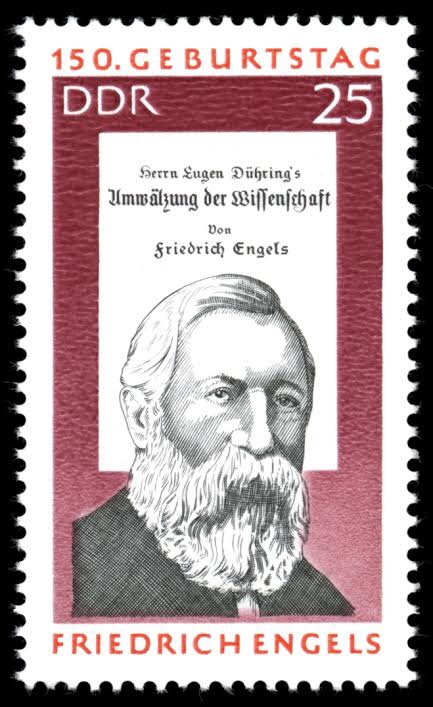
On Anti-Dühring

Engels’s Anti-Dühring is a landmark in Marxist discourse and practice. It is arguably the most important exercise in the polemical clarification of ideas within the tradition of the working class movement and Marxism. The German Ideology, which could compete, remained in the notebooks. “We abandoned the manuscript to the gnawing criticism of the mice all the more willingly since we had achieved our main purpose – self-clarification.” Anti-Dühring, on the other hand, was the movement’s self-clarification.

For a century at least, Anti-Dühring continued to be the model of Marxist polemics for both revisionist and revolutionist Marxists. In fact, it became a foundational textbook for learning Marxism throughout the globe. It is a polemical text (as clear from the name itself) with the purpose of systematic self-clarification. Nobody reads this text to know the blunders of Dühring, but everybody comes to it for the most accessible treatment of various tenets of Marxism.

But then a textbook always has its limitations and drawbacks. This is true about every good polemical text too —it has a pedagogical significance, students must outgrow it. But like any textbook, such texts become the texts of institutional orthodoxy, not a mere initial stepping stone — not just a transitory moment in theoretical development. The polemical form is autonomised, it becomes an end in itself, not a means of self-clarification. This has been the fate of many of Engels’ works, especially Anti-Dühring, in the hands of Marxist believers.

4

The recent phenomena of academic industrialisation and corporatisation of Marxism through the depoliticised liberal formal academia, on the one hand, and of the supra-political institutionalisation of public intellectual Marxism, on the other, by the publishing industries have marginalised the polemical aspect of Marx and Engels’ works (especially Engels’) to insignificance. It has been reduced to a mere literary form or style appropriate for twitter, Facebook and other social media channels.

However, the political-pedagogical nature of the polemical and its unique relevance in the development of Marxism and working class politics in general can scarcely be denied. It is definitely a form, but which is organic to the essence of Marxism. It is very different from the schematic lilliputianism of sectist politics that seeks to dominate and annihilate. It emerges as a method to demonstrate limits of ideas, positioning them to various levels of abstraction, while approximating the concrete in thought through the dialectic of the polemical dialogue.

The Taming of the Shrew: India’s Left in the 2019 Elections


“…the people
Had forfeited the confidence of the government
And could win it back only
By redoubled efforts. Would it not be easier
In that case for the government
To dissolve the people
And elect another?”

– Bertolt Brecht

“Procrustes, or the Stretcher …had an iron bedstead, on which he used to tie all travellers who fell into his hands. If they were shorter than the bed, he stretched their limbs to make them fit it; if they were longer than the bed, he lopped off a portion. Theseus served him as he had served others.”
– Bulfinch’s Mythology

1. Elections are procrustean rituals in an institutionalised democracy to contain and channel the social (over)flow and productivise it to manufacture a government and its legitimacy. By recursive re-discretisation of the social flow into manageable units, the citizenry is recomposed. In these elections, it is not the public that elects the government but the state that reassembles the public to produce the government. This reconstituted public gets the government that it deserves.

2. In the elections of 2019, against the right wing politics of communal polarisation, the left liberals in India have been seeking to pose a different sort of polarisation. Either you are on this side or that side. It doesn’t matter even if some who are on this side, earlier they were on the other and next time again they may fall there, whenever the juggling of elections happens and post-electoral alliances are made. For them, the poles are poles, stuck to the ground.

3. Hence, there is more to the 2019 elections for our nationalist left liberals. As they themselves say, it is a historic moment. And it is indeed something historic that liberal manichaeism seeks to achieve. If BJP is, what they say, a fascist party, then the liberals are imagining something unique in these elections – of defeating fascists in the elections. The fascist regimes, classically, might have come through elections, but have never been eliminated in them.

4. Now, the only strategy that seems to achieve this is by ensuring that votes are not divided (for which a Manichean binary is necessary). Marx’s dictum that all such phrases of not splitting votes and that the reactionaries might win because of the split are meant to dupe the proletariat seems outdated for the doomsday New Left. They want to defeat neoliberal authoritarianism through the procrusteanism of liberal democracy, while the right seeks to synchronise them.

5. However, by posing and making these elections as a two party contest, our marginalised left liberals are binding themselves to the dangerous game of attracting the median voter. In a bipolar contest the result is a more and more identity of opposites. And when much of the opposition is already centred on non-oppositional disagreements rather than based on any principled opposition, the difference is internal. You are but an image of your opponent.

6. They identify the hindutva brigade as a fascist pole, against which they want to see everyone else together. However, this ideal has never been realised, perhaps fortunately for the benefit of the left liberals themselves. The divided regional forces whether in NDA or outside are the only respite against homogenised authoritarianism in the country. From within liberal democracy, the intensification of regionalist localism, along with institutionalised parliamentarianism are the only safeguards left against the hindutva brigade. This is what left liberals don’t realise when they indulge in their anti-fascist rhetoric. Anyway, with this rhetoric they don’t impress anyone but themselves. The major regional forces whenever they take up this rhetoric seriously, they use it merely as a bargaining chip against centrism.

7. The right wing forces have been the main agencies to recompose the relationship between state and civil society across the globe – of combining authoritarianism with liberal democracy. Only by a complete profanation of institutions that emerged in earlier regimes of accumulation that capital can reproduce the state in the neoliberal conjuncture. The barriers must be broken time and again to refinancialise the social factory – the neat divisions between different socio-economic spheres, between productive and reproductive regimes are obsolete and costly. These barriers that managed the surplus/ superfluous population through much-acclaimed welfarism are not required now – they must integrate to form a continuous reserve army. The desacralisation of liberal social-administrative spheres is part of this process. In recent years the right wing attack that directly concerned the left liberals has been in academia. The academia is increasingly made market friendly, not allowing any section of population to take perpetual “study leave”. It is not the quality that matters but quantity – production for production’s sake. Ultimately all of us produce data, and are data ourselves.

8. The left in the name of defending the “gains” is caught up in a contradictory position of defending the status quo. The right-wing forces, on the other, by attacking those gains show far more clear understanding of the contradictions that they expose. They defend the status quo by eliminating those contradictions and expose the brutal structure in its naked form. But this naked coercion would need a new regime of legitimation, because a long-term overexposure of its coercive apparatus can be a doom for the whole system. One of the gains of the right wing onslaught is to regiment the progressive forces and make them complicit in preserving the status quo, by bringing legitimation back to the structure. The cover-up of gains and incremental progress provides the structure a long life. ‘Defending the gains’ doesn’t always need to be a defence of the socio-administrative structure that provisioned those gains. They can be a ground to recognise, expand and generate more cracks in the structure, and create more crises for its reproduction. And in this negation develops a new grammar of social relations. But for left liberals there is no alternative (TINA) – Liberal democracy or Fascism!

9. In an interview to New Left Review in 1975, Communist thinker and leader K Damodaran lamented the failure of Indian left to differentiate between state and government, and hence, their inability to understand their relationship too. There are some who confuse between state and government to pose the impossibility of immediate political actions and there are others who find this confusion very productive, when haloed as the relative autonomy of the state and the political, to justify indulgence in bourgeois polity.

10. In fact, this confusion is one of the means through which the state avoids an overexposure. It is how it camouflages itself in the everydayness of governmentality. The state’s mood fluctuations, given a constant reshuffling in the relationship between the political and the economic, emerge as multiple political fetish-forms, as political forces, and even regimes. You can worship the state in whichever form you like – if nothing suits you, you pronounce it, you will get what you need – a new form! The spirit of state is fathomless and boundless – all political forms, their enthronement, dethronement or re-enthronement combine to constitute “the rhythm of the spirit”. The magic of capitalist state works on only one principle, which Prince Tancredi Falconeri pronounced –

“Se vogliamo che tutto rimanga com’è bisogna che tutto cambi” (“If we want things to stay as they are, things will have to change.”) – Giuseppe Tomasi di Lampedusa, The Leopard (Il Gattopardo)

“If you can’t change the world, change yourself.”


“While Butler, needy wretch, was yet alive,
No generous patron would a dinner give;
See him, when starved to death, and turned to dust,
Presented with a monumental bust.
The poet’s fate is here in emblem shown,
He asked for bread, and he received a stone.”

Ultimate!!! Marxism is really going big and funny – academic and publishing monopolies, and now this!!! We danced every time a mainstream publication or newspaper or liberals called Marx’s this or that theory relevant. In fact, this has been the job of Marxist academia and publishing businesses, of convincing the mainstream of the prescriptive, descriptive and analytical relevance of Dr Marx. In the name of rigour, the great sanitised figure of Marx the theoretician is built, who cannot be charged of Leninism (well, Leninology too is there to do similar with Lenin) and of the “crimes” of the Georgian and other Orientals. The Melancholic figure of Prof Marx, instead of Bacchanalian inclinations of Herr Marx. Marx’s father tried hard to achieve this by forcing him to transfer from Bonn to Berlin, the “workhouse”, but he eventually failed and died. But now it is different, it does not matter if his spirit rebels, the high priests of academic and publishing Marxisms can easily exorcise “the spectre of Marx”.

If this was not sufficient, there are already some new moles in the market who are prepared to take on capitalists with AltMarxist cryptocurrency, Marxcoin, our own money. Of course, “money cannot overthrow capitalism”, but with money we can win capitalism. Who cares about Marx’s attacks on “artful tinkering with money”? These have been sufficiently academicised, or reduced to policy and economic issues. The spirited science of Marxist polemics is gone. Who cares about Marx’s form and content dialectic?

Time to rewrite the Eleventh Thesis: “If you can’t change the world, change yourself.” Or perhaps in the context of 100 years of the October Revolution (and what we have been doing after 1989), we can further innovate, “We have been interpreting ourselves in various ways, the point is to change ourselves.”

Notes on Materialism in Earliest Marx


1. Marx’s “Reflections of a Young Man on the Choice of a Profession” that he wrote for school-leaving Examinations in August 1835 (when he was 17 years old) is quite revealing. We find some definite traces of his social materialism in this otherwise idealist text.

2. Nature and deity in these Reflections are forces of necessity. They determine the sphere of activity for animals, which animals cannot transcend. But for humans they provide “a general aim” towards which they must seek their own roads and means.

3. But this open-endedness of human activity is a source of both fulfilment and frustration. It is here experience, knowledge and conscious learning become crucial.

4. However, the “deity” or force of necessity does not leave human totally helpless – it “speaks softly but with certainty.” She must know how to recognise it, without self-deceiving.

5. This recognition of necessity can easily be lost in immediate and momentary inspirations, imaginations, emotions, phantoms acting on our impetuous instincts – thus the voice of the deity is drowned and we suffer.

6. In the choice of profession one needs to hear the true calling (the voice of the deity, the necessity). Once you give yourself to the demon of ambition, you lose sight of the “deity” and start relying on “chance and illusion”. You still remain an object of necessity, but obviously not as a master navigating through the narrow escapes provided by necessity to your destination. Instead you walk without a guide and without any knowledge of the pathways, hitting the walls of necessity. And the result is failure and “self-contempt”. Now not just our physical and intellectual constitution, but also already established social relations act as the given structure of necessity. It is here that even the Earliest Marx stands united with the core of early and late Marx’s materialism:

“our relations in society have to some extent already begun to be established before we are in a position to determine them.”

On Rights Politics and Migrant Workers


These notes were prepared for a discussion in Delhi on a report on the condition of migrant workers in Delhi, Uttarakhand and Tamil Nadu (October 6 2017).

REFORMS & REVOLUTION

1. The two significant aspects of demand and right politics are – firstly, they are grounded in the immediate social needs that are framed within a structure. Secondly, they are attempts to establish a discourse with the state machinery – hence they are discursively circumscribed within the field of social relations. Thus, they are necessarily reform oriented, but they need not be reformist. The questions of rights, reforms and demands are unavoidable guerrilla struggles, which build the capacity of workers to organise larger movements. But do these struggles mean deferring the final movement that targets the very structural and superstructural setup that give language to those social needs? No, because they also test the vulnerabilities of the system and can become endeavours to burrow through it the final escape or emancipation. Every moment is a moment for both reform and revolution, and also reaction. When a movement is able to transcend its initial demands, to go on to attack the present social relations and to reorganise them then it becomes revolutionary. When the movement attempts to take the leap, but fails, then reaction happens. When the movement is not ready to take any leap beyond or reneges at the last moment, reform and/or reaction can happen, depending on the level of crisis in the system.

2. However, because the rights politics in itself is concerned with achievements of the rights and demands, at its own level will be geared towards negotiations and bargains, and impressing upon the state machinery, rather than changing the social relations themselves. Even the trade union politics is embedded in this kind of relationship. There is nothing in these forms that makes them question the structure of that relationship between workers and capitalists, or in the former case between workers and the state. The danger of reformism comes from this. But once again, as a conscious part of the larger movement against the structure of present social relations they play a crucial role of waging guerrilla struggles. But what does this signify? Then how do we define the working class politics? Also what will be the organisational question which balances between reform and revolution?

3. When we talk about workers’ politics, it is grounded in the dialectic of competition and collectivity. Marx captured this very aptly, when he said: “Wage-labour rests exclusively on competition between the labourers. The advance of industry, replaces the isolation of the labourers, due to competition, by their revolutionary combination, due to association.” The politics that is premised upon the segmentation of the workers vs the politics of ever-expanding combination and association, that is grounded in the everyday interaction among workers. The latter is not a mechanical aggregation or unity of isolated workers with similar grievances or demands, but a combination or network that is built in their daily conflict with state and capital. Only an expansion of this network has the capacity to refuse to be subsumed by capital and its network. In this, demands are definitely raised but are incidental. In this framework, demands and rights play the role of testing the system’s vulnerabilities and the organisational strength of the expanding combination.

ON MIGRATION

4. Migration is not just a fact, but also an act. It is not fully incidental that a word for migration in Hindi is पलायन (the more formal word is प्रवास). The former is very rich, often used as a stigma – one of its meaning being running away or an escapist act. In my view, it is this sense that renders the act of migration politically rich. Migration is not just a spatial fix, a response of the weak to the immediate contingencies of life. It is also a rebellious withdrawal, an escape, a long march against “the current state of affairs.” It is an act of refusal, non-acceptance of the lot. As an immediate spatial fix it demonstrates the weak agency of the migrant – a weakness in mastering the system. But it also has a utopian element that makes any human agency restless, that may come one time as an escape, another time as an emancipation, especially when individual weakness becomes a ground for collective subjectivity. Wasn’t this Ambedkar’s intention when he advised dalits to escape villages?

5. Legal Unionism is bound to consider migrant and mobile workers unreliable for their purpose – it simply cannot rely on them. On the other hand, social unionism which seeks to overcome the limits of traditional unionism is caught up in the discourse of non-conflictuality and negotiations with state (which in turn is problematically conceptualised). Hence for this school too it is always about accommodation – creating space for the migrants, not about problematising the whole space itself which is the etatised field of labour-capital relations. Therefore the vagrancy and mobility of proletarians are something to be shed off, not to be made a ground to imagine an overhauling of social relations and ideologies. Hence migrants as migrants are suspects, to be always put in the peripheries of organised politics. But different revolutions have shown how it was mostly settled workers’ organisations, afraid of losing their accumulated privileges, developed petty bourgeois tendencies and were unable to go beyond the legal fights when required, unless workers revolted and autonomously organised themselves.

6. Right from Karl Marx, Marxists have understood the relationship of workers mobility and their political consciousness. Lenin provides an insight into the poltical meaning of migration and demonstrates how to think about workers beyond their victimhood and our philanthropist vanguardism:

“There can be no doubt that dire poverty alone compels people to abandon their native land, and that the capitalists exploit the immigrant workers in the most shameless manner. But only reactionaries can shut their eyes to the progressive significance of this modern migration of nations. Emancipation from the yoke of capital is impossible without the further development of capitalism, and without the class struggle that is based on it. And it is into this struggle that capitalism is drawing the masses of the working people of the whole world, breaking down the musty, fusty habits of local life, breaking down national barriers and prejudices, uniting workers from all countries in huge factories and mines in America, Germany, and so forth.”

“Thus, Russia is punished everywhere and in everything for her backwardness. But compared with the rest of the population, it is the workers of Russia who are more than any others bursting out of this state of backwardness and barbarism, more than any others combating these “delightful” features of their native land, and more closely than any others uniting with the workers of all countries into a single international force for emancipation.

“The bourgeoisie incites the workers of one nation against those of another in the endeavour to keep them disunited. Class-conscious workers, realising that the breakdown of all the national barriers by capitalism is inevitable and progressive, are trying to help to enlighten and organise their fellow-workers from the backward countries.”

7. In recent years, Negri (and Hardt) repeats the same in the language of our times:

“Traditionally the various kinds of migrant workers, including permanent immigrants, seasonal laborers, and hobos, were excluded from the primary conception and political organization of the working class. Their cultural differences and mobility divided them from the stable, core figures of labor. In the contemporary economy, however, and with the labor relations of post-Fordism, mobility increasingly defines the labor market as a whole, and all categories of labor are tending toward the condition of mobility and cultural mixture common to the migrant. Not only are workers are forced to change jobs several times during a career, they are also required to move geographically for extended periods or even commute long distances on a daily basis. Migrants may often travel empty-handed in conditions of extreme poverty, but even then they are full of knowledges, languages, skills, and creative capacities: each migrant brings with him or her an entire world, Whereas the great European migrations of the past were generally directed toward some space “outside,” toward what were conceived as empty spaces, today many great migrations move instead toward fullness, toward the most wealthy and privileged areas of the globe…

“Part of the wealth of migrants is their desire for something more, their refusal to accept the way things are. Certainly most migrations are driven by the need to escape conditions of violence, starvation, or depravation, but together with that negative condition there is also the positive desire for wealth, peace and freedom. This combined act of refusal and expression of desire is enormously powerful…. Ironically, the great global centers of wealth that call on migrants to fill a lack in their economies get more than they bargained for, since the immigrants invest the entire society with their subversive desires. The experience of flights is something like a training of the desire for freedom.

“Migrations, furthermore, teach us about the geographical division and hierarchies of the global system of command. Migrants understand and illuminate the gradients of danger and security, poverty and wealth, the markets of higher and lower wages, and the situations of more and less free forms of life. And with this knowledge of the hierarchies they roll uphill as much as possible, seeking wealth and freedom, power and joy. Migrants recognize the geographical hierarchies of the system and yet treat the globe as one common space, serving as living testimony to the irreversible fact of globalization. Migrants demonstrate (and help construct) the general commonality of the multitude by crossing and thus partially undermining every geographical barrier.”

Notes on Rohith Vemula’s Suicide


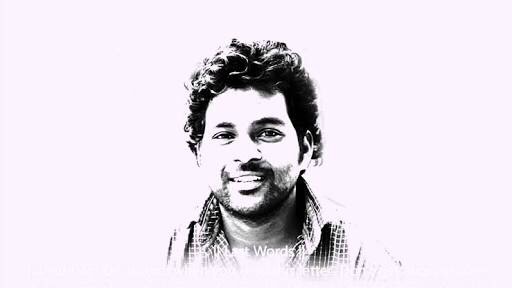
1. “It takes a loud voice to make the deaf hear, with these immortal words uttered on a similar occasion by Vaillant, a French anarchist martyr, do we strongly justify this action of ours.” These were the opening words of the leaflets that Bhagat Singh and Batukeshwar Dutt threw after bombing the Central Legislative Assembly in New Delhi on April 8, 1929. By the massive reaction across India to the suicide committed by Rohith Vemula, a Dalit student at the Hyderabad Central University, it is not an exaggeration to say that this action of his was justified – as a loud voice or explosion that we all heard. If murder is justified as a politico-legal act (in case of executions, as legal murders), why not self-murder? It is ethically far superior or noble too as it is directed towards oneself – as a samadhi, both in brahminical and anti-brahminical traditions.

2. One might say that the revolutionary terrorism of Bhagat Singh challenged the state, by openly defying its laws. One might further admit that in revolutionary terrorism, the nobility of the cause is objective and evident. Revolutionaries are distant to their acts and their effects, which are fully under their command. It is for the emancipation of humanity, workers or nations that the revolutionary terrorists live and die – a mark of extreme selflessness. They standout among the masses, they are heroes whom we all look up to – kind of supermen. If they are democratic and responsive to people, it is their humility, which further adds to their stature.

But suicide? How can it be revolutionary? It is an act of extreme selfishness and cowardliness. It is this belief that shows up slyly even in the massive pro-Dalit and Dalit responses to Rohith’s suicide, even in their bid to disprove it. Of course, they will not call this act selfish or cowardly. They will explain it to disprove all this, but ultimately the paradigm to demonstrate its something else-ness is same, whether you sanctify it as a kind of protest, in which you must add, suicide when nothing else works or call it an “institutional murder”, or a desperate act of a depressed individual. Rohith must be either a victim (of the system or of groups/individuals) or depressed or even, at least for the status quoist forces, a desperado.

3. Marx had published a peculiar write up in 1846 on suicide, which is not much studied. Till recently it was thought to be merely a translation of a French police administrator, Jacques Peuchet’s work on suicide cases. The fact that why on earth Marx translated a piece on suicide too was not touched upon. It was its retranslation in English, its comparison with the original one by Peuchet along with short studies by Kevin Anderson and Eric A Plaut revealed the importance of the text. Marx’s omissions, commissions and editorialisation in his translation transformed it into a very significant text where Marx directly deals with women’s issues, bourgeois family and a generalised system of alienation. He twisted the text which was already very graphic and condemning with his powerful unattributed insertions. One of them is:

“Those who are most cowardly, who are least capable of resistance themselves, become unyielding as soon as they can exert absolute parental authority. The abuse of that authority also serves as a cruel substitute for all of the submissiveness and dependency people in bourgeois society acquiesce in, willing or unwillingly.”

What Marx does in the text is to show how cowardliness and impotence of people in authority and power lie in their inability to make sense of suicide. Marx thus translates Peuchet:

“What characterises courage, when one, designated as courageous, confronts death in the light of day on the battlefield, under the sway of mass excitement, is not necessarily lost, when one kills oneself in dark solitude. One does not resolve such a difficult issue by insulting the dead.”

Marx pushes the argument further by inserting:

“One condemns suicide with foregone conclusions. But, the very existence of suicide is an open protest against these unsophisticated conclusions.”

4. At least the state, as the collectivity of ruling interests, is well aware of the lethality of the self-afflicted terror, suicide. It knows how this act is a powerful means of undermining it. That’s the reason, suicide is a crime. Foucault succinctly put, suicide was a crime “since it was a way to usurp the power of death which the sovereign alone, whether the one here below or the Lord above, had the right to exercise.” He proclaims, “This determination to die, strange and yet so persistent and constant in its manifestations, and consequently so difficult to explain as being due to particular circumstances or individual accidents, was one of the first astonishments of a society in which political power had assigned itself the task of administering life.”

5. An act is not just its grammar, it is a performance – when, where, who, before/against whom etc all characterise it. Hence, the divide between revolutionary and reactionary acts. A “revolutionary suicide” is an act enmeshed in politics of experience, like any self-murder. It is a response grounded in the personal self-full experience of the perpetrator. It is devoid of the nobility and selflessness of a declassed revolutionary or a self-flagellating noble liberal, volunteering to think about them who can’t think for themselves. Only a black revolutionary could have conceptualised this concept, and a Dalit can very well understand it. When “bereft of self-respect, immobilized by fear and despair, [an individual] sinks into self-murder”, it is, according to Huey Newton, “reactionary suicide.” On the other hand, revolutionary suicide is not a result of “a death wish”, therefore, it is a suicide which is not even suicidal. “We have such a strong desire to live with hope and human dignity that existence without them is impossible.” The desire is so strong that we seek to satisfy it “even at the risk of death” – “it is better to oppose the forces that would drive me to self-murder than to endure them.”

Addendum

6. Pitting knowledge and reason against experience constitutes what can be called an arrogance of determinism and abstraction. It is immaterial if scholars are aware of this or not. Until and unless this abstraction is re-derived from experience, that is until this duality is resolved in the dialectic of practice, it will have an affinity to the brahminical Cartesian prioritisation of abstracted science. This is where many theorisations and historicisation of oppressed identities fail them. In their attempt to explain the experience of caste and race in terms of its determinations, many times they simply write off the question of the reproduction of the caste system or identitarian hierarchy in everydayness – how it is reproduced in social practice, where, let’s admit, it is nothing short of a conspiracy.