धुर-दक्षिणपंथ के विरोध का अर्थ


सम्पादकीय (ड्राफ्ट), मोर्चा

उनका तर्क है कि कोई भी चीज़ स्वयं को केवल एक ही प्रकार की चीज़ के रूप में दोहरा सकती है, तथा किसी भिन्न चीज़ में परिवर्तित नहीं हो सकती। — माओ 

“विश्व इतिहास में… सभी अत्यंत महत्वपूर्ण घटनाएं और हस्तियां… दो बार आविर्भूत हुई हैं।… पहली बार दुखांत नाटक के रूप में और दूसरी बार प्रहसन के रूप में।” मगर ये घटनाएं यथार्थ में दो बार  नहीं होतीं, बल्कि अतीत की मृतात्माएं भाषा, परंपरा, नाम, रणनाद और परिधान मुहैय्या कराती हैं जिन्हें उचित संप्रेषण के अभाव में “विश्व इतिहास की नवीन रंगभूमि को इस चिरप्रतिष्ठित वेश में और इस मंगनी की भाषा में सजाया” जाता है।  मार्क्स के अनुसार, इस “भोंडी नकल” से प्रगतिशील ताकतें भी अछूती नहीं होती। 

प्रतिक्रियावादी ताकतें स्वभावतः राष्ट्रवादी, नस्लवादी, जातिवादी अतीत के “गौरव” को पुनश्च जीती हैं, मगर अपने आप को सर्वहारा क्रांति के हिरावल मानने वाले यदि अतीत को जीने लगें तो समस्या है। अतीत की समझ जरूरी है  (यह मार्क्सवादी से अधिक कौन जानता है) मगर उनमें संदर्भ के ऐसे बिंदुओं की तलाश करने के लिए, जो हमें वर्तमान में हमारे स्थान को स्थापित करने में मदद करें, ठीक उसी तरह जिस तरह नाविकों को आकाश के तारे मदद करते हैं।  जब वर्तमान का अर्थ धूमिल हो रहा हो तो अतीत के वे बिंदु हमारे लिए तारों का काम करते हैं।  मगर आज की सामाजिक क्रांति अपना काव्य अतीत से कभी नहीं गढ़ सकती, उसे भविष्य से ही गढ़ना होगा। बेगमपुरा की नगरी अतीत में नहीं है, भविष्य में है। 

इतिहास और वर्तमान की समझदारी का रिश्ता एकतरफा नहीं होता यानी इतिहास पर आपकी पकड़ वर्तमान में आपको शातिर बना देगी, ऐसा बिल्कुल नहीं है। ज्यादा समय इतिहास के ज्ञान का बोझ आपको ऐतिहासिक रूपकों की भूलभुलैया में विलीन कर देता है, और वे मिथक का काम करते हैं। तथाकथित वस्तुनिष्ठ इतिहास के प्रचारक वर्तमान को महज उसका निष्कर्ष मानते हैं, जबकि गतिशील वर्तमान हमेशा नया इतिहास रचता है, उसमें नए बिंदुओं को तलाशता है ताकि भविष्य के रास्तों को ढूँढ़ सके। इतिहास का विकासवादी (evolutionary) दृष्टिकोण, वर्तमान की नवीनता को नहीं स्वीकारता, वह स्वरूपात्मक पुनरावृत्तियों की भाषा में उसको बांधने का प्रयास करता है। वर्तमान का हरेक नया क्षण इतिहास के पुनरावलोकन के लिए अवसर प्रदान करता है —  पुराने क्षणों को देखने और समझने के लिए नया दृष्टिकोण देता है। इसके विपरीत, नए में पुराने को खोजने की जिद्द में इतिहास के दरारों और छलाँगों को नजरअंदाज करने से हमारी राजनीति और हमारे संघर्ष निश्चित व्यवस्थापरक सीमाओं में बंधे रहते हैं, जबकि संघर्षों में हमेशा अंतर्निहित अमूर्त संभावनाएं होती है, जो संयोगों की जननी हैं जिनसे इतिहास की गति में छलांग पैदा होती हैं। 

फासीवाद के ऐतिहासिक रूपक से वर्तमान के दक्षिणपंथी उभार की समझदारी को प्रस्तुत करने में अवश्य ही मदद मिलती है, परंतु जैसा कि अलेक्जेंडर रोसेनब्लूएथ और नॉर्बर्ट वीनर ने लिखा है, “रूपक की कीमत शाश्वत सतर्कता है।” जीव-वैज्ञानिक रिचर्ड लेवॉन्टिन “द ट्रिपल हेलिक्स” में इस बात पर टिप्पणी करते हुए कहते हैं —  प्रकृति के बारे में बात करते हुए हम रूपकों के उपयोग से बच नहीं सकते, लेकिन रुपक को वास्तविकता के साथ घालमेल करने का खतरा हमेशा बना रहता  है। हम दुनिया को मशीन की तरह से देखना बंद कर, मशीन ही समझ बैठते हैं। प्राकृतिक विज्ञान के क्षेत्र से कहीं अधिक यह समाज और सामाजिक विज्ञान के क्षेत्रों  में होता है। सामाजिक अवधारणाएं, खास तौर से जो मूर्त तौर पर किसी ऐतिहासिक काल, घटना इत्यादि  से जुड़ी होती हैं उनका इस्तेमाल वर्तमान के चित्रण और समझ के लिए अनिवार्य हैं, परंतु उन्हें उनकी ऐतिहासिकता से काट कर भौतिकवैज्ञानिक अवधारणाओं की तरह इस्तेमाल नहीं किया जा सकता। फासीवाद की मूर्तता जो इटली और जर्मनी या फिर उस समय के अन्य धुर–दक्षिणपंथी आंदोलनों में मिलती है, उसे इन आंदोलनों या उनके समय के इतिहास से निकालकर उनका अवधारणात्मक इस्तेमाल करना खतरनाक है — क्योंकि इससे उनके खिलाफ की लड़ाई की “भोंडी नकल” का खतरा पैदा हो जाता है। 

पिछले कुछ अंकों से हम घोर दक्षिणपंथी आंदोलनों, राजनीति और सत्ताओं के उभार की जांच हेतु सामग्रियों का प्रकाशन कर रहे हैं।  इन सामग्रियों और चर्चाओं ने इतना तो साफ किया है कि उस जमाने के फासीवाद और नाजीवाद जिस रूप में सामाजिक उत्कंठाओं और कुंठाओं की उपज और अभिव्यक्तियाँ थे, आज के धुरदक्षिणपंथ भी उसी तरह आज की उत्कंठाओं और कुंठाओं की उपज और अभिव्यक्ति हैं।  उनके तौर-तरीके में भी समानता दिखती है। परन्तु विद्यमान नव-उदारवादी पूंजीवादी चरण की विशेषताएं इन राजनीतिक अभिव्यक्तियों की भूमिकाओं और कार्यकलापों को नया स्वरूप और नया अर्थ देती हैं। आज के दक्षिणपंथ को समझने में “फासीवाद” का परिभाषात्मक उपयोग खतरे से खाली नहीं है। इसका नतीजा आज की स्थिति की अतिरंजित ढंग से पेशकश ही नहीं, बल्कि हमारे वक्त की विशिष्टता और गंभीरता को कम करना भी हो जाता है। 

आज के नव–उदारवादी दौर में फासीवादी प्रवृत्तियाँ पूंजीवादी व्यवस्था के राजनीतिक -आर्थिक संघटन में समाहित हो गई है। वर्गीय और अन्य विभाजनकारी भिन्नताएं राजकीय कार्यकलापों के स्तर पर, विशेषकर पूंजीवादी लोकतंत्र के तहत छिपी रहती थीं, जहां  संप्रभुता को निर्वैयक्तिक कानूनी प्रणाली के माध्यम से काम करना होता था और जो सभी पर समान रूप से लागू होती थी। (गासपार मिकलोस तामास) जबकि इसके विपरीत, फासीवादी तानाशाही विभाजनकारी भिन्नताओं को उजागर कर उसी के आधार पर मनमानी नीतियों द्वारा संप्रभुता स्थापित करती  थी — “संप्रभु वह है जो अपवाद पर निर्णय लेता है।”

1970 के मध्य से ही लगातार पूंजीवाद के नवोदारीकरण के दौर में पूंजीवादी राजसत्ता ने फासीवादी प्रवृत्ति को इस प्रकार से आत्मसात किया है कि पूंजीवादी जनतंत्र  के तहत भी संप्रभुता का वही रूप हो गया है, जो खुले तौर पर मनमानी नीतियों द्वारा अपने विभाजनकारी चरित्र को पेश करता है — सार्विक नागरिकता के आदर्श की जगह पर नागरिकता को विशेषाधिकार और श्रेणीबद्ध बना देता है। दूसरी तरफ, आज फासीवादी भीड़ — संगठित/केंद्रित हो या असंगठित/विकेंद्रित हो दोनों ही रूपों में दैनिकता में लगातार विद्यमान रहती है। ये आज पूंजीवादी जनतंत्र के लिए खतरा नहीं है, बल्कि नवोदार पूंजीवादी जनतंत्र को पॉपुलिस्ट चरित्र देती है, और बदलती सरकारों को इसी के दायरे में काम करना होता है — विशेष प्रकार के लोकवृत्त का निर्माण करती है, जिसके तहत विचारधारात्मक रूप से भिन्न राजनीतियाँ आपस में प्रतिस्पर्धात्मक विनिमय संबंध बना पाती हैं, और एक दूसरे की पूरक बन जाती हैं।  क्या यही आज भारत की दशा नहीं हो गई है? चाहे केंद्र सरकार हो या राज्य सरकारें हों, चाहे वह अति-दक्षिणपंथी भाजपा नेतृत्व की सरकार हो या किसी और पार्टी के नेतृत्व की सरकारें हों, चाहे शासक पार्टी हों या विपक्ष की पार्टियां हों, सभी इस भीड़ को भीड़ रूप में ही नियोजित करने की कौशिश कर रहीं हैं, चाहे कोई सांप्रदायिक आधार पर करे, या फिर भाषाई या अन्य आधारों पर। नव-उदारवादी संदर्भ में इस उत्तर-फासीवाद के खिलाफ संघर्ष किस प्रकार से ऐतिहासिक फासीवाद के खिलाफ लड़ाई के तौर-तरीकों से, जिसके लिए फासीवाद एक चिह्नित आंदोलन और राज्य था जिस पर सीधा निशाना साधा जा सकता था, लड़ा जा सकता है? 

जैसा कि बार बार कहा गया है पूंजीवादी समाज में अलगा‌व और कुंठा स्वाभाविक है, जो कि समाज में फैलते सर्वहाराकरण, असमानता, व्यक्तिकरण और प्रतिस्पर्धा का सीधा नतीजा हैं। इस समाज का  हर वर्ग इनसे प्रभावित होता है। एंगेल्स अपनी आरंभिक पुस्तक, द कन्डिशन ऑफ द वर्किंग क्लास इन इंग्लैंड  (1845) में सामाजिक प्रतिस्पर्धा का बखूबी चित्र खींचते हैं:  

“प्रतिस्पर्धा आधुनिक नागरिक समाज में सभी के विरुद्ध सभी की लड़ाई की पूर्ण अभिव्यक्ति है। यह लड़ाई, जीवन के लिए, अस्तित्व के लिए, हर चीज के लिए लड़ाई, जरूरत पड़ने पर जीवन और मृत्यु की लड़ाई, केवल समाज के विभिन्न वर्गों के बीच ही नहीं, बल्कि इन वर्गों के अलग-अलग सदस्यों के बीच भी लड़ी जाती है। हरेक आदमी दूसरे के रास्ते में है, और हरेक अपने रास्ते में आने वाले सभी लोगों को बाहर निकालने और खुद को उनकी जगह पर रखने का प्रयास करता है। मजदूर आपस में उसी प्रकार लगातार प्रतिस्पर्धा में रहते हैं, जैसे कि पूंजीपति वर्ग के सदस्य।”

यह “सभी के विरुद्ध सभी की लड़ाई” व्यक्तिगत और सामाजिक स्तर पर कुंठित आशाओं और मानसिक-भौतिक रुग्णताओं को पैदा करती है। इन कुंठित प्रवृत्तियों और रुग्णताओं को लेकर तीन तरह की राजनीति हो सकती है। एक, जो इन कुंठाओं को नियंत्रित और प्रबंधित करे ताकि वे व्यवस्था के लिए खतरा न बन जाएं, तथा प्रतिस्पर्धा को और तेज कर उसे पूंजीवाद के सामाजिक पुनरुत्पादन का जरिया बना दे; दूसरा, जो इन कुंठाओं के तह में जाए, और उसके आधार पर चोट करे; और  तीसरा, वह जो कुंठा को ही राजनीति बना ले। पहले प्रकार की राजनीति के तहत सभी बुर्जुआ राजनीतिक शक्तियां — लेफ्ट-राइट-सेंटर, उदारवादी हों या रूढ़िवादी — होतीं है,  दूसरे के तहत क्रांतिकारी अथवा परिवर्तनगामी राजनीति होती है जो व्यवस्था को ही चुनौती देती है। तीसरे में धुर-दक्षिणपंथी शक्तियाँ शामिल हैं जो कुंठितों की कुंठाओं की जैविक अभिव्यक्ति हैं — जो शिकायतों और लांछनों की भाषा में ही अभिव्यक्त होती हैं। यह बात फासीवादी या अन्य-धुरदक्षिणपंथी जन-आंदोलन  के लिए तो सही ही है, जो राजनीतिक-आर्थिक संकट के दौर में  राज्य की वैधता (legitimation) को  अन्य दक्षिणपंथ और रूढ़िवादी शक्तियों के साथ जुड़ कर पुनर्स्थापित करने की कोशिश करता है। जिस प्रकार से पूंजीवाद की राजकीय-वैधानिक व्यवस्था औसत आदमी के रूप में सभी वर्ग के व्यक्तियों को ढालता है, उसी औसत आदमी की कुंठाओं को धुरदक्षिणपंथ एकत्र कर राजनीति का रूप देता है। क्रांतिकारी शक्तियों को इसी औसतीकरण के खिलाफ वर्गीय राजनीति को सामने रखना होगा। उदारवादी औसतीकरण का पूरक है फासीवादी औसतीकरण जो पूंजीवादी सामाजिक पुनरुत्पादन के संकट के दौर में सामने आता है। 

हमने मोर्चा के पिछले अंक के संपादकीय में आज के दक्षिणपंथी उभार के कुछ कारणों पर ध्यान दिया था। संक्षेप में हम बोल सकते हैं कि नवोदार पूंजीवादी प्रक्रियाओं के तहत बेशीकरण, सर्वहाराकरण और प्रतिस्पर्धा में तेजी ने न्यूनीकृत राजसत्ताओं के लिए वैधता–संकट (legitimation crisis) पैदा कर दिया है। बेशी और सर्वहाराकृत आबादी की बढ़ती तादाद की आपसी प्रतिस्पर्धा ने पूंजीवाद की प्रतिस्पर्धात्मक राजनीतिक व्यवस्था को अनिश्चित बना दिया है।  दक्षिणपंथी जन पार्टियों का ऐतिहासिक योगदान फासीवाद की तरह ही इस आबादी को इस रूप में संगठित करना होता है कि वे पूंजी के शासन के लिए खतरा न बन सकें। परन्तु 1920 – 45 के दौर में पूंजी, उसके मूर्त स्वरूप और बाजार राष्ट्रीय सीमाओं के आधार पर अपने आप को नियोजित करते थे और इसी कारण राष्ट्रीय नीतियों और राजनीतियों के आधार पर पूंजी संचय के राजनीतिक अर्थतांत्रिक मॉडलों की तैयारी हो सकती थी। लेकिन पूंजी के बढ़ते वित्तीयकरण और भूमंडलीकरण ने राज्य की इन क्षमताओं को कमजोर कर दिया है, और व्यवस्थापरक राजनीति की भूमिका आज जन असंतोष को व्यक्तिकृत और फिर उसे संगठित कर कुंद करना है, कोई सुव्यवस्थित राजनीतिक–आर्थिक मॉडल देना नहीं है। ऐसे में राजसत्ता-केंद्रित संघर्षों से हम किस हद तक आज के दक्षिणपंथी विकृत जन आंदोलनों की मौजूदगी से निजात पा सकेंगे?

हमारा मानना है कि पुराने संघर्षों से अभी भी बहुत कुछ सिखा जा सकता है, परन्तु उनको मॉडल की तरह इस्तेमाल करना गलत होगा – हम उनकी नकल नहीं कर सकते। हमें उनके प्रासंगिक गुणों को नया स्वरूप देना होगा। संघर्ष का स्वरूप हमेशा समय और स्थान से बंधा होता है। दूसरे समय या स्थान के संघर्षों से सीखने का अर्थ उनकी पुनरावृत्ति नहीं हो सकती। जिनके लिए वर्तमान महज पुनरावृत्ति है, वह अतीत की झूठी निश्चितताओं को जीना चाहते हैं। यहाँ हम संक्षेप में कुछ रणनीतिक सीख को सामने रखेंगे।  

फासीवाद के विरोध का सबसे सुगठित जन-आंदोलनकारी स्वरूप कम्युनिस्ट इंटरनेशनल के व्यवहार में पैदा हुआ, जिसका आकार मार्क्सवादी इतिहासकार एरिक हॉब्सबॉम के अनुसार संकेंद्रीय वृत्त की तरह था। “श्रम की संयुक्त ताकतें (‘संयुक्त मोर्चा’ या यूनाइटेड फ्रन्ट) लोकतंत्रवादियों और उदारवादियों के साथ एक व्यापक चुनावी और राजनीतिक गठबंधन (‘लोकप्रिय मोर्चा’ या पोपुलर फ्रन्ट) की नींव रखेगी। इसके अलावा, जैसे-जैसे जर्मनी आगे बढ़ता गया, कम्युनिस्टों ने ‘राष्ट्रीय मोर्चे’ के रूप में और भी व्यापक विस्तार की कल्पना की, जिसमें सभी लोग शामिल थे, चाहे उनकी विचारधारा और राजनीतिक मान्यताएँ कुछ भी हों, लेकिन वे फासीवाद (या शक्तियों की धुरी) को प्राथमिक खतरा मानते थे।” इतिहासकारों का मानना है, चूंकि कम्युनिस्ट सिद्धांत और व्यवहार में भी अंतरराष्ट्रवादी थे, जिस कारण से फासीवाद के विरोध में राष्ट्रवादियों और देशप्रेमियों से ज्यादा दृढ़ प्रतिज्ञ ढंग से लोगों को एकत्र कर पाते थे। हॉब्सबॉम कम्युनिस्टों की फासीवाद-विरोधी रणनीतिक सक्षमता का आधार उनके व्यवहार की संरचना में देखते हैं।  

“कम्युनिस्टों ने प्रतिरोध का रास्ता अपनाया, न केवल इसलिए कि लेनिन की ‘अग्रणी पार्टी’ की संरचना अनुशासित और निस्वार्थ कार्यकर्ताओं की एक ताकत तैयार करने के लिए बनाई गई थी, जिसका उद्देश्य कुशल कार्रवाई करना था, बल्कि इसलिए भी कि चरम स्थितियाँ, जैसे कि अवैधता, दमन और युद्ध, ठीक वही थीं जिनके लिए ‘पेशेवर क्रांतिकारियों’ के इन निकायों को बनाया गया था। वास्तव में, उन्होंने ही ‘केवल प्रतिरोध संघर्ष की संभावना को देखा था’…। इस मामले में वे जन समाजवादी पार्टियों से अलग थे, जिन्हें वैधता के अभाव में काम करना लगभग असंभव लगता था, चूंकि चुनाव, सार्वजनिक बैठकें और बाकी चीजें उनकी गतिविधियों को परिभाषित और निर्धारित करती थीं।” (एरिक हॉब्सबॉम, ‘दी एज ऑफ एक्सट्रीम्स’)

“श्रम की संयुक्त ताकत” के रूप में संयुक्त मोर्चा को समझना, राष्ट्रवाद के खिलाफ अंतरराष्ट्रवादी प्रतिबद्धता और चरम स्थितियों में काम करने योग्य सांगठनिक क्षमता — ये तीन सिद्धांत आज भी प्रतिक्रियावाद के खिलाफ संघर्ष में अहम होंगे। इन्हीं के आधार पर आज के संघर्ष  की तैयारी हो सकती है। 

प्रत्यूष चन्द्र

Good bye, Com Sher Singh


He was the most communist communist in his daily life, whom very few “communists” would recognise as a “communist”. For him, communism was always a real movement and never a state of affairs to be established —  it was already there in class activities of workers, which he minutely documented. His life and work could never be separated — he was what he did. Even his oft anti-theoretical stance could be interpreted as practice being one with theory. That was Sher Singh for you.

Industrial Accidents, Nationalism and Working Class (Video)


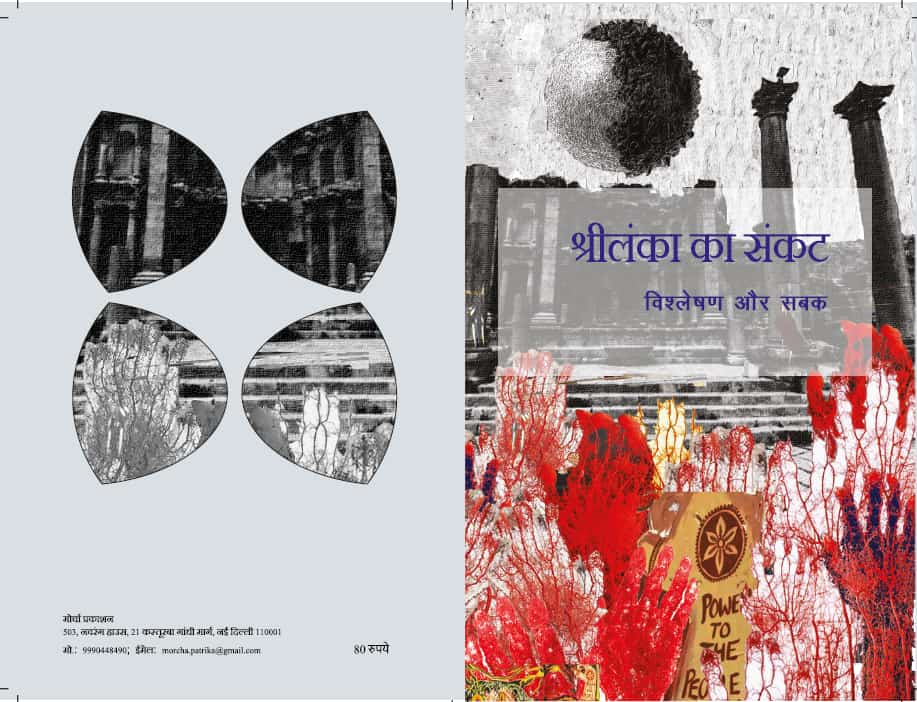
श्रीलंका का संकट और “जनता अरगलय”  


“हम नहीं जानते और न ही जान सकते हैं कि संसारव्यापी आर्थिक और राजनीतिक संकट के परिणामस्वरूप सभी देशों में उड़ने वाली असंख्य चिंगारियों में से कौन सी चिंगारी आग को भड़काएगी, यानी जनता को उठा खड़ा कर देगी।” — लेनिन (1920)

I

श्रीलंका की हाल की घटनाएँ आशा और निराशा दोनों ही पैदा करती हैं — अगर एक तरफ पिछले कई महीनों से दिखती जन-क्रियाओं की दृढ़ता, निरंतरता और  बहुआयामिता को देख कर आशा पैदा होती है, तो दूसरी तरफ इन घटनाओं के तात्कालिक नतीजे निराश करते हैं। यह बात सही है कि जिस फुर्ती से आंदोलन के नतीजतन राजसत्ता के चिह्नित मोहरे अप्रैल से जुलाई के अंतराल में एक एक कर लुढ़क रहे थे — मंत्रियों की कैबिनेट,  केन्द्रीय बैंक के गवर्नर, प्रधानमंत्री, और अंत में राष्ट्रपति गोताबया का देश से भागना और बाहर से इस्तीफा देना — उतनी ही तेजी से नए मोहरे जुलाई के मध्य से सत्ता की सीढ़ियों पर चढ़ते गए। श्रीलंका में जहाँ तमाम राजनीतिक आभिजात्य संकर नस्ल के हैं — यानी उनके बीच आंतरिक और आपसी प्रजनन (केवल वैचारिक नहीं) की एक मजबूत परंपरा रही है, वहाँ महान इतालवी लेखक ज्यूसेप्पे तोमासी दी लांपेदूजा के उपन्यास “इल गात्तोपार्दो” (तेंदुआ) का व्यवस्थापरक कूटनीतिक निचोड़ — Cambiare tutto perché niente cambi (सब कुछ बदलो ताकि कुछ न बदले) पूरी तरह से लागू होता है। और कई दशकों से यही होता रहा है। 

परंतु इस बार कुछ तो अलग हुआ  —  श्रीलंका में वैश्विक सत्ताओं को भी श्रीलंका के इस आभिजात्य वर्ग की क्षमता पर शक होने लगा। यही वजह थी कि अमरीकी राजदूत जुली चुँग भूतपूर्व-“क्रांतिकारी आतंकवादी” जनता विमुक्ति पेरामुन (जेवीपी) के नेतृत्व को भी एक विकल्प के रूप में पेश करने लगीं। इन पिटे हुए नेताओं से मिलकर चुँग ने कहा कि “मुझे पता है कि अतीत में बहुत सारी बयानबाजी हुई थी”, परंतु आज “मेरे लिए जेवीपी एक महत्वपूर्ण पार्टी है। उसकी मौजूदगी बढ़ रही है। आज की जनता पर उसकी पकड़ मजबूत है।” सचमुच सब कुछ बदलना पड़ता है ताकि कुछ न बदले। परंतु विक्रमसिंघे के राष्ट्रपति पद पर काबिज होने और भूतपूर्व त्रात्स्कीपंथी दिनेश गुणवर्देन के प्रधानमंत्री पद को संभालने से जेवीपी की बढ़ती महत्वाकांक्षा को एक हास्यास्पद अंत मिला, और फिलहाल सब कुछ बदलने की जरूरत नहीं पड़ी।

जो श्रीलंका की घटनाओं में निश्चित यथेष्ट “क्रांतिकारी” बदलाव देखना चाहते थे उनको अवश्य ही यह नतीजा उदासीन करता है। मगर तात्कालिक  राजनीतिक बदलावों से आंदोलन की महत्ता तय नहीं होती। ऐसे बदलावों में क्रांति को ढूँढ़ने वाले यह  भूलते हैं कि फ्रांसीसी क्रांति ने पूंजीवाद को पैदा नहीं किया, पूंजीवाद ने फ्रांसीसी क्रांति को जन्म दिया; या फिर, रूसी क्रांति बोलशेविकों के दिमाग की उपज नहीं थी, सोवियतों और अन्य सामाजिक सरोकारों में होते बदलावों ने रूसी क्रांति को जन्म दिया। नतीजों के आधार पर अगर जन उभारों और क्रांतियों के औचित्य को तय करेंगे तो निराशा हाथ लगनी ही है। यदि हम इन आंदोलनों को  जन-क्रिया के संघटन और अवस्थाओं के रूप में न देखकर कर्मफलहेतु समझते रहेंगे हमें ये आंदोलन विफल क्या निरर्थक भी लगेंगे — और तब तो बीसवीं सदी की महान क्रांतियों और प्रतिक्रांतियों के सौ साल को हम एक जगह पर घूमने वाले चक्र की तरह देखेंगे और हम नहीं समझ पाएंगे कि किस प्रकार सर्वहारा जन की क्रियाओं और उनके सामूहिक आत्मनिर्णय ने पूंजीवाद के तमाम अवतारों को संकटग्रस्त रखा, उनको भी जो सर्वहारा क्रांतियों में जनित सत्ता के अलगाव के मूर्तरूप थे और जिन्हें समाजवाद का नाम दिया गया था। 

श्रीलंका को लेकर तमाम व्याख्याओं में जन-संघर्ष (जनता अरगलय) को जीवन-स्तरों में गिरावट को लेकर श्रमिक वर्ग (खास तौर पर उसके मध्य-वित्तीय तबके — इन्हें ही मध्यम वर्ग आजकल कहते हैं) की प्रतिक्रिया के रूप में देखा गया है। इनकी दृष्टि में जनता क्रियाशील नहीं प्रतिक्रियाशील है। वर्चस्वकारी शक्तियों के बौद्धिक सिपाही इसमें कुछ विपक्षीय दलों और राष्ट्रविरोधी तत्वों का षड्यंत्र देखते हैं तो प्रगतिशील लोग आशातीत होते हैं परंतु वांछित नतीजा न देखकर आंदोलन के अंदर राजनीति और राजनीतिज्ञों की कमी का रोना रोते हैं। श्रीलंका के संदर्भ में तो कुछ लोग इसे चीन के खिलाफ अमरीका के नेतृत्व में साम्राज्यवादी खेमे की चालबाज़ी देखते हैं। इन सभी व्याख्याकारों के लिए जन-क्रिया की कोई स्वायत्तता नहीं है — व्यवस्था के व्याकरण में जनता औसत व्यक्तियों अथवा नागरिकों की भीड़ है जो केवल अपनी प्रतिक्रिया दे सकती है, कोई पहल नहीं कर सकती।  

II

पूंजीवादी संकटों को महज आर्थिक प्रबंधन की कमजोरियों और गलत नीतियों के नतीजे के तौर पर देखना तो अवश्य ही गलत है, परंतु इन संकटों की वस्तुनिष्ठता को सामाजिक व्यवहार और संघर्षों के दायरे से परे समझना शायद उससे भी बड़ी गलती है। कम से कम मार्क्सवादियों का यह वैचारिक-कार्यक्रमात्मक दायित्व है कि वे जन-संघर्षों में इस तरह की द्वैतवादी अपरिष्कृतता की आलोचना करें ताकि ये संघर्ष व्यवस्था-बद्ध वर्चस्वकारी माँगवादी राजनीति के आगे अग्रसर हो अपने ही अंदर मौजूद सामूहिक तत्वों के आधार पर नए समाज के प्रारूप पेश कर सकें। 

राजनीतिक अर्थशास्त्र की मार्क्सवादी आलोचना पूंजीवाद की संरचना, राजनीतिक अर्थशास्त्रीय अवधारणाओं और उपस्थित बाह्यरूपों के तह में सामाजिक संबंधों के प्रक्रियात्मक सत्य और उनके आंतरिक अंतर्विरोधों को उजागर करती है। उसके अनुसार राष्ट्रीय और अंतरराष्ट्रीय संकटों को वर्गीय संबंधों — पूंजी और श्रम के अंतर्द्वंद्व — द्वारा समझने की जरूरत है। ऐसा न करने से हम मेहनतकश जनता को महज आर्थिक और राजनीतिक नीतियों के भुक्तभोगी की तरह देखते रहेंगे और उनके नायकत्व के चरित्र से अनभिज्ञ हम भी उसके अलगाव के जरिया बन अधिनायकों और राजसत्ता के पूजक बने रहेंगे। यह बात सही है कि मानव-जन अपना इतिहास मनचाहे ढंग से नहीं बनाते और वे उसे अपनी मनचाही परिस्थितियों में भी नहीं बनाते, पर तब भी वे उसे स्वयं बनाते हैं।

श्रीलंका के जनता अरगलय का तात्कालिक संदर्भ एक प्रकार का आर्थिक संकट है जिसके कारण को बहुत आसानी से स्थानीय अव्यवस्थाओं पर मढ़ा जा सकता है। वैसे भी संकटों के सारे स्वरूपों को अर्थशास्त्री आमतौर पर तकनीकी चरों और अचरों के असंतुलन  के रूप में पेश करते हैं। कुछ अर्थशास्त्रियों के अनुसार चूंकि ये संतुलन पूंजीवादी प्रक्रियाओं में स्वभावतः मौजूद होता है, असंतुलन बाह्य कारकों के हस्तक्षेप का नतीजा है। इन अर्थशास्त्रियों के अनुसार राजकीय व्यवस्था का मुख्य काम अपने और अन्य “बाह्य” कारकों के हस्तक्षेप को न्यूनतम करना है। अन्य अर्थशास्त्रियों के लिए पूंजीवादी प्रक्रियाएँ अपने आप में असंतुलित हैं इसलिए राज्य व्यवस्था का हस्तक्षेप जरूरी है। मामला दोनों के लिए प्रबंधन का है। दोनों ही पूंजीवादी प्रक्रियाओं को स्वतःस्फूर्त मानते हैं — बस अंतर उनके नैसर्गिक संतुलनता के सवाल पर है। 

दोनों पक्षों के लिए सरकार और राजनीतिक शक्तियों की स्वायत्त सत्ता है जो मन चाहे ढंग से आर्थिक प्रबंधन कर सकती है। ये दृष्टिकोण पूंजी, आर्थिक प्रक्रियायों और यहाँ तक कि बाजार की भी जिंसीकृत समझ रखते हैं — इनको सामाजिक संबंधों के रूप में नहीं देखते। इसी कारण से वे समझ नहीं पाते कि किस प्रकार राजसत्ता, सरकार, राजनीति और आर्थिक-वैधानिक नीतियाँ इन संबंधों के गतिकी में जड़ित हैं — उनकी सापेक्ष स्वायत्तता की प्रतीति इस गतिकी के अन्तर्विरोधात्मक चरित्र का नतीजा है। इस अन्तर्विरोधात्मकता के जड़ में पूंजी-श्रम संबंध का द्वंद्ववाद है। यही अंतर्विरोध समयासमय संकट को जन्म देता है जो विभिन्न रूप ले सकता है, परंतु इतना तो साफ है कि पूंजी अथवा उसके तंत्र पूंजीवाद का संकट अंततः पूंजी-श्रम के संबंध का संकट है।

मार्क्सवाद ने पूंजीवादी संकट के विभिन्न अभिव्यक्तियों को पूंजीवादी संचय के गूढ़तम प्रक्रियाओं से जोड़ कर विभिन्न संकट सिद्धांतों की पेशकश की है। ज्यादातर मार्क्सवादी “अर्थशास्त्री” (पेशेवर और शौकिया दोनों) भी इन सिद्धांतों को महज पूंजी और पूँजीपतियों के विकास के सिद्धांत के रूप में देखते हैं जिसका वर्ग-संघर्ष से सीधा कोई वास्ता नहीं है। यदि उसमें प्रतिस्पर्धा की बात आती भी है तो उसे पूंजी की विभिन्न इकाइयों के बीच रिश्ते का पर्याय समझा जाता है। सामान्य तौर पर संकट को उत्पादन और संचरण की एकता में विच्छेद के रूप में देखा जाता है — बहस महज उत्पादन या संचरण के केन्द्रीयता को लेकर होती है। इस विच्छेद में निस्संदेह तथाकथित “उत्पादन शक्तियों” की निर्णायक भूमिका समझी जाती है, परंतु इन शक्तियों की गणना में जो सबसे महत्वपूर्ण तत्व है, यानी मानवीय श्रम, उसे ही निष्कासित कर इन्हें टेक्नोलॉजी का पर्याय मान लिया जाता है। इस तरह राजनीतिक अर्थशास्त्र की मार्क्सवादी आलोचना की विशिष्टता गायब हो जाती है और उसकी अवधारणाएं जड़ता का शिकार हो जाती हैं। निष्कर्षतः मार्क्सवादियों के बीच भी पूंजीवादी संकट के तमाम सिद्धांत निवेश चरित्र और यांत्रिक ब्रेकडाउन के सिद्धांत बन जाते हैं। (बेल 1977; बेल और क्लीवर 1982) इस प्रकार पूंजीवादी संकट के मार्क्सवादी सिद्धांतों के अन्तर्सम्बन्ध और अखंडता  का संप्रत्ययात्मक (conceptual) आधार ओझल हो जाता है और ये सिद्धांत अलग-अलग, यहाँ तक कि विरोधास्पद प्रतीत होते हैं। इन सब के केंद्र में श्रम और वर्ग संघर्ष के सवाल जो इन तमाम सिद्धान्तों को बांधते थे, उनके ओझल हो जाने से पूंजीवादी संकट की विभिन्न अभिव्यक्तियाँ विकेन्द्रित होकर अपनी-अपनी कहानियाँ गढ़ती हैं। 

इस तरह जो कारण है वह महज कार्य में तब्दील हो जाता है, वह कुंठित प्रतिक्रियात्मकता का द्योतक हो जाता है, और कई टुकड़ों में संगठित हो राजनीतिक प्रतिस्पर्धा का मोहरा बन कर रह जाता है। अर्थशास्त्रीय मार्क्सवादियों से तो यही उम्मीद की जाती है परंतु राजनीतिक मार्क्सवादी भी पूंजी की जिंसीकृत ही नहीं व्यक्तिकृत समझ रखते हैं और उसे सामाजिक संबंध और निर्वैयक्तिक सत्ता के रूप में नहीं देख पाते। तथाकथित मार्क्सवादी राजनीतिज्ञों के अनुसार पूंजी कोई वस्तु है जिस पर पूँजीपतियों का आधिपत्य है और अगर मजदूर उस पर कब्जा कर लें तो सब ठीक हो जाएगा।

जबकि मार्क्स के लिए पूंजी वह सामाजिक संबंध है जिसके तहत पूंजीपति पूंजीपति होते हैं, और मजदूर मजदूर होते हैं। पूंजीवादी संकट के विभिन्न स्वरूप इस संबंध के आंतरिक संकट की अभिव्यक्तियाँ हैं। वर्ग-संघर्ष केवल फैक्ट्री या फैक्ट्रियों के अंदर अथवा मजदूरों-पूंजीपतियों के बीच के सीधे टकराव से ही नहीं शुरू होता। वह तो आदिम संचय द्वारा श्रम को दोहरी आजादी मिलने से लेकर श्रम बाजार की धक्कम-धुक्की से होता हुआ वर्कशॉपों, फैक्ट्रियों, जमीनों, या कहें उत्पादन/श्रम संबंधों के तमाम स्वरूपों को समेटता हुआ, उपभोग की सीमाओं में घुस श्रम-शक्ति और बेशी आबादी के पुनरुत्पादन के सवाल से जूझता है। या कहें आज पूरा समाज ही सामाजिक फैक्ट्री के रूप में वर्ग संघर्ष का रणक्षेत्र है। इन तमाम सामाजिक-आर्थिक क्षेत्रों में वर्ग-संघर्ष मौजूद है, पूंजी की समस्याएँ इन सारे क्षेत्रों में श्रम को नियंत्रित करने की हैं, और इसी में असफलताएँ संकट के विभिन्न स्वरूपों को पैदा करती हैं।

III

अंतर्राष्ट्रीय कर्ज के संकट को लेकर अर्थशास्त्रीय अटकलें कर्ज की तह में छुपे सामाजिक-राजनीतिक तत्वों को सामने नहीं आने देतीं। 1982 के मेक्सिको संकट से लेकर आज तक कई प्रकार के कर्ज संकट हमारे सामने आए हैं। ये कर्ज मुख्यतः सरकारी और बहुपक्षीय अंतर्राष्ट्रीय वित्तीय संस्थानों द्वारा दिए जाते हैं, परंतु हाल के वर्षों में निजी संस्थानों का हिस्सा बढ़ता जा रहा है। ये कर्ज साधारणतः आधारिक संरचना और बाजार के विकास के नाम पर  लिया जाता है, परंतु ये मासूम लगने वाले कारक सामाजिक-भौगोलिक दिक्काल का कायापलट कर स्थानीय सामाजिकता को पूरी तरह से झकझोर देते हैं। इनका काम उन सामाजिक संबंधों और क्रियाओं को इस प्रकार पुनर्संयोजित करना है ताकि नई स्थितियों के विकास में वे बाधक न हों और उनके अधीन रह वे उत्पादक बन सकें। मार्क्सवादी भाषा में यही आदिम संचय की प्रक्रिया है जो संसाधन को आबादी के नियंत्रण से और आबादी के श्रम को पुराने सामाजिक संबंधों से आजाद करती है, ताकि वे पूंजीवादी संचय और बाजार के विकास के आधार बन सकें। 

इसके अलावे कर्ज की वे शर्तें हैं जिन्हे संरचनात्मक अनुकूलन कार्यक्रम अथवा संरचनात्मक सुधार कहते हैं और जिनके तहत स्थानीय अर्थव्यवस्था, संस्थाओं और सामाजिक संबंधों को वैश्विक पूंजी संचय की जरूरतों के अनुकूल विकसित करने की कोशिश होती है। निजीकरण, श्रम बाजार का युक्तिकरण, मौद्रिकरण का विस्तार, मितव्ययिता इत्यादि ऐसे औजार हैं जो स्थानीय श्रमिकों की आबादी को लाचार बना उन्हें इन जरूरतों के अनुसार अनुशासित करने की कोशिश करते हैं। पूंजी के स्थानीय प्रशासक उधार ली गई धनराशि का उपयोग मुख्यतः एक तरफ अगर स्थानीय औद्योगिकीकरण के साथ-साथ इसकी सभी परिचर लागतों को वित्तपोषित करने के लिए करते हैं जिसमें ठोस निवेश के लिए बुनियादी ढांचे पर खर्च शामिल है, तो दूसरी तरफ स्थानीय संघर्षों के जवाब में, विशेष रूप से, मजदूर वर्ग पर सैन्य/पुलिसिया नियंत्रण स्थापित करने के लिए करते हैं। (क्लीवर 1989; बेल और क्लीवर 1982)

यदि हम अंतर्राष्ट्रीय कर्ज के अर्थशास्त्रीय दलीलों और उसके शर्तों के औपचारिक व्याकरण को बिना इन व्यावहारिक पक्षों को ध्यान में रख पढ़ेंगे तो पूंजीवाद द्वारा फैलाए वैचारिक मायाजाल में फँस हम वर्ग-संघर्ष के बहुरूपिए पक्ष से अनभिज्ञ ही रहेंगे। सर्वहारा के खिलाफ पूंजी के विशिष्ट हमले को हम सर्वहाराकरण के खिलाफ सर्वहारा होती आबादी के संघर्ष के विभिन्न स्तरों को समझे बिना कभी नहीं ग्रहण कर सकते। कर्ज का संकट इसी वर्ग संघर्ष का नतीजा है — जिसे पूंजी के हित में जीतने के लिए सरकारों को और कर्ज लेना पड़ता है। 

यह बहुस्तरीय वर्ग संघर्ष सामाजिकता के विभिन्न दायरे की विशिष्ट भाषा को लिए होते हैं, उन्हें एक स्वरूप में बांधना नामुमकिन ही नहीं प्रतिक्रियावादी भी है, क्योंकि वह मजदूर वर्ग की अपनी अभिव्यक्तियों का दमन है जो कि अंततः पूंजी को ही सुरक्षित करता है। कहीं पर यह संघर्ष अगर औद्योगिक संघर्षो के रूप में मिलते हैं तो कहीं राष्ट्रीयताओं और अस्मिताओं की भाषा में ये मौजूद रहते हैं। मार्क्स की “क्रांतिकारी सामान्यीकरण” की अवधारणा इन संघर्षो की स्व-अभिव्यक्तियों में पूंजी विरोधी क्रांतिकारी सूत्र को पहचानना है।

IV

श्रीलंका की कर्ज की जरूरत को और आज के उसके कर्ज संकट को उसके पीछे काम कर रही सामाजिक प्रक्रियाओं और संघर्षों को पहचाने बगैर समझा नहीं जा सकता। इस पुस्तिका में हमारे साथियों ने इस संदर्भ को समझने के लिए जरूरी तथ्यों को बखूबी पेश किया है। इसलिए मैं बस दो तथ्यों को यहाँ गिनूंगा। पहला कि श्रीलंका की राजसत्ता लातिन-अमरिका में पिनोचेत की दमनकारी सरकार के बाद दूसरी थी जिसने वाशिंगटन कंसेंसस के नवोदारवादी मुहिम को जगह दी। दूसरा, आज से पहले श्रीलंका सोलह बार आईएमएफ के आर्थिक स्थायीकरण कार्यक्रमों को कार्यान्वित कर चुका है। उसके बाद भी वैश्विक और स्थानीय पूंजीवादी सत्ताएँ श्रीलंकाई जनता और संसाधनों को अपने गिरफ्त में नहीं कर पाई हैं। गृह युद्ध में जीत और सिंहली राष्ट्रवाद के  सशक्तिकरण ने श्रीलंकाई राजसत्ता को जो वैधानिकता प्रदान की थी वह पूरी तरह से श्रीलंका की जनता ने मटियामेट कर दिया। वर्ग संघर्ष की भाषा वह कुंजी है जो हमें श्रीलंका में कर्ज की राजनीति, गृह युद्ध, अस्मिताओं/राष्ट्रीयताओं के खूनी संघर्ष और आज के आर्थिक, सामाजिक और राजनीतिक संकट को एक दूसरे से बांध के समझने में मदद करती है।

अंत में कुछ घरेलू बातें।

कुछेक संगठनों को छोड़कर हिंदुस्तानी वामपंथियों में श्रीलंका की घटनाओं को लेकर आम अलगाव बहुत ही निराशाजनक है, जबकि हिंदुस्तानी राजसत्ता और शासक वर्ग ने लगातार अपने हित को साधने में और विश्व-पूंजीवाद के क्षेत्रीय नायकत्व के नाते हस्तक्षेप करने में कोई कसर नही छोड़ा। हालांकि दक्षिण एशिया में नेपाल के लोकतंत्र आंदोलन के बाद श्रींलंका का जनता अरगलय पहला ऐसा जन उभार है  जिसने शासन-व्यवस्था और क्षेत्रीय संतुलन को संकट में डाल दिया, मगर दोनों आंदोलनों में अंतर काफी साफ है। जहां एक तरफ नेपाली आंदोलन का लक्ष्य, उसका राजनीतिक स्वरूप और नेतृत्व साफ दिखता था, तो दूसरी तरफ श्रीलंका के जनता अरगलय में न कोई निश्चित लक्ष्य है, न कोई निश्चित राजनीतिक स्वरूप है और ना ही कोई निश्चित नेतृत्व है।  निश्चित्तता प्रतिक्रियाओं के दायरे को भी निश्चित करती है — आंदोलन के विरोधियों और समर्थकों दोनों की प्रतिक्रियाओं को व्याकृत करती है। इसी कारण से भारत की विभिन्न राजनीतिक शक्तियाँ अपनी-अपनी राजनीति के अनुसार नेपाल की राजनीति के साथ जुड़ती रहीं है, उस पर टिप्पणी देती रहीं और असर भी डालती रही हैं। परंतु इस निश्चितता का आडम्बर उसके पीछे की अनिश्चित संभावनाओं की अपारता को नापने नहीं देता जबकि इसी अनिश्चितता में क्रांतिकारी परिवर्तन की गुंजाइश होती है। निश्चितता के दायरे में  राजनीति केवल निश्चित संभावनाओं का इंतज़ार है, उसमें आशा की कोई गुंजाइश नहीं होती — जो होना है उसकी आशा नहीं की जाती, उसका इंतजार होता है।

श्रीलंका को लेकर हिंदुस्तानी वामपंथ की उदासीनता और निष्क्रियता के पीछे एक कारण तो अवश्य ही प्रत्यक्ष रूप से श्रीलंका के आंदोलन में  “राजनीति की कमी” और अनिश्चितता थी। परंतु यह पर्याप्त या मुख्य कारण नहीं है। इसका सबसे प्रमुख कारण भारतीय वामपंथ का निम्न-पूंजीवादी राष्ट्रवादी विचलन है जो उसे भारतीय राजसत्ता और क्षेत्रीय पूंजीवादी प्रक्रियाओं में भारत की वर्चस्वकारी भूमिका की सटीक अंतर्राष्ट्रीयवादी आलोचना करने से रोकता है। जो धाराएँ आज भी भारत में “पूंजीवादी-जनवादी” कर्तव्यों को क्रांति द्वारा पूरा करने की बात करती हैं उनके लिए भारतीय पूंजीवाद और उसकी राजसत्ता का विश्व साम्राज्यवादी नेटवर्क के अंतर्गत एक वर्चस्वकारी शक्ति होने की बात कैसे स्वीकार होगी? वे छुटपुट धाराएँ भी जो भारत में समाजवादी क्रांति का सपना देखती हैं, वे भी पेड़ गिनने में लगी रहती हैं, जंगल की संश्लिष्ट समझ विकसित नहीं कर पातीं। (वे बहुत मायने में भारतीय राजनीतिक अर्थतंत्र की विश्लेषणात्मक स्तर पर सटीक और विस्तृत आलोचना पेश करती हैं, परंतु पूंजीवादी संरचना की संश्लिष्टता अथवा समग्रता को ग्रहण करने में चूक जाती हैं)। इसीलिए, भारतीय पूंजीवाद और राजसत्ता की (उप)साम्राज्यवादी रणनीतियाँ, पड़ोसी और अन्य देशों में भारत के दाँव-पेंच, जिनका निश्चित आर्थिक चरित्र है — ये सब इनके कूपमंडूक चिंतन प्रक्रिया से बाहर हो जाते हैं। और यही कूपमंडूकता हमें हमारे घर के दरवाजे पर हो रहे संघर्षो से सीख और प्रेरणा लेने से रोकती है।

पता नहीं लेनिन (1920) की निम्नलिखित बात का इस भूमिका में कही बातों से पाठकों को कोई सीधा रिश्ता दिखता है या नहीं, परंतु मेरी समझ में वामपंथी रूपवाद जिसको तोड़ने में हिन्दुस्तानी वामपंथियों को बहुत समय लग रहा है, और जो उन्हें नए संघर्षों को उन संघर्षों के अपने रूप में अपनाने से रोकता है, उसको यह उद्धरण चुनौती देता है:       

“सबसे अधिक प्रगतिशील वर्ग की अच्छी से अच्छी पार्टियाँ और अधिक से अधिक वर्ग -सजग हिरावल जिस बात की कल्पना कर सकते हैं, इतिहास आम तौर पर, और क्रांतियों का इतिहास खास तौर पर, उससे कहीं अधिक सामग्री-समृद्ध,अधिक विविध, अधिक अनेकरूपीय, अधिक सजीव और प्रतिभा-सम्पन्न होता है। यह बात समझ में आनी चाहिए, क्योंकि अच्छे से अच्छे हिरावल भी केवल हजारों आदमियों की वर्ग-चेतना, निश्चय, उत्साह और कल्पना को ही व्यक्त कर सकते है, जब कि क्रांतियाँ वर्गों के तीव्रतम संघर्ष से प्रेरित करोड़ों आदमियों की वर्ग-चेतना, निश्चय, उत्साह और कल्पना से ओतप्रोत सभी मानव क्षमताओं के विशेष उभार और उठान की घड़ी में होती हैं। इससे दो महत्वपूर्ण अमली नतीजे निकलते हैं: पहला, यह कि क्रांतिकारी वर्ग को अपना काम पूरा करने के लिए, बिना किसी अपवाद के सामाजिक गतिविधि के सभी रूपों में, सभी पहलुओं में पारंगत होना चाहिए (इस विषय में जो कुछ वह राजसत्ता पर अधिकार करने के पहले पूरा नहीं कर पाता, उसे सत्ता पर अधिकार करने के बाद — कभी-कभी बड़े जोखिम उठाते हुए और बड़े खतरों के साथ — पूरा करना पड़ता है); दूसरा, यह कि क्रांतिकारी वर्ग को बहुत ही जल्दी के साथ और बड़े अप्रत्याशित ढंग से एक रूप को छोड़कर दूसरा रूप अपनाने के लिए सदा तैयार रहना चाहिए।”

और वैसे भी, बाबा वाक्यं प्रमाणम्!!!

संदर्भ सूची:

हैरी क्लीवर (1989), “Close the IMF, Abolish Debt and End Development: a Class Analysis of the International Debt Crisis,” Capital & Class (39), Winter 1989

पीटर बेल (1977), “Marxist Theory, Class Struggle and the Crisis of Capitalism” in Jesse Schwartz (ed.), The Subtle Anatomy of Capitalism. Santa Monica: Goodyear

पीटर बेल और हैरी क्लीवर (1982),” Marx’s Theory of Crisis as a Theory of Class Struggle,” Research in Political Economy (Vol. 5) 

व्लादिमीर लेनिन (1920),  वामपंथी कम्युनिज्म – एक बचकाना मर्ज

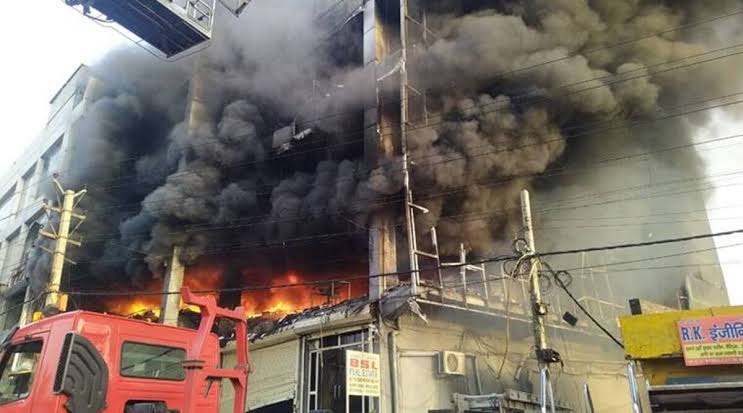
Capitalism, law and surplus population – in the context of the Mundka incident


Industrial accidents are a necessary condition of the capitalist economy, that is, their possibility is an integral part of capitalist life. Their occurrence can be avoided to some extent by legal-administrative reforms and vigilance. There are limits to these reforms, however. The Mundka incident, on the one hand, exemplifies corruption and non-compliance of the law (which attracts the most attention of the well-wishers), and on the other, it is primarily a manifestation of the organic brutality of capitalist industrial life. This brutality reflects the dispensability of individuated workers in an environment of continuous surplusing.

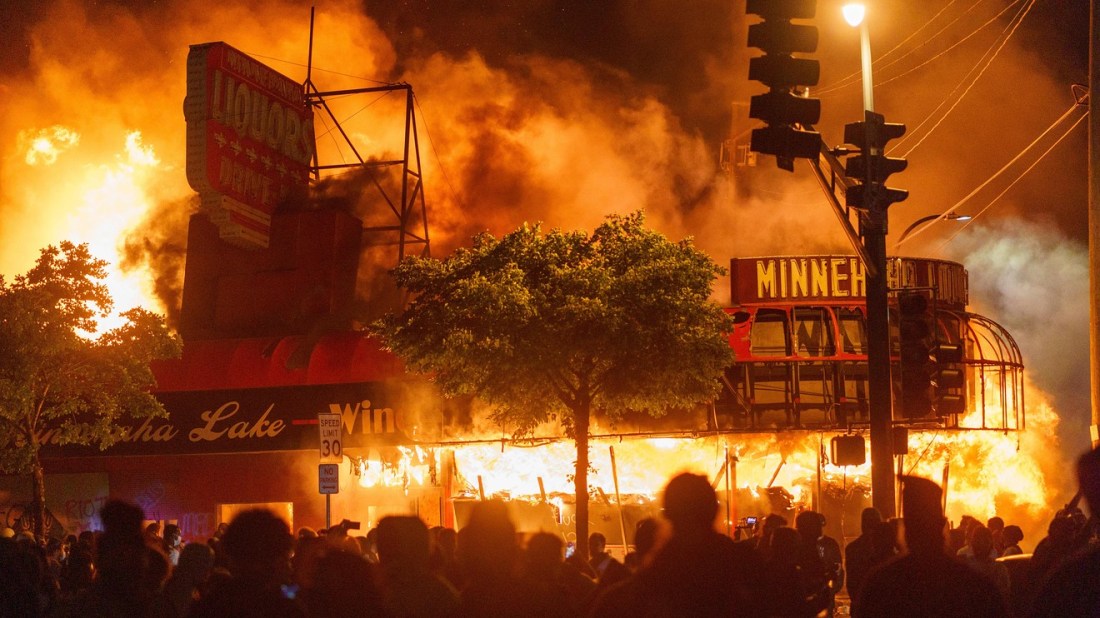
Capitalism and Social Justice: The Floyd Protests in the US


In 1968, when Europe was witnessing student revolts, Italian Marxist filmmaker, novelist and poet Pier Paolo Pasolini wrote a poem addressing students, where he unabashedly told them,

When yesterday at Valle Giulia you fought 
with policemen, 
I sympathized with the policemen! 

He went on to explain that these boys in the police came from poor families and were dehumanised by the system — 

…Worst of all, naturally, 
is the psychological state to which they are reduced 
(for roughly sixty dollars a month); 
with a smile no longer, 
with friends in the world no longer, 
separated, 
excluded (in an exclusion which is without equal); 
humiliated by the loss of the qualities of men
for those of policemen (being hated generates hatred). 

Pasolini tauntingly challenged the students,

We obviously agree against the police as institution. 
But get mad at the Legal System and you will see! [1]

The Defunding of Police: What does it signify?

In the context of the ongoing movement against police violence in the US, the proposal for defunding and disbanding the police force has gained a wide currency. It has enthused many towards a more libertarian future. Its influence has also reached the learned sections of the left and liberal circles in India. As in 1968 and some years after it, today once again we see a confluence between those who stress on the virtues of a lean state and those demanding social justice, trying to give meanings or definite agenda to the movement —binding it to concrete demands. As David Harvey has shown, the intellectual force and initial consensus for neoliberalism were derived from such confluence.[2] However, neither in the case of the 1968 upsurge nor today can one reduce a whole movement to these vocal agencies who are there to negotiate with the system — in the case of the Floyd protests, to bring in police reforms and the Democrats to commit for them, while blaming Trump for everything. 

It is interesting to see the complementarity of Trump and his right-wing bandwagon, on the one hand, and the left-liberals, on the other. The former sees the conspiracy of anarchists, communists and anti-capitalism everywhere, destroying American values and institutions; therefore, they stress on violent incidents that have happened during the upsurge. The liberals and left see in the protests the assertion of American values rescuing  institutions from their takeover by conservative and even fascist elements. They downplay violence and sometimes even blame rightwingers for infiltration. Hence, in both discourses American values and basic institutions remain sacrosanct.

Even the apparently radical suggestion to defund and even disband the police is perhaps not very drastic. With the growing numbers of private security agencies and the localised community-level management of their engagement, the state run formal police force is increasingly becoming obsolete. Two prominent journalists-cum-business experts, while writing in Business Insider, applauded police-free Capitol Hill Autonomous Zone (CHAZ) and found Trump’s accusation that such zones are  anarchistic to be unwarranted and “a wrong response”. They go on to say,

“Whether you believe in the Black Lives Matter cause or not, you should want this test to continue. If the Floyd protests have shown us anything, it’s that America needs new models for law enforcement, regulation, and community organising. CHAZ is one tiny demonstration. We can think of tons of experiments worth trying: no-armed-police zones, no-police-car zones, an-officer-on-every-corner zones… Let’s try ‘em all. May there be 1,000 more CHAZzes!”[3, emphasis mine] 

Disbanding the police force is a wonderful idea, but what does it mean to implement this idea in an unequal system? Isn’t policing an intrinsic need of such a system? Is this system itself being questioned, or is it just an anger against a particular “alienated” form of policing? Empowering people without destroying the internal hierarchy in a community will only allow those on top to accumulate more power. Disbanding police in this scenario will force the community to internalise policing, and the powerful will play the judge. Power always clings to the powerful, who in turn are only personifications of power. That is why you see no significant outrage at such “radical” proposals in the US, except from the supporters of Trump, and Fox News. But what we see most of the time, if not always, depends on the perspective that we take, which in turn is dependent on our location relative to various socio-cultural (superstructural) asperities that break open whenever there is a heightening of structural stress energy in capitalist class relations.  Hence, the relevant question would be whether the Floyd Protests are merely about different demands that are being posed, or whether something more is happening in the American society that we need to understand.

Capitalism is ever ready to recompose itself according to the crisis that a social movement poses. Reducing a movement to its immediate demands is one of the main ways that contribute to this recomposition. The demands are crucial to organise the movement, but reducing the latter to the literality of the former is not just ludicrous, but a serious reduction that reifies demands and is a  result of commodity fetishism — of reducing social relations to thingness, which helps in capitalist reproduction not just in ideology, but also materially. It is through this reduction that the legitimation of a capitalist state, as the chief arbitrator of the system, is derived. But a movement is definitely more than its demands, it is about social relations. What is happening in the US is not simply a reaction to an incident, rather it is the eventalisation of that incident exposing the ab-normalcy of those relations.       

The Political Economy of Policing and the Floyd Protests

It seems corporate America has found “a public relations windfall” in the Floyd protests. Many delivery-based firms, like Amazon, Instacart, GrubHub among others, who have been crucial agencies of commodity circulation during the ongoing pandemic, were engulfed in labour conflicts. They found a respite in the protests, as “corporate anti-racism is the perfect egress from these labor conflicts. Black lives matter to the front office, as long as they don’t demand a living wage, personal protective equipment and quality health care.”[4] However, these spectacular protests could not be reduced to militant black liberal demands of Black Lives Matter, foremostly because the problems of policing themselves could not be understood simply from the perspective of race. 

Racial disparity is an important description of inequalities that characterise the American society. The statistical significance of this phenomenon can hardly be overstated in describing police violence and incarceration in the US.  However, it is not self-explanatory, it is linked to the deeper political economic processes. 

“What the pattern in those states with high rates of police killings suggests is what might have been the focal point of critical discussion of police violence all along, that it is the product of an approach to policing that emerges from an imperative to contain and suppress the pockets of economically marginal and sub-employed working class populations produced by revanchist capitalism.“[5, emphasis mine]

In the Marxist framework, “the uncertainty and irregularity of employment, the constant return and long duration of gluts of labour are all symptoms of a relative surplus population.”[6] The growing number of marginalised sub-employed segments of the working class are what constitute today the relative surplus population and its various types: Floating, Latent, Stagnant and “the sphere of pauperism…the hospital of the active labour-army and the dead weight of the industrial reserve army.”[7] This ever growing population must be harnessed for capitalist accumulation, to obtain cheap labour and to cheapen existing labour. Yet it is a dangerous disruptive force when not engaged productively in an immediate manner. The increase in police violence is perhaps evidence of an increased self-activity of this population.  A proper regime of incarceration and policing is needed to contain, suppress and productivise its energy. 

In fact, Ruth Gilmore in her book, Golden Gulag, shows “how resolutions of surplus land, capital, labor, and state capacity congealed into prisons.” The “phenomenal growth of California’s state prison system since 1982” can be understood as a part of the resolution to the crisis of the golden age of American capitalism, which was characterised by overaccumulation wanting radical measures like “developing new relationships and new or renovated institutions out of what already exists.” [8] Since the late 1990s, Gilmore along with Angela Davis and others has been involved in the organising efforts against what they call, the Prison-Industrial Complex.[9] 

With regard to the Floyd Protests too, it has been observed that among the masses that have emerged on the streets, there are those who have suffered because of the pandemic and being sheltered-in-place “without adequate sustained federal relief.” Therefore, these protests are also a consequence of “mass layoffs, food pantries hard pressed to keep up with unprecedented need, and broad anxiety among many Americans about their bleak employment prospects in the near future.” This can be grasped only if the widespread looting is not rejected, but explained. 

Unlike the ghetto rebellions of yesteryears, the composition of the looters today is multiracial and intergenerational, targeting downtowns and central shopping districts. These are “the most dispossessed of all races and ethnicities who are the most likely to be routinely surveilled, harassed, arrested, convicted, incarcerated and condemned as failures, the collateral damage of the American dream.”[10] The law-preserving and law-constituting forces can understand only the language of demands, and the surplus-ed do not demand, but act.

Beyond Neoliberal Social Justice 

The hegemonic tendency in the American anti-racist movement today “accepts the premise of neoliberal social justice”. It has emerged as “the left wing of neoliberalism  [whose] sole metric of social justice is opposition to disparity in the distribution of goods and bads in the society, an ideal that naturalizes the outcomes of capitalist market forces so long as they are equitable along racial (and other identitarian) lines.”[11] This provides a crucial clue to understand not just the limits of the movements for representation, recognition and redistribution, but also the compatibility of social justice with neoliberalism. This can help in making sense of why in some countries, like India, policies and laws towards ensuring social justice frequently accompanied the aggressive implementation of neoliberal economic reforms. 

The history of capitalism shows that it includes through differentiation and segmentation, constituting the unevenness of its social geography, which is a crucial factor in the dynamics of capitalist accumulation. It is this differential inclusion that structures the extension and intensification of division of labour, facilitating the circulation of commodities and capital and ensuring the transfer of value. This aspect of capitalist development manifests itself in real identitarian inequalities, insecurities, anxieties and politics at diverse levels of social structures. Social differentiation, obviously, in effect preempts or defers the emergence of class-against-capital that threatens not just law and order, but the very system that they conserve. Simplistically put, identities are all about horizontal divisions and vertical (re)integration. This engenders a perspective that does not allow various segments to think beyond redistributive economics and the politics of representation and recognition. So all social conflicts become just problems of management, engineering, and of statistics. Hence, tweaking specific variables is what needs to be done. Blaming individuals  or even specific institutions for what is an endemic problem of the system is the best way to salvage the system. This is how today, as Pasolini would put, people everywhere (differentially, but definitely) “belong to a ‘totality’ (the ‘semantic fields’ on which they express themselves through both linguistic and nonlinguistic communication).” This is how “bourgeois entropy” is reached, when “the bourgeoisie is becoming the human condition. Those who are born into this entropy cannot in any way, metaphysically, be outside of it. It’s over.”[12] But, is it so?  

Can we deny the experience of racism and, for that matter, of any enclosed segment of class? Aren’t such experiences crucial to the politics of class? While it is true that racism cannot be understood in its own terms, and all problems faced by black proletarians cannot be reduced to racism, can we deny that class always appears through such specific geo-cultural forms of social relations? The sedimental reality of all these forms is, of course, the dynamics of class relations and struggle, but these dynamics can only be captured in the experience of these forms. The struggle against segmentation is not to wish it away. Any unity based on such ideological wishing away of inter-segmental conflicts will be external and an imposition. 

An identity assertion becomes revolutionary when it is a ground for negating the very logic of differentiation and segmentation that sustains capitalist accumulation through competition and hierarchy. Then, the assertion is not for identitarian accommodation, but against the logic of identification—to envisage a non-identity against and beyond all identities. The positive assertion of identities, on the other hand, is for accommodation within power and accumulation of power —this is what social justice means within the logic of capital. However, any assertion of oppressed identities always contains the possibility of the release of an anti-identitarian subject, the class of proletarians, that goes against racism, casteism and other segmentations to destroy the stability of the very system of classification and gradation of labourers that sustains capitalism. It is this subject that can be traced in the incidents of looting and arson in the Floyd protests. Since they serve no means, they are ignored by those who don’t decry them.

Note: My special thanks to Arvind, Lalan, Nilotpal, Paresh, Prakash, Pritha and Satyabrat for innumerable discussions on the article. 

References

[1] Il PCI ai Giovani (The PCI to the Young), in Pier Paolo Pasolini. 1972 [2005]. Heretical Empiricism. Tr. Ben Lawton & Louise K. Barnett, New Academia Publishing, pp 150-158.

[2] David Harvey. 2005. A Brief History of Neoliberalism. Oxford University Press. (Chapter 2, ‘The Construction of Consent’).

[3] David Plotz & Henry Blodget. 2020. ‘We need more experiments like Seattle’s police-free’, Business Insider (June 13, 2020). Accessed on June 15, 2020.

[4] Cedric Johnson. 2020. ‘The Triumph of Black Lives Matter and Neoliberal Redemption’, nonsite.org (Posted June 9, 2020). Accessed on June 15, 2020.

[5] Adolph Reed, Jr. 2016. ‘How Racial Disparity Does Not Help Make Sense of Patterns of Police Violence’, nonsite.org (Reposted June 9, 2020). Accessed on June 15, 2020. 

[6] Karl Marx. 1976. Capital. Volume 1, (Trans. Ben Fowkes). London: Pelican Books, p. 866.

[7] Ibid, p. 797.

[8] Ruth Wilson Gilmore. 2007. Golden Gulag: Prisons, Surplus, Crisis and Opposition in Globalizing California. University of California Press, p. 28.

[9] Critical Resistance Publications Collective, ed. 2000. Critical Resistance to the Prison-Industrial Complex. Special Issue of Social Justice 27(3). 

[10]Johnson, op. cit.

[11] Reed, op. cit.

[12] Pasolini, op. cit., p. 156. 

India Unlocked: World’s “Biggest Lockdown” and Workers’ Long March


“… never torment a creature for sport,
for it might be loaded.” – Ernst Bloch

At times, states compete to showcase merchandise and relative productive capacities. Other times, many of these states sell misery to gain access to economic packages, charities and loans. Today is the time when they compete to show off their capacity to impose the most efficient lockdown on their citizenry. Of course, the priority is to make this imposition consensual, because that would showcase the self-discipline of the national workforce. But if that doesn’t work, then the dosages of coercion are streamlined to measure the states’ disciplining capacity. The Narendra Modi government’s chest-thumping claim to run the “world’s biggest lockdown” was to showcase the realisation of the neoliberal ideal of a “strong state” in India — the carrots-and-sticks hidden behind the quinine-and-quarantine lockdown. 

The Story of India’s Lockdown

With the absence of any coherent public health system, in the nationalist war against the “Chinese virus”, India has been relying on the dedicated medical workforce of much maligned public hospitals fending the virus without sufficient protection and supplies. Of course, popular pseudoscience is also there, factoring in a hot summer and the cumulative impact of other vaccines etc, along with the placebo effects of the homeopathic recipes. 

Even with regard to the so-called practice of “social distancing” and its generalisation through the lockdown, much was left to the play of the complex and sinister traditional divisions — such as caste and communal divides among others — within the Indian society. One can speculate that this factor might have played a role in the slow expansion of the pandemic in India. 

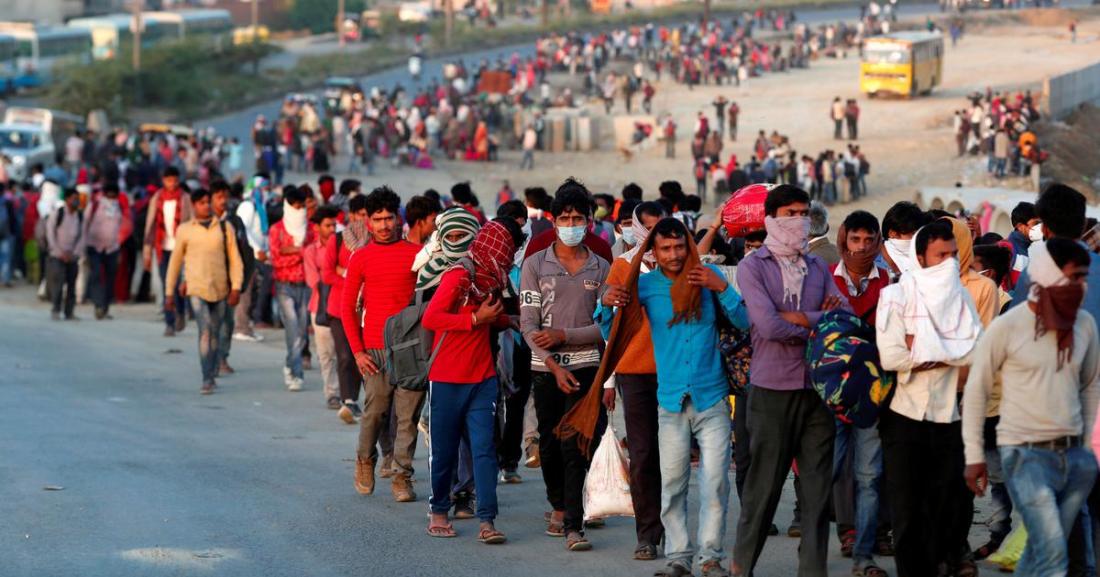
However, it goes to the credit of supposedly the most vulnerable in India who called the Indian state’s bluff, making its rhetoric of a successful and strong lockdown evaporate into thin air. The migrant’s faint cry to be allowed to go back home became a collective roar, and a long march in defiance of the strictures and coercive forces ensued.

We are witness to a process of how the vulnerabilities of the weakest become their strength; how their weak actions lead to a legitimation crisis of the state (and also at many times capitalist crisis in general). It is not very difficult to see how existential defiance of India’s migrants and the working class in general unravelled the neat choreography of the lockdown, making it meaningless. The exodus of internal migrants (India’s “biggest intangible assets” and “India’s real economic dynamo: a silent force“) and the anticipated volatility in the labour market have made capital jittery. 

The Narendra Modi government, with President Trump’s encouragement, was already planning to catch companies flying away from China. The labour laws were being derailed to clear the way. But nobody heard the plates shifting — the lockdown just couldn’t lock the workers in! Their footlooseness, which was the biggest asset, has become a great liability now.

The Liberal Politics of Victimhood and Representation

The tremors were felt everywhere. The state was trying to control the damage desperately by providing buses, rations, and identifying potential stars in children, cycling hundreds of miles carrying their parents. On the other hand, the sensitive gentry could see the faces of orphans whose parents died in an accident while cycling 750 kilometres back home, or see blood splattered on the railway tracks.  

In a recent article in The Indian Express, one of the most sensible political scientists in India, Suhas Palshikar, expressed the angst of the majority of the self-acclaimed politically conscious people on the side of left and liberals. He lamented “the incongruous image of the politicians and the political party” — they talk of the people but “betray an instinctive choice of ‘law and order’ and a techno-bureaucratic idea of governance”. It seems they are “on a holiday” and abstaining from politics. At the time when the central government is “caught in the trap of regulation and denial,” and “beset with uncontrollably delusional self-belief”, the opposition forces should have taken the initiative to  “come up with a robust alternative route to governance” (of course, Kerala is already showing the way!). 

According to Palshikar, there should be “a political response to the pandemic,” for which “resumption of democratic contestation is a must”, since “politics alone can be survival therapy for democracy.” He advises the Congress and its leadership to ask the party workers “to hit the roads, talk with suffering workers, walk with them”, only then they would “realise that taking a stand also means mixing with the people.” 

Palshikar’s plea for the “resumption of democratic contestation” may seem inspiring at the time when there are so many people who are left uncared-for during the pandemic. It might motivate the opposition to see a political opportunity here, and the government too might see their pragmatic mistakes. But there are many assumptions on the basis of which such a plea is made. It seems Palshikar and, with him, most liberals and leftists in India assume that there is never a democratic agency of those who are surplused by the system, as there is no political agency beyond the legitimate state apparatuses — institutional and ideological. 

With the WHO’s recognition of Covid-19 as a pandemic, the governments did what they are always good at when they are forced into action, i.e, to reach out for coercive measures. In the absence of vaccination and any understanding of the infecting germ, these measures take the form of imposing ancient “tribal traditions” of prevention (as J.D. Bernal used to call them) —social distancing, isolation and quarantine. But the liberal conscience, represented by Palshikar and others, demands an official opposition which will act as a corrective to this coercion. 

The Real Opposition beyond Spectacular Politics

What happened instead is something, which, though, is not very uncanny in history, but, generally, goes unseen and unrecognised. It is accounted only in a retrospective reading of the people’s history. It happens beyond the spectacle of formal politics, which doesn’t have any category to capture this phenomenon in its positive grammar, except as a subaltern that never speaks. 

The wails of pain, agony and anger of India’s internal migrants and workers in general have shattered the adamantine chains of the lockdown. The lockdown was never successful except in the ritualites of the already cocooned little bourgeois within everyone (meaning, everyone individually or as an aggregate of individuals). We found the appropriate nuclear environment of safety and discipline, and sang the “Middle Class Blues”: 

“The streets are empty. 
The deals are closed. 
The sirens are silent. 
All that will pass.” (Hans Magnus Enzensberger) 

Among the working masses, the lockdown as a generalisation of “social distancing”  was anyway meaningless, and its imposition amounted to an outrage. They felt what they are —surplus-ed and other-ed

There are talks about the consolidation of the state and the rise of authoritarianism, but it is seldom recognised that this is a result of the exposed weakness of the state, its inability to regulate workers’ self activities and, especially, the panic and fear that they instill among other classes. Those who see these workers only as victims, which they are in the legitimate framework of political economy, are unable to see the organic resistance of the workers to the systemic regulation. 

What argumentative liberals and online radicals couldn’t achieve was accomplished by the synergistic effects of the “weapons of the weak”. In fact, they are still waiting for the powers who imposed the lockdown to end it, so that, once again, they are able to lead these victims of the system back to the normal systemic cycle —some want them to fulfil their duties, and some, mainly those who are on the side of the left, would want them to struggle for their rights. What an irony!

There is nothing to celebrate here, but everything to understand — in order to imagine a new politics organically grounded in the everydayness of working class resistance.

Brecht and Workers’ Self-Inquiry


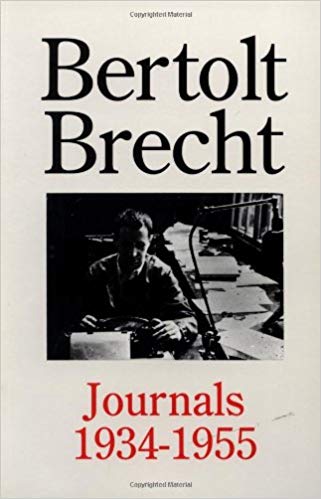
The lucidity of Brecht’s journal entries is remarkable. He is a master of aphorisms, yet he never allows forms to stifle the richness of content. The meaning overflows through the pores of the condensed entries of his journals. Every entry is a bombshell, which fractures appearances and reveals the structure of the real, putting it into a crisis.

In 1936 he wrote an entry in which a worker’s almost instinctive refusal to work and the right to leisure are articulated. It shows that “incipient class consciousness” is already there among workers in work relations and the feeling of solidarity emerges right there.

The worker in this entry is Brecht himself. He is working as a scriptwriter in London, where he came to “learn to write for films”, but he ends up “learning something different”.

Although his boss or superior treats him as “an absolute equal, the nature of the work” is such that he feels “like an employee”. But a worker’s refusal is not about unfairness, or even formal and informal inequality at the workplace. It is about work itself. “i have not chosen the subject i am working on for myself, i can’t relate to it and i don’t know what will happen to my work when it comes on the market. i only have my labour to sell, and what is done with it afterwards has nothing to do with me.

But it is also not just about being disinterested towards the subject. Work is the whole material structure of work relations which is intrinsically class polarised. Workers’ interests are totally opposed to the efficient functioning of this structure. Hence, the refusal to work. “my interests are quite opposed to those of my employer. since i am on a weekly wage, it is not good for me if the work progresses quickly, quite the contrary.

The subjectivity that takes shape in this atmosphere is spontaneous. “already i even catch myself taking out my watch as evening approaches; i want to get away, it’s time for real life to begin.” But his urge to escape is not because he is looking forward to something. “real life is quite separate, and incidentally quite unappealing.” He is not falling for the fetish of “own time”. It is simply a space-time where he is not thinking about work. “but in ‘my own time’ i don’t waste a single thought on my daily work.

It is this refusal that makes a worker relate and empathise with other workers and build horizontal relations. “i leave with the little englishman who works alongside me as translator and we strictly avoid touching anything that might remind us of work. i feel a sense of total solidarity with him when he refuses to work on sundays.

The building of such relations cannot remain hidden, it disturbs the whole segmentation that constitutes these relations. It makes superiors (in work hierarchy – supervisors etc) suspicious, and they try to regain confidence of workers by making a common cause against employers. But workers are aware of the tactic, yet they know its possible need too, so they remain silent. “kortner seems to have noticed this incipient class consciousness, for he often says on the phone, when he is cancelling an appointment, that with his job he has work to do – just as any boss might.” whenever he can, he makes mock of his employers, points out their inferiority and laziness, whereupon we are both silent.

When Brecht eats his lunch at his superior’s place, it is in the company of the latter’s wife who “is very nice” that “it all stops and i am the great poet once more.” He also has “the privilege of being able to take a nap, but then, after coffee, the situation changes once more.

And as a finale, Brecht ends, “the paper i am using to write this is from work: i pinched it.”

Visit: Brecht on “the Concept of Class”

Brecht on “the Concept of Class”


8 Jan 42

the concept of class too, perhaps because it has come down to us as it was framed in the last century, is used much too mechanically today. there is nothing to be derived from a purely statistical concept of a german working class nowadays; yet such a concept is deep-seated. trade-unions and political parties are accustomed to count members. the political concept is devalued too, since it presupposes organisations and ‘democratic forms of state’, a ‘free interplay of forces’ which can be steered by the ruling class. the closure of the labour market in the interests of the war economy has damaged the term ‘class’ as an economic concept. what remains is the class itself. it, happily, is not just a concept.

the fact that wars cannot be waged without the proletariat (as the productive force) does not mean that a war which is disagreeable to the proletariat cannot be waged. a revolutionary situation only comes into being when eg it takes the individual initiative of the proletariat to fight a war that the proletariat favours, or when a lost war can only be liquidated by the proletariat. etc etc.

In this entry from his Journals 1934-1955, Brecht captures the complexity of the class question. The “coming down” of this concept as “framed” in a particular phase in history leads to its devaluation in another phase in history. The statistical, political and economic conceptions were all devalued in the phase of the war economy, but what remained was the class itself, which “happily, is not just a concept.” In this note, he implicitly advances the need for the movement of concept to capture the reality of class.

In the second para, he brings out the reality of the proletariat of which Marx and Engels talked about in their Communist Manifesto – of the dialectic of class formation. Marx and Engels achieved this by critiquing the political economic logic of competition and cooperation as foundational to the formation of classes and class struggle in capitalism. They showed how the negation of classification is immanent in the process of classification. This dialectic recurs in Brecht’s writings at numerous occasions. As an example, we can cite one of his most used and abused poem, General, den Tank, or even his War Primer. In fact, that is why montage is central to his creative writings which captures the dynamics of internal relations that constitute the real, thus reclaiming “the genuine reality [that] has slipped into the functional”. The problem of the proletariat as the “productive force”, as a reification that constitutes capital, as being complicit in wars does not do away with the proletarian initiative. In fact, it is this initiative or art that interrupts the normal exposing what has been functionalised, thus generating “a revolutionary situation.”

This note can be posed as an answer to the dominance of the analytical tradition within the progressive (including the Marxist) circle in our times, which can be broadly divided into two complementary sections. On the one hand, there are those who immediately deploy the analytical concepts trying to straitjacket the concrete to suit those concepts, while on the other, there are those who in reaction stoop down to radical empiricism proclaiming the death of the grand narrative (including class), worshipping relativism. The poverty of both these sections is their tendency to reduce concepts to mere descriptive categories. It is in this regard that we can combine them under the identity of (post) structuralism.

In the above note, what Brecht achieves philosophically is an articulation of the distinction, yet necessary and problematic relationship between the real and the conceptual – “the class itself” and “the concept of class”.

On Rights Politics and Migrant Workers


These notes were prepared for a discussion in Delhi on a report on the condition of migrant workers in Delhi, Uttarakhand and Tamil Nadu (October 6 2017).

REFORMS & REVOLUTION

1. The two significant aspects of demand and right politics are – firstly, they are grounded in the immediate social needs that are framed within a structure. Secondly, they are attempts to establish a discourse with the state machinery – hence they are discursively circumscribed within the field of social relations. Thus, they are necessarily reform oriented, but they need not be reformist. The questions of rights, reforms and demands are unavoidable guerrilla struggles, which build the capacity of workers to organise larger movements. But do these struggles mean deferring the final movement that targets the very structural and superstructural setup that give language to those social needs? No, because they also test the vulnerabilities of the system and can become endeavours to burrow through it the final escape or emancipation. Every moment is a moment for both reform and revolution, and also reaction. When a movement is able to transcend its initial demands, to go on to attack the present social relations and to reorganise them then it becomes revolutionary. When the movement attempts to take the leap, but fails, then reaction happens. When the movement is not ready to take any leap beyond or reneges at the last moment, reform and/or reaction can happen, depending on the level of crisis in the system.

2. However, because the rights politics in itself is concerned with achievements of the rights and demands, at its own level will be geared towards negotiations and bargains, and impressing upon the state machinery, rather than changing the social relations themselves. Even the trade union politics is embedded in this kind of relationship. There is nothing in these forms that makes them question the structure of that relationship between workers and capitalists, or in the former case between workers and the state. The danger of reformism comes from this. But once again, as a conscious part of the larger movement against the structure of present social relations they play a crucial role of waging guerrilla struggles. But what does this signify? Then how do we define the working class politics? Also what will be the organisational question which balances between reform and revolution?

3. When we talk about workers’ politics, it is grounded in the dialectic of competition and collectivity. Marx captured this very aptly, when he said: “Wage-labour rests exclusively on competition between the labourers. The advance of industry, replaces the isolation of the labourers, due to competition, by their revolutionary combination, due to association.” The politics that is premised upon the segmentation of the workers vs the politics of ever-expanding combination and association, that is grounded in the everyday interaction among workers. The latter is not a mechanical aggregation or unity of isolated workers with similar grievances or demands, but a combination or network that is built in their daily conflict with state and capital. Only an expansion of this network has the capacity to refuse to be subsumed by capital and its network. In this, demands are definitely raised but are incidental. In this framework, demands and rights play the role of testing the system’s vulnerabilities and the organisational strength of the expanding combination.

ON MIGRATION

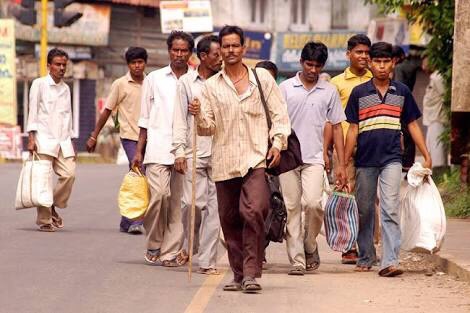
4. Migration is not just a fact, but also an act. It is not fully incidental that a word for migration in Hindi is पलायन (the more formal word is प्रवास). The former is very rich, often used as a stigma – one of its meaning being running away or an escapist act. In my view, it is this sense that renders the act of migration politically rich. Migration is not just a spatial fix, a response of the weak to the immediate contingencies of life. It is also a rebellious withdrawal, an escape, a long march against “the current state of affairs.” It is an act of refusal, non-acceptance of the lot. As an immediate spatial fix it demonstrates the weak agency of the migrant – a weakness in mastering the system. But it also has a utopian element that makes any human agency restless, that may come one time as an escape, another time as an emancipation, especially when individual weakness becomes a ground for collective subjectivity. Wasn’t this Ambedkar’s intention when he advised dalits to escape villages?

5. Legal Unionism is bound to consider migrant and mobile workers unreliable for their purpose – it simply cannot rely on them. On the other hand, social unionism which seeks to overcome the limits of traditional unionism is caught up in the discourse of non-conflictuality and negotiations with state (which in turn is problematically conceptualised). Hence for this school too it is always about accommodation – creating space for the migrants, not about problematising the whole space itself which is the etatised field of labour-capital relations. Therefore the vagrancy and mobility of proletarians are something to be shed off, not to be made a ground to imagine an overhauling of social relations and ideologies. Hence migrants as migrants are suspects, to be always put in the peripheries of organised politics. But different revolutions have shown how it was mostly settled workers’ organisations, afraid of losing their accumulated privileges, developed petty bourgeois tendencies and were unable to go beyond the legal fights when required, unless workers revolted and autonomously organised themselves.

6. Right from Karl Marx, Marxists have understood the relationship of workers mobility and their political consciousness. Lenin provides an insight into the poltical meaning of migration and demonstrates how to think about workers beyond their victimhood and our philanthropist vanguardism:

“There can be no doubt that dire poverty alone compels people to abandon their native land, and that the capitalists exploit the immigrant workers in the most shameless manner. But only reactionaries can shut their eyes to the progressive significance of this modern migration of nations. Emancipation from the yoke of capital is impossible without the further development of capitalism, and without the class struggle that is based on it. And it is into this struggle that capitalism is drawing the masses of the working people of the whole world, breaking down the musty, fusty habits of local life, breaking down national barriers and prejudices, uniting workers from all countries in huge factories and mines in America, Germany, and so forth.”

“Thus, Russia is punished everywhere and in everything for her backwardness. But compared with the rest of the population, it is the workers of Russia who are more than any others bursting out of this state of backwardness and barbarism, more than any others combating these “delightful” features of their native land, and more closely than any others uniting with the workers of all countries into a single international force for emancipation.

“The bourgeoisie incites the workers of one nation against those of another in the endeavour to keep them disunited. Class-conscious workers, realising that the breakdown of all the national barriers by capitalism is inevitable and progressive, are trying to help to enlighten and organise their fellow-workers from the backward countries.”

7. In recent years, Negri (and Hardt) repeats the same in the language of our times:

“Traditionally the various kinds of migrant workers, including permanent immigrants, seasonal laborers, and hobos, were excluded from the primary conception and political organization of the working class. Their cultural differences and mobility divided them from the stable, core figures of labor. In the contemporary economy, however, and with the labor relations of post-Fordism, mobility increasingly defines the labor market as a whole, and all categories of labor are tending toward the condition of mobility and cultural mixture common to the migrant. Not only are workers are forced to change jobs several times during a career, they are also required to move geographically for extended periods or even commute long distances on a daily basis. Migrants may often travel empty-handed in conditions of extreme poverty, but even then they are full of knowledges, languages, skills, and creative capacities: each migrant brings with him or her an entire world, Whereas the great European migrations of the past were generally directed toward some space “outside,” toward what were conceived as empty spaces, today many great migrations move instead toward fullness, toward the most wealthy and privileged areas of the globe…

“Part of the wealth of migrants is their desire for something more, their refusal to accept the way things are. Certainly most migrations are driven by the need to escape conditions of violence, starvation, or depravation, but together with that negative condition there is also the positive desire for wealth, peace and freedom. This combined act of refusal and expression of desire is enormously powerful…. Ironically, the great global centers of wealth that call on migrants to fill a lack in their economies get more than they bargained for, since the immigrants invest the entire society with their subversive desires. The experience of flights is something like a training of the desire for freedom.

“Migrations, furthermore, teach us about the geographical division and hierarchies of the global system of command. Migrants understand and illuminate the gradients of danger and security, poverty and wealth, the markets of higher and lower wages, and the situations of more and less free forms of life. And with this knowledge of the hierarchies they roll uphill as much as possible, seeking wealth and freedom, power and joy. Migrants recognize the geographical hierarchies of the system and yet treat the globe as one common space, serving as living testimony to the irreversible fact of globalization. Migrants demonstrate (and help construct) the general commonality of the multitude by crossing and thus partially undermining every geographical barrier.”