Neoliberalism and Primitive Accumulation in India


The need to go beyond capital

Pratyush Chandra & Dipankar Basu
Radical Notes

Recent events in Singur – a town which is less than 40 kms away from Kolkata (Calcutta), where the West Bengal government is struggling to acquire and sell 1000 acres of agricultural land to Tata Motors – indicate the extent to which capitalist-parliamentarianism can regiment a counter-hegemonic force once it agrees to play by the rules. At the least, it clearly shows that the Communist government, which boasts of being the longest-running democratically elected Marxist government in the world, is hopelessly caught in the neoliberal project. And Singur is not an isolated event. In the state of West Bengal alone, the process of state-led land grab and the resultant opposition is already gaining momentum in at least three different locations: (a) in Kharagpur, West Medinipur district, where vast tracts of multi-crop farmland is being taken over for yet another Tata vehicle factory; (b) in Nandigram, East Medinipur district, where a chemical industries hub is proposed to be set up by the Salim group on a 10,000-acre area; and (c) in North Bengal where a Videocon Special Economic Zone (SEZ) is proposed to come up in the near future.

Nor is this story limited to West Bengal. Throughout India, resources are being acquired for Special Economic Zones and numerous other industrial schemes meant to facilitate corporate capital expansion. Since laws permitting this acquisitions were passed an year ago, state governments have notified 267 SEZs, which will require more than a half million hectares of land. Of this, the state has already acquired 137,000 hectares for 67 SEZs while another 80 have `in principle’ been approved.(1) The Government has converted the erstwhile Export Processing Zones located at Kandla and Surat (Gujarat), Cochin (Kerala), Santa Cruz (Mumbai-Maharashtra), Falta (West Bengal), Madras (Tamil Nadu), Visakhapatnam (Andhra Pradesh) and Noida (Uttar Pradesh) into SEZs. In addition, 3 new Special Economic Zones that had been approved for establishment at Indore (Madhya Pradesh), Manikanchan (Salt Lake, Kolkata) and Jaipur have since commenced operations.

In this backdrop, the West Bengal government’s adamant attitude towards land acquisition, despite the popular unrest, shows that the Indian State and its agencies, irrespective of their ideological masks, are working relentlessly to provide the private sector with “an internationally competitive and hassle free environment”. In this note, we wish to conceptualise this political economic process, identifying its different facets and understanding their interlinkages. It is our contention that using the recently re-interpreted Marxist concept of “primitive accumulation” can provide crucial insights in this regard. We wish to demonstrate that current developments in India can be fruitfully understood by employing the notion of primitive accumulation, understood as a constitutive primitive of capitalism, the process which continuously creates and consolidates the capital-relation. Adopting this new perspective might also help in redefining the agenda of struggles and counter-hegemonic politics in the neoliberal context.

Primitive Accumulation: Two Interpretations

As is well known, Marx had brought up the concept of primitive accumulation to try to understand the historical origins of capitalism. It is generally accepted by economic historians that in pre-capitalist modes of production the primary producers (majority of whom were peasants) had ownership of the means of production, most crucial among them being land. If we agree that capitalism is distinguished from these other modes of production by the relationship of a class of propertyless labourers (who have nothing to sell but their labour power) and a class of propertied capitalists (the owners of the means of production) mediated through the market (2), then the following question naturally arises: how did we arrive at the class of propertyless labourers from a class of producers who had the ownership (or at least the right of usage) of the means of production? It is this historical question that Marx sought to answer with the concept of “primitive accumulation”.

In a sense, the answer is already contained in the question. Primitive accumulation is the process by which the producer is divorced from her/his means of production. Since, moreover, land is the primary means of production in pre-capitalist societies, the main focus of primitive accumulation was to separate peasants from the land. While the gradual penetration of market relations had a role to play in this, outright use of force was far more important, and in a sense the key. Only by evicting peasants from their lands and disrupting their livelihood could the development of markets in free labour and land be ensured; and only this could provide the firm basis for the emergence and consolidation of the capital-relation:

“The capital-relation presupposes a complete separation between the workers and the ownership of the conditions for the realization of their labor. As soon as capitalist production stands on its own feet, it not only maintains this separation, but reproduces it on a constantly extending scale. The process, therefore, which creates the capital-relation, can be nothing other than the process which divorces the worker from the ownership of the conditions of his own labor; it is a process which operates two transformations, whereby the social means of subsistence and production are turned into capital, and the immediate producers are turned into wage-laborers. So-called primitive accumulation, therefore, is nothing else than the historical process of divorcing the producer from the means of production. It appears as ‘primitive’ because it forms the pre-history of capital, and of the mode of production corresponding to capital.”(3)

It is worth recalling that Marx studied the “enclosure movement” in Britain within this overall perspective. One crucial aspect of primitive accumulation should be noted immediately: it effects a redistribution and transfer of claims to already existing assets and resources, rather than creating any new assets. In this sense, it is an accumulation of intangible rights and not the accumulation of tangible assets or goods. This aspect of primitive accumulation is important for our purposes because the current frenzy of state-assisted acquisition of land and other resources in India is precisely a process whereby rights of access and usage of already existing resources are being redistributed and transferred.

The last decade has witnessed a resurgence of debate around attempts to re-interpret the concept of primitive accumulation.(4) This debate has indicated that there are two distinct but related interpretations of primitive accumulation, one which stresses the temporal aspect and the other which stresses the constitutive or originary aspect. For the first, more traditional, interpretation the primitiveness of primitive accumulation is understood in a purely temporal sense. Primitive accumulation is seen as the historical phase which created the preconditions for the development of capitalism by forcing the separation of workers and means of production. The second interpretation notes that there is both a temporal and a continuity argument in Marx’s account of primitive accumulation. For this interpretation, therefore, the primitiveness of “primitive accumulation” does not arise simply from its location in historical time, relevant only as the initial stage of capitalism; rather, it is the constitutive primitive of the capitalist system, a process that is essential for perpetuating its fundamental class structure – the separation between producers and means of production.

If primitive accumulation is constitutive, then it must arise as a continuous process within capitalism viewed as a global system. Expanded reproduction of the system requires reproduction of the capital-relation at every moment; separation of workers and means of production must be maintained continuously. In its day-to-day functioning, a mature capitalist economy enforces this separation through the market, i.e., by economic means; but at the boundaries (both internal and external), where capitalism encounters other modes of production, property and social relations attuned to those modes and also to the earlier stages of capitalism, other ways of subsistence, primitive accumulation comes into play. More often than not, direct use of force is necessary to effect the separation at the boundaries. And since capitalism, as a global system, continuously encounters other modes of production along with the simultaneity of diverse stages of capitalism in various localities, the constitutive role of primitive accumulation is always in demand. One can probably go so far as to assert that capital accumulation is the extension of primitive accumulation, enforced through the market. In fact, in Volume 3 of Capital, Marx himself calls the concentration and centralisation of capital, which occur during the course of market-induced capital accumulation, as “simply the divorce of the conditions of labour from the producers [which occurs through primitive accumulation] raised to a higher power”(5).

But this does not mean that the two are identical. In fact two differences are especially important to grasp for the development of our overall argument:

(a) “[W]hile accumulation relies primarily on “the silent compulsion of economic relations [which] sets the seal on the domination of the capitalist over the worker,” in the case of primitive accumulation the separation is imposed primarily through “[d]irect extra-economic force” (Marx 1867: 899-900), such as the state (Marx 1867: 900), particular sections of social classes (Marx 1867: 879), etc. We can say therefore that primitive accumulation for Marx is a social process instigated by some social actor (the state, particular social classes, etc.) aimed at the people who have some form of direct access to the means of production. This social process often takes the form of a strategy that aims to separate them from the means of production.”(6)

(b) “As opposed to accumulation proper, what may be called primitive accumulation… is the historical basis, instead of the historical result, of specifically capitalist production’ (Marx 1867: 775). While sharing the same principle – separation – the two concepts point at two different conditions of existence. The latter implies the ex novo production of the separation, while the former implies the reproduction – on a greater scale – of the same separation.”(7)

Keeping these differences are important because one comes to the rescue of the other when market processes falter. Since capital accumulation operates through the market, the services of primitive accumulation are required almost by definition when the market is in crisis. During crucial phases of capitalist crisis, primitive accumulation emerges to help transcend barriers to accumulation in two ways: (a) by facilitating the transition from the critically fated regime to a new regime of accumulation, and (b) by continuously negotiating the spatial expansion (both internal and external) of capitalism. During periods of transition and expansion, “new enclosures” are required for putting the normal course of capitalist reproduction back on track. Securing these enclosures through force and other “direct extra-economic means” is the function of primitive accumulation. This re-definition allows us to grasp the function of the State and its continuous politico-legal activism in every stage of capitalism.

The present neoliberal phase can probably be understood fruitfully from this perspective. Despite the talk of separating the political from the economic, which is a staple rhetoric of the current phase, it is the state as the instrument of politico-legal repression that facilitates neoliberal expansion. Firstly, the state intervenes with all its might to secure control over resources – both natural and human (“new enclosures”) – and secondly, to ensure the non-transgression of the political into the economic, which essentially signifies discounting the politics of labour and the dispossessed from affecting the political economy. David Harvey notes that, “The main substantive achievement of neoliberalization… has been to redistribute, rather than to generate, wealth and income”; the main mechanisms for achieving this is referred to by Harvey as “accumulation by dispossession”, by which he means,

“… the continuation and proliferation of accumulation practices which Marx had treated of as ‘primitive’ or ‘original’ during the rise of capitalism. These include the commodification and privatisation of land and the forceful expulsion of peasant populations…; conversion of various forms of property rights (common, collective, state, etc.) into exclusive private property rights…; suppression of rights to the commons; commodification of labour power and the suppression of alternative (indigenous) forms of production and consumption; colonial, neo-colonial, and imperial processes of appropriation of assets (including natural resources); monetization of exchange and taxation, particularly of land; the slave trade (which continues particularly in the sex industry); and usury, the national debt and, most devastating of all, the use of the credit system as a radical means of accumulation by dispossession. The state, with its monopoly of violence and definitions of legality, plays a crucial role in both backing and promoting these processes.”(8)

Harvey identifies four main features of “accumulation by dispossession”: privatisation, commodification, financialization and the management-manipulation of assets, each feeding on the other, supported by the other and gaining strength from the other. The neoliberal resurgence since the mid-1970s can be understood as capital’s counter-revolutionary response to the crisis that enwrapped “embedded liberalism” internationally in the late-1960s, with “signs of a serious crisis of capital accumulation…everywhere apparent. Unemployment and inflation were both surging everywhere, ushering in a global phase of ‘stagflation’ that lasted throughout much of the 1970s.”(9)

The Politics of Primitive Accumulation in India

What is going on in India today can be understood by employing the concept of primitive accumulation (as understood in the second interpretation) in almost all of the above senses: separating primary producers from land; privatisation of the “public”, conversion of common property resources into marketable commodities, destroying non-market ways of living, etc. To our mind, each of the instances of “displacement” or state-led “land grab” are willy-nilly feeding into the overall process of primitive accumulation in India by divorcing primary producers from the land or restricting direct access to other common property resources like forest, lakes, river, etc. A question crops up immediately. Being a labour-surplus economy, does India need to generate additional labourers, which is an obvious result of primitive accumulation, before absorbing what is already available? Certainly not, if we think from the perspective of labour. But the answer changes if we see the whole process from the perspective of capital. Fresh entrants into the already burgeoning ranks of the proletariat will increase the relative surplus population – floating, latent and stagnant – depressing real wages and thereby increasing the rates of profits on each unit of invested capital. Moreover, one of the major features of the neoliberal regime of accumulation has been the incessant `informalisation’ of the labour process, and further growth of the relative surplus population makes late-capitalist countries like India finely attuned to this. As Jan Breman notes:

“Mobilization of casual labour, hired and fired according to the needs of the moment, and transported for the duration of the job to destinations far distant from the home village, is characteristic of the capitalist regime presently dominating in South Asia.”(10)

Separation of producers from their means of production and subsistence, especially land and other natural resources, also creates markets for these resources; and thus comes into being the various agencies that thrive through hucksterage in these markets. These intermediaries play the crucial role of facilitating and normalising the process of primitive accumulation. Examples abound: Trinamool Congress goons, grassroots-level CPI(M) leadership, local middle classes like school teachers, lawyers, and other similar forces in the Singur case; state-traders, local elites-supported Salwa Judum in Chhatisgarh.

The major target of land acquisition in India today is in areas where either peasant movements have achieved some partial success in dealing with capitalist exploitation and expropriation or areas largely inhabited by the indigenous population whose expropriation could not be increasingly intensified because of the welfarist tenor of the pre-liberalisation regime. West Bengal is the prime example of the former, where Left Front rule congealed due to its constituents’ involvement in the popular movements. Now, the movements’ institutionalisation and incorporation of the leadership into the state apparatus is facilitating the present-day resurgence of primitive accumulation. Examples of the second kind of area could be parts of Chhatisgrah, Orissa, Andhra Pradesh or Madhya Pradesh, which the corporate sector is eyeing for mining activities and for setting up steel plants.

As an instructive example, if nothing else, let us see how displacement in Singur will affect the various class forces on the ground. While the state apparatuses are trying to secure resources for corporate capital, sections of the local elite, including the well-off farmers led by the mainstream non-left political parties – like the Congress and Trinamool (TMC) – have joined the movement against land acquisition essentially to obtain various kinds of concessions, a higher price for giving up the land to the State and perhaps also for increasing the land price for their future real estate speculation around the upcoming industrial belt. For example, “a TMC leader and ex-pradhan of one of the gram panchayats was initially with the movement, but finally gave away his land. Many of the landed gentry, some of them absentee, who own bigger portions of land, depend on ‘kishans’ (i e, hired labours, bargadars, etc) for cultivation of their lands. They principally depend on business or service and have come forward to part with their land in lieu of cash.”(11) In case the government talks to the protesters and gives larger concessions, it is these sections that will benefit the most.

The people who are really the backbone of the movement in Singur are the landless working class and poor peasantry. According to a recent report, “many agricultural workers and marginal peasants will lose their land and livelihoods. Though the State Government has decided to compensate the landowners, no policy has been taken for the landless agricultural workers, unrecorded bargadars and other rural households who are indirectly dependent for their livelihood on land and agricultural activities.”(12) The region is also inhabited by the poor who “frequent the nearby town, being employed in factories, shops and small businesses. Some of the youth have migrated to cities like Mumbai, Delhi and Bangalore, working there principally as goldsmiths or construction workers. There were several cases of reverse migration when people came back to their village after the closing down of the industries where they were working or finding it more profitable to work on the land than to work in petty industries or businesses, drawing a paltry sum in lieu of hard labour.”(13) For this population as also for the landless workers and marginal peasants, the Singur struggles are existential ones.

As an example of the second kind of land acquisition, we can turn our attention to Chhatisgarh. A report on recent developments in Chhatisgarh notes that, in India,

“[t]ribal lands are the most sought after resources now. Whether it is in Orissa or Chhattisgarh or Andhra Pradesh, if there is a patch of tribal land there is an attempt to acquire it. It is no geographical coincidence that tribal lands are forested, rich with mineral resources (80 per cent of India’s minerals and 70 per cent of forests are within tribal areas) and also the site of a sizeable slice of industrial growth. The tribal districts of Chhattisgarh, Orissa, Jharkhand, Karnataka and Maharashtra are the destination of us $85 billion of promised investments, mostly in steel and iron plants, and mining projects. Ironically, these lucrative resources are of no benefit to the local people: an estimate of 10 Naxal-affected states shows that they contribute 51.6 per cent of India’s GDP and have 58 per cent of the population. As with Chhatisgarh, all these states have a strong Naxal presence and are witness to movements against land acquisition. The state governments say these protests are Naxal-inspired. Local people say, however, that all they are trying to do is protect their land, forests and livelihood.”(14)

Here the State’s mode of facilitating primitive accumulation is by raising mercenaries, the Salwa Judum. This extra-legal use of force is supported by the traditional exploiters of the indigenous population – traders, usurers, civil servants and tribal neo-elites, who have functioned as intermediaries in the regime of commerce-based surplus extraction. On the one hand, absence of any recognised land rights of tribal communities, has allowed the State to use principles of terra nullius and eminent domain to expropriate them. On the other, these communities have continued to exist in defiance of all these legalities. However, with the recent intensification of efforts to secure resources for corporate profiteering, along with the continued presence of primitive extractive modes of exploitation, these communities have been left with no real choices but to arm themselves for securing their unrecognised rights. Hence,

“Most tribal people living in forests are officially ‘encroachers’. They live under the constant threat of being alienated from their land and livelihood. While the government completely failed to reach out to them, the Naxals succeeded in connecting to sections of the people. They spread to the state’s 11 districts (200 districts in the country). Unable to contain them, government supported the creation of a civilian militia – Salwa Judum”.(15)

Besides these widely discussed cases of recent land acquisition and displacement, there have been numerous conflicts around the rights over water resources over the years. In almost all such cases, the state has come forth as being hell bent upon the construction of big dams and other hydroelectric projects despite all evidence of the net negative marginal costs of these projects. During the past two decades, Narmada Bachao Andolan has been a prominent force constantly exposing the anti-people, anti-environment character of these projects. Even in the Himalayan region of Uttaranchal (site of the legendary Chipko Andolan), riverbeds and surrounding lands have been ‘enclosed’ for private capital to be used for power generation and lucrative tourism projects. In fact, recent politics in this region cannot be fully understood without understanding the conflicts around these enclosures. Closer to urban India has been the neoliberal systematisation of commercial and financial centres, the `clearing’ of slums, in cities like Delhi and Mumbai, which have naturally been the hotbed of the politics of and against “new enclosures”.

Understanding all these diverse processes in the framework of primitive accumulation has several strategic implications. Perhaps, most urgently, this can provide a unified framework to locate the numerous struggles going on in the country right from the `new’ social movements, like landless workers movements, Narmada Bachao Andolan and other local mobilisations of ‘development-victims’, to anti-privatisation movements of public sector workers, all the way to the revolutionary movements led by the Maoists. This unified framework can then possibly facilitate dialogue among these movements, something that is more than essential at this juncture if the movement of labour against capital is to be strengthened.

A Future Beyond Capital

Using this framework will also mean re-evaluating many of the theoretical positions that are currently in use. For example, it will be necessary to rethink the classical communist position that characterises the Indian state as semi-feudal and semi-colonial, and thereby sees the struggle of the peasantry as being directed primarily against feudal oppression. It is possible that the inherent limitations of this ideological framework disallow revolutionaries and other radicals to formulate effective strategies against the whole system, a system that preserves various vestigial forms to facilitate accumulation but is not defined by them. Thus, movements struggling against different forms of these vestiges are easily localised, regionalised, marginalized, dispersed, and even utilised in the intra-ruling class competition and conflicts. The state of the official Indian left is illustrative in this regard. It, too, stresses on the presence of “vestiges” and the insufficiency of development, but then turns around and justifies its accommodation in the neoliberal capitalist project as a fight against these vestiges!

Despite the apparent popularity of the new movements of Latin America among the official Left in India, their attachment to a schematic notion of national capitalist development retains all its strength. The devastating consequence, of course, is the deferral of the revolutionary moment till that development is attained; in reality, this amounts to postponing the revolutionary moment beyond the horizon of all concrete possibilities. Surely, this is not simply an ideological problem coming from a faulty understanding of the dynamics of capitalism or socialism. It is a consequence of the official left leadership’s accommodation in the capitalist-parliamentary framework, an accommodation moreover that forces them to participate in the competitive race for representation. In the pursuit of presenting itself as the legitimate representative of the “plurality of opinions”, which parliamentary politics poses against the notion of class struggle, the left reproduces this plurality within itself, along with its built-in hierarchy. With partial successes in this exercise, representatives of the opinions that count, i.e., the hegemonic class interests, solidify themselves within the party structures. And it is this congealment within the Left Front in West Bengal that leads the “communists” to vocalise neoliberal myths of neutral industrial development, dubbing every protest against its policies as anti-developmental, backward and manipulative. Parallels with the neoliberal demonisation of the transgression of the political into the economic can hardly be missed. Echoing well-heeled mandarins in Delhi, the Left Front government regularly uses the classic threat of capital flight to regiment all protesting voices.

Without comprehending the function of vestiges of earlier modes of production within capitalism or the role of earlier stages of the capitalist mode of production in sustaining capital accumulation, any fundamental challenge to the hegemonic forces in a late capitalist society like India cannot be formulated. It can hardly be denied that, “we suffer not only from the development of capitalist production, but also the incompleteness of that development. Alongside the modern evils, we are oppressed by a whole series of inherited evils, arising from the passive survival of archaic and outmoded modes of production, with their accompanying train of anachronistic social and political relations. We suffer not only from the living, but from the dead. Le mort saisit le vif [The dead man clutches onto the living]!”(16)

We will have to recognise the fact that during the stage of imperialism, and more so in the present postcolonial situation, “a high level of capitalist development no longer require[s] the elimination of the traditional class of ‘small producers'” and other pre-capitalist ‘remnants’.(17) Even in a country like Japan, “in which capitalist society developed only at the so-called finance-capitalist stage of world capitalism, a high level of capitalist development has not been incompatible… with the survival of the traditional class of ‘small producers’.”(18)

Indian capitalism, like Japanese, came into being in the stage of imperialism, when finance capital and inter-imperialist rivalries were already subjugating the whole world. Moreover, development under direct colonialism foisted some unique features on to the general characteristics of “late capitalism”. During the colonial period, “self”-expansion of Indian capital beyond the physical horizons of India was implausible because this would have required an Indian State committed to these interests. Colonialism ruled this out almost axiomatically. However, there were other channels available. The simultaneous existence of various socio-economic formations at diverse levels of Indian society allowed some possibility of ‘internal’ colonialism and “enclosures”, thus, providing the basis for capitalist expansion. Even after Independence, Indian capital relies heavily on the ‘diversity’ (or unevenness) of Indian economy and society for primitive accumulation and expansion. Additionally, ‘semi-feudal’ conditions at various locations within the country provide a vast reserve army of labour. The important characteristic of this insecure and docile population is that they can be pulled out of their original locations and thrown into the growing labour market without disturbing the essential fabric of society. In other words, pre-capitalist forms of exploitation provide vast and near permanent pools of cheap labour, which competes with the urban proletariat, thereby bringing the latter under political and economic control. Moreover, this seems (19) to resolve the “agrarian problem” of Indian capitalism, by ‘externalising’ rural and underdeveloped India from the “core” industrial islands. Concentrating capitalist agricultural development in particular locations of India (for example in West and North-west India), Indian capitalism could afford to under-develop other locations so that they could serve as “external markets” and as reserves of “footloose labour”.

Because unevenness is the essential feature of capitalist development, any mode of regulation, including neoliberal globalisation, has to negotiate with diverse stages of societal development. Hence local reactions against this new wave of capitalist consolidation and accumulation are bound to be diverse. The revolutionary vision consists in coordinating these diverse forces for building a formidable challenge to capitalism. Even the struggles against vestigial forms, if they have to be decisive, need to be recognised as contesting capitalist relations that sustain them and are articulated through them. In the Indian context, they are all struggles against a stuttering capitalism, against the inherent brutalities of primitive accumulation. We will have to realize that the movements are not about “saving” tribals/indigenous populations or their way of lives; the movement is a movement of labour against capital. Tribals, poor peasants, marginal peasants, landless labourers, informal sector workers, all these sub-classes are fighting against the tyranny of capital, against being fed – with their labour and resources – into the capitalist machinery. Obviously, in this fight against capital, we cannot cling on to any nostalgia for a pristine past, rather our vision must be directed towards the future, a future built on the transcendence of capital, a socialist future rooted in a participatory economy and polity. Only then can the vast majority suffering in the margins of capitalism and toiling under vestigial relations, can make a concerted, decisive effort to end the tyranny of capital.

Notes & References

(1) Prem Shankar Jha, Compensation not enough, Daily News & Analysis (October 2, 2006)

(2) Marx refers to this as the capital-relation.

(3) Karl Marx, Capital Vol. 1, Penguin Books (1976 [1867]), pp. 874-75

(4) See the contributions in The Commoner No 2. (September, 2001)

(5) Karl Marx, Capital Vol. 3, Penguin Books (1981 [1894]), pp. 354

(6) Massimo De Angelis, “Marx and primitive accumulation: The continuous character of capital’s “enclosures”, The Commoner No 2 (September, 2001)

(7) Ibid. (Note: ex novo is used in the sense of `original’ or `from the scratch’).

(8) David Harvey, A Brief History of Neoliberalism, Oxford (2005), pp. 159

(9) Ibid, pp. 12

(10) Jan Breman, Footloose Labour: Working in India’s Informal Economy, Cambridge University Press (1996), pp. 23

(11) Parthasarthi Banerjee, “Land Acquisition and Peasant Resistance at Singur”, Economic & Political Weekly (November 18, 2006)

(12) Paschim Banga Khet Majoor Samity, “Terror Cannot Suppress Them: People’s Resistance to Forced Land Acquisition In Singur”, (December 6, 2006)

(13) Parthasarthi Banerjee, op cit

(14) “Anti-Naxal operations a cover for exploiting tribal people”, Down to Earth Vol 15 No 11 (October 18, 2006)

(15) Ibid.

(16) Karl Marx, “Preface to the First Edition”, Capital Vol 1, Penguin (1976 [1867]), pp.91

(17) Kozo Uno, Principles of Political Economy, Harvester Press (1980 [1964]), p.xxvii.

(18) Ibid, pp. 125

(19) Japanese Marxist Kozo Uno stressed that capitalism is incapable of solving the agrarian question. “We can say that it became clear on a world scale that the ability to solve the agrarian question would entail the ability to construct a new society to replace capitalism, and we may regard the League of Nations as having been one such attempt. The solution to this problem, of course, means no more than the external expression of the internal contradictions of capitalism, and cannot occur unless the issue of class relations is solved. In this sense, the failure of the League of Nations was only to be expected.” (Quoted in Andrew E Barshay, The Social Sciences in Modern Japan: The Marxian and Modernist Traditions, University of California Press (2004), pp.128)
The Lost Left


The Times of India (December 28, 2006)
Considerably modified version of the article can be found in RADICAL NOTES & ZNET

The events in Singur are signs of a crisis borne out of a disjuncture between the Left Front’s pragmatic policies and the legacy of the movement and class interests that empowered it.For a long time, the open eruption of this crisis was evaded by the West Bengal government’s success in convincing its mass base of its ability to manoeuvre state apparatuses for small, yet continuous, gains. It justified all its limitations and inefficacy by condemning the faulty Centre-state relationship and a larger conspiracy to destabilise limited reformist gains, for instance, those from reforms in the Bargadari system.

The allegation of conspiracy seemed tangible only to the extent that parliamentary politics drives every opposition party to encash the difficulties incumbent governments face — by peddling popular grievances for electoral gain. For illustration, one needs to just review the history of the exit-entry of governments and their economic policies over the past 20 years. There were economic grievances that contributed to the Opposition’s success in destabilising governments and forming alternative ones, yet there was a remarkable continuity in economic and financial policies. Because of the Indian state’s ability to contain popular opposition within the precincts of electoral democracy — the ritual of elections — it could evade any fundamental political economic crisis and did not have to deter from its neo-liberal commitments.

Once the Left in West Bengal chose to play by the rules of parliamentary democracy, it faced the constant threat of defeat in electoral competition. The internalisation of the need to evade this threat transformed its character, thus leading it to aspire beyond being a class party of workers and peasants. It had to become an all people’s party — a party that could negotiate between diverse, dynamic and antagonistic interests.

A cosmetic radicalism though is advantageous in the states where it is the incumbent power. It can mobilise its traditional class base, by playing on victimhood, and rituals of national strikes. Alongside, it has been increasingly using the threat of capital flight to justify its concurrence with the national economic policies. Behind these usual mechanics of stabilising its position in the representative democratic set-up resides an essential dilemma for the official Left.

The historical legacy of the peasants and workers’ movements has been both a boon and a bane. This has gravely severed its ability to use traditional means of state coercion for containing its mass base, forcing an informal accommodation or para-legalisation of the Left’s traditional mass organisations — their transformation into ideological state apparatuses. Herein lies the danger.

Once these organisations are identified with officialdom, the grass roots are alienated and the scope for their independent assertion amplifies. In the history of Bengal’s Left, this has happened many times — the most formidable one was the Naxalbari movement. Singur is the latest case.

One must question the motives of mainstream non-Left political parties like the Congress and Trinamul, which represent the interests of the landed gentry that use ‘kishans’ — hired labours and bargadars — for cultivation. This class, who the West Bengal government claims have consented to land alienation in Singur, join such movements essentially to obtain various kinds of concessions — a higher price for giving up land to the state and perhaps also for increasing the price for future real estate speculation around the upcoming industrial belt.

But there is a larger section of the landless peasantry and those frequenting nearby towns for work; for them, the struggles like that of Singur are existential ones. They do not possess any faith in neo-liberal industrialisation based on flexible, informal and mechanised labour processes. Recently, in many parts of the country, these sections of rural poor have been the object and subject of radical mobilisations.

It is the fear of their politicisation in the wake of its drive for competitive industrialisation, which is the real worry for the accommodated Left in West Bengal, especially CPM, which has traditionally resisted the mobilisation of the landless in the state, even by its own outfit.

Class and the ‘common sense’ of Thinking Beyond Class


Pratyush Chandra & Ravi Kumar

[Note: This is in response to a review article entitled “Rhetoric and reality in critical educational studies in the United States”, written by a well-known U.S. critical educator, Prof Michael W. Apple and published in the British Journal of Sociology of Education (Vol. 27, No. 5, November 2006, pp. 679-687). Apple’s article is available at Prof Peter McLaren’s blog. A pdf version of the present response is also available there. I am posting it here because it provides my ideas on the relationship of class and identity in a nutshell.]

Like everywhere, in India too the celebration of diversity has always been present as political aesthetics underlying the hegemonic stability. We have always been taught about India being a marvellous realisation of ‘unity in diversity’, despite the crudity in which this diversity is often realised – with the islands of opulence (population-wise these might seem vast) surrounded by the sea of deprivation and hunger. Within this politico-epistemological paradigm conflicts are taken to be socio-cultural gaps, which can never be bridged but definitely an equilibrium point or harmony can be engineered. The success of any hegemony is dependent on its capacity of reproducing this diversity without disturbing the equilibrium “graph”. So there is nothing new in this continuous babbling which we hear in political and academic circles about multiplicity, about conflicts. The only change that we can discern is in the multiple innovative ways in which this commonsensical discourse is presented. After all it is all about différance – about deferring and differing signs.

We must admit that our interest lies more in exposing our indigenous Apple “look-alikes” than Apple himself, who nevertheless with his erudition provides an occasion to understand the basic nature of this community (which is hegemonic even within the mainstream Indian left circles informing their status quoist accommodation). A defining characteristic of this leftism is that it accepts reality as it is given by capitalism, i.e., in its appearances. The empiricist description of the reality, as this left experiences, is enough for forming its agenda. Thus the systemic logic of capitalism is fragmented and reduced to the realpolitik division of economics, politics, education etc and class is reduced to the category of an identity among a plethora of identities, like caste, race, gender etc.

It is forgotten that whenever you ‘identify’ class, as a group of people, as an identity, you don’t really identify it but rather you describe various groups of people, i.e., manual/mental worker, organised/unorganised labour etc. On the contrary, class is a relational entity that can be grasped only in the process of its formation. The point is to unfold how class formation, dynamics and struggle constitute the apparent reality – realised in identity conflicts, “social movements” etc; in short, how “essence must appear”. Only during the course of continuous open/hidden class struggle, class realizes itself, “across [identity] lines”, across groups of people. ‘Apple look-alikes’ simply refuse to recognise the logico-historical structure of the reality in their description and celebration of apparent relativities – they go on repeating that there are many determinations of reality but cannot understand that there is “no democracy of determinations” in this structuring of reality.

It is this sociology of relativities or differences that leads Apple and his ilk to admire the Right’s chameleon character. They definitely “have much to learn from the forces of the Right” – how antagonistic becomes mere “disparate”, and how left can takeover the right by emulating the latter’s capacity of brokering “alliances” across “disparate groups”, “across ideological differences”.(1) Hence, the status quo of differences is effectively maintained – peace and harmony prevail. This admiration of near-fascistic social corporatism has been the hallmark of the tired and accommodated left everywhere. They have become cynical towards every leap in societal development – drastic and violent break. They preach nothingness in their flashy rhetoric, like Apple’s “non-reformist reforms” (-1+1=0), just to insist that they are still different, which Apple time and again explicitly claims in his review article.

In India, during the post-independence stage of planned capitalism, which needed analytical tools to inform the intensification of capitalism “from above”, a sort of Marxist historiography in the academic circles (which tilted more towards nationalism) was absorbed eclectically within the overall positivist atmosphere.(2) The economistic notion of class was used to the extent that it could help in identifying the historical forces developing under the impact of capitalist development, but it was effectively embedded within the discourse of national developmental needs asking for popular sacrifices in the interest of national goods. Thus, the left sacrificed “class”. Despite being more aware of class processes and being conscious of the effectiveness of class as a category of analysis as well as mobilisation, the political left in India was subservient and attracted towards the homogenising nationalist goals because of the leadership’s hangover for united front, nationalist struggle and peasant/petty-bourgeois class interests. This led to the betrayal of the revolutionary simmering that gripped the Indian working classes and peasantry in the 1960s-70s.

The 1970s is the historical turning point when we see multiple identity conflicts flaring up throughout India, which were until now networked either by the democratic nationalist discourse or by their articulation within the communist politics in terms of the classical notion of national self-determination, or were generally despised like Hindu-Muslim conflicts. There arose caste identities competing for a greater representation in bureaucracy and state institutions and regional identities competing for a greater share in capital allocation, developmental funds and rent. On the one hand, this was symptomatic of the intensification of capitalist development that led to the rise of rural and sub-regional bourgeoisie with their aspirations to share power in the Centre – which could be possible only by confronting the upper caste rentier landlordism and its alliance with the monopoly bourgeoisie brokered on the eve of Independence. On the other, with the lack of any attempt on the part of the political left to organise the growing mass of the unemployed (especially among the educated sections) and the vast section of the underemployed informal sector workers (whose organisation would have to transcend the pecuniary logic of legalist trade unionism), the class resentments of the exploited were effectively fragmented and thus organised on caste lines and other competitive identities. Some sections of the educated unemployed could be appeased and accommodated in the mainstream sector with the extended affirmative action measures, which effectively derailed the need for politically organising the reserved army of proletarians. In the process occurred a vertical homogenisation, which provided a stable field for the competitive ‘democratic’ realpolitik reducing class assertions to rights discourse and lobby politics, which were eventually promoted by the internationally funded Non-Governmental Organisations (NGOs).

However, the most revealing aspect in “the retreat of class” in the left discourse both in direct politics and academia has been the easiness with which the notion of class could be replaced by other identities. In India, especially caste and minority-majority discourses became pivotal for determining the political agenda of the left, as for other status quoist forces. And this happened because traditionally class was not taken as a process unfolding itself in diverse appearances but rather was understood simply as another identity, different only to the respect that it possessed economic overtones, thus allowing the later critics of class to dub the concept of class as economistic. This notion of class was definitely sufficient for the pragmatic needs of leftism in the colonial phase, but with its entrance in the postcolonial liberal democratic set-up where it competed with other bourgeois political formations to sell its agenda as more accommodative of ‘diversity’, the notion of class, as traditionally understood, could not satisfy its new priorities for winning the elections.

In social theory the impact of ‘post-ism’ was felt heavily and the analysis in educational studies, without any exception, carries this trait. The debate on inequity is not so much in terms of class (no doubt ‘poor’ are mentioned as do all ‘development sector’ reports) but on lines of the ‘Indian reality’, that of multiple realities. It is caste, gender, race and religious communities, which are deprived and marginalised. Consequently, the reality that social identities are mere instrumentalities related with the particular stages of development and that their specific functions are defined in the political economic context constituted by capitalist accumulation and class dynamics are comfortably ignored. Identities, though touted as democratic due to their heterogeneity become homogeneous occulting the class differences within. It successfully pushes class to back burner and celebrates the democratisation which ultimately, and in fact, is for the dominant elite within the identity, which becomes or aspires to be accommodated in the ruling segment of the society and state. Empirical works have very sharply shown this phenomenon.

Within this framework, if one locates the possibilities of anti-systemic political movements what one finds is that until and unless the crisis of accumulation reaches an unsustainable level, the counter-hegemonic oppositions are generally channelled into identity assertions and even, social alliances “across ideological differences” – a crisscrossing of class interests. Only at a revolutionary stage, classes congeal themselves qua classes in their finality, and are ready to seize the moment when either revolution disarms the counter-revolution or the counter-revolution disarms the revolution. However, unless there is an unrelenting effort to deconstruct the identitarian political processes in terms of class processes as part of the conscientisation and organisation of class militants while readying them for the revolutionary seizure, the counter-revolutionary fragmentation of the uprising and even at times the rise of a totalitarian fascist power are inevitable (bundling the ‘disparate’ forces together by force). In fact, German revolutionary Klara Zetkin “described fascism as the product of a political situation, itself shaped by the ‘decay and the disintegration of the capitalist economy’, which combined with ‘the standstill in the world revolution’, to enable a capitalist offensive. It was this context which enabled fascism to grow.”(3)

The rise of Hindu fundamentalism in India can be understood in these terms. On the one hand, it represented the failure of the secular democracy to manage the popular fallouts of the capitalist development especially at the time of a neoliberal consensus. Thus, the neoliberal offensive required a militant “executive committee of the ruling class”, which eventually had to rely on the Hindu Right after the failure of Indira Gandhi’s attempt to establish an authoritarian rule in the 1970s. However, it was mainly the remarkable inability of the traditional Indian left in preparing its own mass base and establishing a unity between the working class and the poor peasantry for a revolutionary assault against the Indian state that provided a greenfield for the rightist manipulations. This left the popular resentment vulnerable either to the manipulation of the localist, regionalist and identitarian petty bourgeoisie and neo-bourgeoisie or to the militant right, which effectively used trade unions and voluntary organisations for selling its social corporatist agenda.

In fact at the turn of the 21st century, like everywhere, the agenda of the Right in India and the Centre-Left fidelity to democratic-secularist consensus to outpace the Right seem to be bound with one another in a kind of perverted “negation of negation”: “in a first negation, the populist Right disturbs the aseptic liberal consensus by giving voice to passionate dissent, clearly arguing against the “foreign [immigrants/Islamic/Pakistani/Bangladeshi] threat”; in a second negation, the “decent” democratic center, in the very gesture of pathetically rejecting this populist Right, integrates its message in a “civilized” way – in-between, the ENTIRE FIELD of background “unwritten rules” has already changed so much that no one even notices it and everyone is just relieved that the anti-democratic threat is over.”(4)

Definitely this is true even for the more “decent” left, which would agree with Apple: “we have much to learn from the forces of the Right. They have shown that it is possible to build an alliance of disparate groups and in the process to engage in a vast social and pedagogic project of changing a society’s fundamental way of looking at rights and (in)justice. Radical policies that only a few years ago would have seemed outlandish and downright foolish are now accepted as commonsense. While we should not want to emulate their often cynical and manipulative politics, we still can learn a good deal from the Right about how movements for social change can be built across ideological differences.”(5)

————————–
(1) Apple’s review article (see the note in the beginning)
(2) However, there are a significant number of Marxist historians and political economists in India who have successfully transcended the identitarian, nationalist and third-worldist enticements, like D.D. Kosambi, A.R Desai and Rajnarayan Chandavarkar. On the other hand, another critical school of historiography, the subaltern school essentially emerged as a critique of the nationalist school, but quickly graduated into the community of “Apple look-alikes”, postmodernists and post-colonialists with their stress on the relative autonomy of the subalterns.
(3) Renton, Dave (1999), Fascism: Theory and Practice, Pluto Press pp.58
(4) Zizek, Slavoj (2003), The Iraq War: Where is the true danger?
(5) Apple’s review article (see the note in the beginning)

Protest Letter against the West Bengal Government action in Singur


FORUM OF INQUILABI LEFTISTS (FOIL)

To: Members of the Political Bureau of the Communist Party of India (Marxist)

December 6, 2006

Dear Comrades,

We, members of the Forum of Inquilabi Leftists, a broad network of US based South Asian Leftist scholars and activists write this to register our protest at the manner in which the CPI(M) led Left Front Government of West Bengal dealt with the land acquisition process in Singur for the Tata automobile plant.

The protests by the oustees of Singur whether by landowners or by the thousands of landless poor drawing sustenance from the local economies are emblematic of a new political force that is arising in both rural and urban areas of India. The challenge of this force cannot be met with by brutal repression. By resorting to such highhandedness, the Government of West Bengal leaves the CPI(M) with little credibility while protesting similar actions by other state governments in India.

We acknowledge the incontrovertible fact of opportunist politics by centrist and rightist political parties in Singur. But opportunist politics arise in the first place because there are opportunities to exploit. Those opportunities in the case of Singur, we believe, were created by the Government of West Bengal by prioritizing private investments with little promise of equity over large local economies that sustain numerous social groups that are marginal to the formal economy.

That such an approach has been adopted by the only leftist political party in India to hold elected state power is disappointing at the very least. It makes us wonder whether: the leadership of the CPI(M) in its capitalist-parliamentarist pursuit has dangerously internalised the dominant class/caste structures of the Indian society at the expense of unwavering loyalty of the poor peasantry and the working class that handed the control of the state machinery to CPI(M) in West Bengal.

As a group of people committed to the advancement of socialist democracy, we urge you to:

1) Immediately take steps to encourage democratic political activity in Singur, especially the five affected villages by:

a) dropping charges against the protesters and releasing them from custody

b) lifting Section 144 of the CrPC and withdrawing police camps, and

c) desisting from imposing formal and informal barriers to people visiting Singur.

2) Initiate a process to rethink your strategy for economic development in the context of globalization by keeping in mind the dangers of largescale dispossession of people everywhere. Such a rethinking is the imperative for a party like the CPI(M) especially because outside of Bengal – where the party is not in power, the CPI(M) has a responsibility to oppose similar projects.

In short, we are writing this to you to remind you of a historic responsibility that any leftist party has to confront. It cannot be sidestepped through circulating platitudes about the ‘reality of globalization’ as the spokespersons of the CPI(M) have been wont to in the wake of the incidents at Singur.

In solidarity,

Forum of Inquilabi Leftists (FOIL)

[signed on behalf of FOIL by:]

Anantakrishna Maringanti, Anivar Aravind, Anu Mandavalli, Ashish Chaddha, Ashwini Rao, Aurnab Ghose, Biju Mathew, Girish Agarwal, Kaushik Ghosh, Nandita Ghosh, Partho Ray, Pinaki, Pratyush Chandra, Raja Swamy, Ra Ravishankar, Ravindran Sriramachandran, Satish Kolluri, Sayan Bhattacharyya, Shalini Gera, Shourin Roy, Sushovan Dhar, I.K. Shukla, Sukla Sen, C.K. Vishwanath

"The last shall be first, and the first last"


Pratyush Chandra

The Bush-Blair duo’s statements immediately after Zarqawi’s death were very interesting. The adolescent victorious spirit that they generally display was clearly absent. Bush said: “The difficult and necessary mission in Iraq continues. We can expect the terrorists and insurgents to carry on without him. We can expect the sectarian violence to continue.” And Blair echoed: “The death of Zarqawi is a strike against al-Qaeda in Iraq and therefore a strike against al-Qaeda everywhere but we should have no illusions. We know that they will continue to kill, we know that there are many, many obstacles to overcome.” Evidently, the ‘optimism’ that they demonstrated after Taliban’s and Saddam’s defeats was nowhere to be seen.

There is only one reason behind this cautiousness in the imperialist camp, that the duo themselves makes clear, is that the death of all these “evil” symbols will not curb the continuity of insurgency. In fact, as these symbols are rubbed off the media lenses, the anxiety increases with the revelation of the continuous and mass character of the insurgencies in both Iraq and Afghanistan.

The presence of al-Qaeda has been a boon in the post-Cold War era, providing a definite target and rationale for the continued military expansion to cover up the political economic fragility of US-British imperialism. The domestic opinion was easily mobilized by this comic-strip type situation of the two Supermen countering the bearded and hideous aliens. With these aliens dying in their own fire, the Superiority of the “good” men diminishes. And that is dangerous. Thus we find Bush/Blair fumbling for words to characterize the ‘new’ insurgency, and to convince the public of continuing their own ‘noble’ mission. In fact, Blair in his statement on Zarqawi’s death went to the extent of completely shifting the subject to the irrelevant “domestic agenda”, which meant to tell the public that – don’t always stress on our gymnastics, we know we have landed in a thick soup, let’s talk about something else.

And we find them trying hard to convince their international allies, too: “And what I’ve always said about this is whatever people think about the original decision to remove Saddam — I mean, that happened now three years ago — our forces, American forces, other forces have been there with a full U.N. mandate, with the consent of the Iraqi government to do one thing, and that is stand with the Iraqi people in their desire for democracy.” (Blair)

Looming large on all these efforts to recompose the imperialist camp and its ideological campaign, the most formidable danger is the real danger of the increased and coherent insurgency. Al-Qaeda’s elitist character and its sectarian violence, despite its frequent use of pan-Islamic rhetoric to obtain legitimacy, curb every attempt by the colonized people of Afghanistan and Iraq to self-organize, thus helping the occupying forces in divide and rule. Al-Qaeda’s insistence to be the sole-contractor to “save Islam” in this world forces it to target civilians more than the occupants and oppressors, and indulge in sectarian terrorism replicating the same imperialist policy of divide and rule. It was thus that these ‘holy’ soldiers served the global masters during the Cold War, and after the Cold War they continue to serve them. In fact, throughout the Global South the ‘religiosisation’ and sectization of the nationalist and regional politics that we see today have been the immediate results of Post World War II neo-colonization that found post-colonial secular nationalism and regionalism as grave dangers to the imperial powers’ hegemony.

However, as these self-imposing vanguards vanish one by one, who indulge in physically removing the masses from the center-stage of insurgent politics with the help and for the benefit of the occupying forces, the spontaneous and organized nature of mass insurgency will be smoothly nurtured, which until now was always nipped in the bud after sectarian killings, bombings and kidnappings, forcing it to remobilize itself from scratch. The days are not very far when we might see an organized insurgency independent of all clans and sects, which will insist like the Algerians did in the 1950s – “Placing national interest above all petty and erroneous considerations of personality and prestige, in conformity with revolutionary principles, our action is directly solely against colonialism, our only blind and obstinate enemy, which has always refused to grant the least freedom by peaceful means.”

And the Middle East has a great history of anti-colonialist and nationalist uprisings. Even if the officials (both colonials and their local cahoots) have forgotten this, the Middle Eastern people can never forget it. They don’t need to “borrow history” from others. Zarqawi and bin Laden can inspire fear and admiration among those who have forgotten the brilliant struggle for decolonization, but the people throughout the Global South have continued to live this struggle every moment of their lives – against political and economic tyranny, against direct or semi-coloniality. As violence escalates in Iraq and Afghanistan, the natives are not at all afraid. They are not afraid and innocent; they too threw stones at the passing tanks and brigades in the streets of the Afghani towns. As Fanon aptly taught us –

“This atmosphere of violence and menaces, these rockets brandished by both sides, do not frighten nor deflect the colonized peoples. We have seen that all their recent history has prepared them to understand and grasp the situation…. The native and the underdeveloped man are today political animals in the most universal sense of the word.”

Herein lies the danger for imperialism. Afraid of relying on hired locals, as it increases its force and drowns in its own muck, there is a genuine hope for the organized rise in the aspirations of self-determination among the natives. As Sartre would put, all that these hired soldiers can do is to delay the completion of the uncompleted decolonization process that started long back, but ultimately, as Jesus commanded, “So the last shall be first, and the first last” (Mathew 20:16). Amen.

And thus the colonizers are anxious, and the colonized hopeful.

Of Gods and Godmen


One might trace the conception of god and divine beings to the history of religions and beliefs, and view that as a result of habituation – or upbringing – people believe in god and have particular conceptions of divinity or god. But in my opinion, this is one-sided historicism that cannot explain the perpetual reproduction of such conceptions and their varieties (which also entail ruptures in the habituated or “passed on” concepts). In order to explain the existence of particular conceptions we need to trace their genesis or the necessity of their existence in the subject’s being and its relationship with other ‘beings’, i.e., in the process of its own objectification. The history or even story of ideas/conceptions can broadly guide us through the possible markets of variations, but it cannot explain their reproduction and choice.

Within this framework, along with all the commonsensical accusations on components or history of a particular belief system for ‘its’ modern/post-modern character – violent or otherwise, any defense of the ‘belief community’ by drawing alternative components or history is nonsensical. What suffices is to expose the character in terms of the necessities of the conjuncture. This is what Marx did, when he said:

“Religion is, in fact, the self-consciousness and self-esteem of man who either has not yet gained himself or has lost himself again. But man is no abstract being squatting outside the world. Man is the world of man, the state, society. This state, this society, produce religion, which is an inverted world-consciousness, because they are an inverted world. Religion is the general theory of this world, its encyclopedic compendium, its logic in popular form, its spiritual point d’honneur, its enthusiasm, its moral sanction, its solemn complement, its universal basis of consolation and justification. It is the fantastic realisation of the human being because the human being has attained no true actuality. Thus, the struggle against religion is indirectly the struggle against that world of which religion is the spiritual aroma.

“The wretchedness of religion is at once an expression of and a protest against real wretchedness. Religion is the sigh of the oppressed creature, the heart of a heartless world and the soul of soulless conditions. It is the opium of the people.”

Progressive Regression in Nepal


Pratyush Chandra

Only one aspect of Nepal’s Finance Minister Ram Sharan Mahat’s budgetary speech delivered on July 12, 2006 is stunningly consistent: its ceremonial mentioning of people’s movement, their aspirations and their martyrdom. Along with references to “rural empowerment”, “peace” and “sharp cuts in royal palace allocations”, these incantations are intended to provide new discursive “instruments of legitimation” for the Nepali state, or as the World Bank Country Director for Nepal, Ken Ohashi, says, all these are necessary for “establishing the credibility of the state” (“Seizing the open moment”, Nepali Times, 7-13 July 2006). Only time will tell if radical forces are able to expose the new regime’s opportunism under cute baubles: the progression of regression in Nepal.

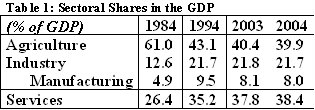
Let us first ponder briefly over the present state of Nepal’s economy to understand the full meaning and implications of the budget. In 2004, Nepal’s population was around 25.2 millions, of which around 85% resided in the rural areas, suggesting their dependence on agriculture. The per capita income in 2004 was US$260, which is far below the average per capita income in low-income countries ($510) and in South Asia ($590). Particularly revealing is the structure of the economy according to the sectoral shares in the Gross Domestic Product (GDP):


Source: World Bank (2006), “Nepal at a glance”.


Source: World Bank (2006), “Nepal at a glance”.

As Table 1 shows, there has been a continuous decline in the share of agriculture in the GDP. The industrial sector’s share definitely did expand from 1984 to 1994. However, since 1994, at least, its share has been stagnant, while the manufacturing industries’ share is on the decline. It seems that the non-manufacturing industries and services sector have been compensating the decreasing share of agriculture in the GDP, but as evident from Table 2, none of these sectors have been promising in their self-expansion. In fact, the average annual growth rate in the industrial sector has drastically reduced in the period 1994-2004.

Even though the increasing share of non-agricultural sectors in the GDP is a universal trend, in Nepal, like in other South Asian countries, this has not been accompanied by a proportionate shift in the labour force from agriculture to the other two sectors. According to the estimates of the Food and Agriculture Organisation (FAO) of the UN, the percentage of agricultural labour force in total labour force in Nepal remains almost unchanged since 1979 – it was 94% during 1979-91, while for several years now it is stuck to 93%.

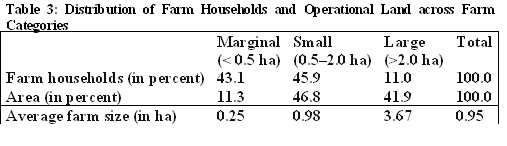
All these indicate a huge rural/urban divide – an immense sea of rural poverty encircling a few islands of urban affluence. Taking into consideration the inequitable distribution of land holdings (Table 3) and semi-feudal forms of exploitation in an increasingly monetised rural setting, one can only imagine the state of the poor peasantry, semi-proletarians and the landless.


Source: Devendra Chhetry, “Understanding Rural Poverty in Nepal”, in Christopher Edmonds and Sara Medina (ed.), Defining an Agenda for Poverty Reduction (Vol. 1), Asian Development Bank (Manila, 2002). The figures are drawn from National Sample Census of Agriculture Nepal, 1991/92, Analysis of Results, Central Bureau of Statistics (Kathmandu, 1994). Ha= hectares

Even the World Bank admits (Economic Update 2002) that poverty could not be reduced in Nepal since “growth has been concentrated primarily in the urban areas and particularly in Kathmandu valley, largely excluding 86 percent of the population who live in rural areas, where per capita agricultural production has grown minimally and the overall level of economic activity has been sluggish”.

The disproportion between the share of the non-agricultural sectors in the GDP and the amount of employment generated in these sectors indicates that whatever growth we find in these sectors are either in capital-intensive industries controlled by foreign capital collaborating with a handful of Nepali mercantilist corporates, or in the informal economy where the circulatory migrants from rural Nepal toil with no job security and very low wages.

Moreover, impoverishment in rural (also in urban areas) has resulted in sluggishness in domestic demand for industrial goods, which has further eroded the possibility of an increased industrial growth in Nepal. This fact coupled with the backlash of liberalisation (export-oriented production) has made the industries in Nepal increasingly dependent on external markets – depleting internal resources to feed external demand. This further perpetuates the need for capital-intensity and an import of technologies to compete globally, thus making the dependency total, and the goal of employment-generating industrialisation a chimera.

In this situation, it is expected from any post-April 2006 government, which draws its power from popular radicalism that has enwrapped Nepal today, that it will represent the aspirations of the masses and address their basic problems – rural poverty, inequitable land distribution, unbridled commercialisation, profit-motivated industrialisation, lack of economic activities induced by popular needs, etc. The figures in Tables 1-2 testify the reality of neoliberalism as practiced in the Nepali setting.

It was in 1984 when the Nepali State accepted the IMF/WB liberalisation package, and never deterred from the neoliberal course despite the so-called 1990 democratic achievements. The Maoist revolt was a challenge to this path, and it was obviously expected that a post-April 2006 government would rethink the model of economic management that the Nepali State has been pursuing till now. But this was not to be, at least if we go by Mahat’s budgetary exercise.

In the introductory paragraphs of the speech, the Finance Minister talks about the need to “form a common vision of socio-economic development through dialogue among political and social forces active in the country” and asserts that “the dialogue between Government of Nepal and Nepal Communist Party (Maoist)” is most certainly a formidable step in this regard. In his zeal to make this point, he goes to the extent of visualising the fantastic possibility “to end all forms of conflict prevalent in the country”. However, the revolutionaries would never claim to negotiate for such a utopia, not with the democrats who are still uncomfortable with the possibility of sweeping away the most blatant point of contention: the burden of royalty.

But the Finance Minister himself betrays his and his colleagues’ conscious design of which all this wordiness is an important characteristic. This blueprint becomes clear in the following sentences: “The national debate today has surely centered on determining the future political system and process to achieve sustainable peace. This does not mean that the issue of economic development should be pushed to back burner. Democracy cannot flourish on the foundation of a weak economy. The economy is in crisis for over half a decade. It is looking for a new momentum.”

This statement contains all the essential ideological elements that characterise global neoliberalism, the weaning diet of the leadership of developing countries. First and foremost, the will to separate the economic from the political, that is, to ensure the complete depoliticisation of the former, is expressed in clear terms. To present that the “national debate” is only about politics is not only a gross misrepresentation of Nepali politics, but more importantly, it is a ploy to ensure that “the issue of economic development” does not become part of this “national debate”. Of course, economic development should not “be pushed to back burner”; rather with Mahat it must compete with political development more vigorously. But what will be the course of this economic development? The immediate answer that we seem to get is: No politics, please.

Economic development, for Mahat and his ilk, is unilinear along a neoliberal trajectory, or whichever one set by the global and regional masters. And the fundamental duty of any “national” leadership under the global neoliberal regime today is to police this unilinearity so that politics does not contaminate economics. This is the redefinition of the cherished “rule of law” today. If all conflicts in the politics of economic development are systematically ruled out, then, of course, the fantastic vision that Mahat has about ending “all forms of conflict prevalent in the country” will become real and there will be everlasting “sustainable peace”.

Consider provisions of the budget. As usual, there is an overabundance of promises, allocations and words as proof of the government’s commitment to the people in Mahat’s budgetary speech. All these are duly balanced by its fidelity to “investment-friendly atmosphere” for agro-businesses and “commercial farming”, “to encourage private investment” in every sector and, of course, faithfulness to its donors.

In the name of the pro-poor programme, the government will formulate an agriculture business promotion policy for “enhancing private sector participation in agriculture, market infrastructure development and agro-industries”. “As per the concept of public-private partnership, a policy will be adopted to encourage private sector in the expansion of technology and seeds under agriculture extension programme”. Then, there will be interest subsidy in tea farming, floriculture and milk chilling centres. The “One-Village-One-Product” programme “under public-private partnership will be initiated to increase production of commodities, which have adequate export potentials in foreign countries”. “Assistance will be provided for improved seeds, fertilisers and technology to jute producing farmers”. And the clincher – “concessional credit facility will be provided to the landless people for the purchase of land”.

Thus, the government will alleviate rural poverty, to ensure food security and implement land reforms. Market is the magic wand. What if there is no food, no land? Market will resolve everything.

Is it too demanding to realise the implications of these budgetary provisions? Where do they locate rural Nepal and its toiling masses in the global agro-industrial complex by excessive commodification of their lives? They are milled into “a new division of labour in agriculture”, where “the centre has specialised in capital-intensive production of grains and dumped them in the periphery, while peripheral states have battled for saturated markets for traditional exports, or have discovered ‘comparative advantage’ in various ‘non-traditional’ goods and land uses, namely ‘exotic’ fruits, cut flowers and vegetable, as well as ostrich husbandry and ‘wildlife’ management (ecotourism). In turn, all of these have been biased towards large-scale landholding, controlled by corporate capital, and destined for luxury peripheral and metropolitan consumption.”(Sam Moyo and Paris Yeros (ed), Reclaiming the Land: The Resurgence of Rural Movements in Africa, Asia and Latin America, Zed Books, London, 2005, p.18)

In the industrial sector too, Mahat has all his recipes ready for resolving industrial difficulties. He dips straight into undergrad textbooks on Economics to derive his recipes. For private sector there is a development and rehabilitation programme. “An Industrial Rehabilitation Fund will be established with the participation of the government, central bank, financial institutions and interested industrialists and entrepreneurs in order to rehabilitate the conflict-affected sick industries”. There will be a new labour law too, amenable to the needs of new industries, special economic zones and export processing zones.

This means the institutionalisation of the already informal labour market with no security for the workers. And, if these workers organise themselves and agitate, they will be accused of serving “the narrow interests of a small group”, as World Bank Country Director Ken Ohashi (“Seizing the open moment”, Nepali Times, 7-13 July 2006, p. 4) puts in an article published on the eve of the budget submission, since “peace, social and political inclusiveness, and economic growth” can be attained only if energy is directed “away from self interests to a collective purpose”. Strikingly, it seems either Mahat has literally lifted phrases from this article, or else the budget was drafted in the WB’s office. He too pleads for “a balance between the collective wishes and collective means”.

It is not very hard to identify the nature of this collectivity. In a class-divided society, the hegemonic collectivity is that of the ruling class, and the State is a definite instrument to serve its purpose. Hence, to meet this ‘collective purpose’, the Koirala government has everything to offer to their rich protégé-protectors, even a complete tax holiday for the newly-established industries in 22 remote districts for ten years. But for the same ‘collective purpose’, the workers and poor peasantry must understand that all “goals cannot possibly be met by this budget” (Ohashi) and that “the state does not have adequate resources to immediately fulfill unlimited needs of the people” (Mahat).

All this should definitely encourage foreign investors and their local agencies, but Mahat draws something more from the free market of ideas. This time around he desires to satiate the swadeshi and patriotic spirit. For this, he has a Swadeshi Jutta (national shoe) formula: “In order to promote the domestic production, the existing legal provision to purchase the domestic products by the government agencies even in cases where such goods are costlier by 10 percent than the foreign products will be implemented strictly. It is believed that the use of indigenous shoes and clothes by agencies like Nepal Army, Armed Police and Nepal Police under this program will encourage the domestic industries to a great extent.”

While all these development and rehabilitation programmes will be implemented to boost the private sector, the classical medicine is in store for “public enterprises”: Liquidation. It is not very difficult for even a newspaper-reading or TV-watching layperson to decipher the neoliberal ideological character of these budgetary measures, squeezed between the wordy paragraphs on “inclusive society and economy” and poverty-alleviation rhetoric.

The Nepali leadership, which has been historically compliant to the needs of the global masters, literally as their security guards, has never found neoliberal lessons very difficult to learn. Like in other countries, Nepal’s balance of payments crisis in 1982-85 gave the country’s leadership the classical rationale to ride the IMF/WB led neoliberal wave. Thus, they negotiated “a standby credit arrangement with the IMF. Accordingly, Nepal implemented an economic stabilisation programme in 1984/85. This was followed by the Structural Adjustment programme of IMF and the World Bank in 1986/87”. (“Understanding Reforms in Nepal”, Institute for Policy Research and Development, 2005). The political economy of Nepal, which had been a guinea pig in the hands of international finance capital for testing strategic panaceas, was once again brought to the operating table for yet another surgery. When the side effects started showing up in the shape of the democratic uprising, a patchwork was arranged in 1990.

The 1990 political arrangement broadened the experience and reach of this leadership in renting out the local natural and human resources for the benefits of the global machinery of capitalism. The localised elements of the ruling class that were nurtured by the aid regime and extensive commercialisation of the economy were brought into the fold of the State power. The limited democratic “political competition” established in 1990 provided a mechanism to attune the composition of the State to the changes in the ruling class composition. It was visualised that formal democracy would reduce all inter- and intra-class conflicts to competition between lobbies and dissipate any fundamental challenge to the economic structure, while the process of neoliberalism intensified.

The standard remedy in neo-classical bourgeois economics for any crisis due to marketisation is more marketisation with peripheral superstructural arrangements. Thus in Nepal too, “Economic liberalisation and privatisation policies were intensified from 1992 onward with the implementation of the Enhanced Structural Adjustment Facility (ESAF) programme. Given the open border and special trade relations with the southern neighbour, the speed and direction of reforms were also affected by the reform drive pursued in India. Since then reforms have either been continued or deepened in the modern economic sphere of trade, industry, finance, exchange rate, and monetary and fiscal policies. As a result, Nepal now stands as one of the most liberalised and open economies in the South Asian region” (ibid). A least developed country has been blessed by the most liberalised economy in the region; such is the endowment of neoliberalism.

This reckless and continuous compliance to the needs of global capitalist accumulation and its political regime nurtured radicalism in the consciousness of the Nepali downtrodden. Before 1984, this was spontaneous and sporadic. Under neoliberalism, it became general and organised, reaching its zenith in the form of Nepali Maoism. In 1990, it was thought that electoral games and formal democracy will keep this radicalism at bay and the Nepali downtrodden playful. On the contrary, it helped in rooting out the local elements of the Nepali ruling classes and neo-rich, revelling in their newfound proximity to Kathmandu and royal institutions. Thus the prism of caste, ethnic and local consciousness that inverted the reality and united the downtrodden with their oppressors was shattered.

As wealth and growth concentrated in few urban areas in a few hands close to power, close to local political linkages of international investment and finance, the rural-urban divide sharpened. There was an unprecedented intensification in vertical and horizontal inequalities leading to the unity of class war and autonomous identity movements under People’s War. The rural poor and migrant workers united with all the other marginalised forces to challenge the basic structure.

The alternative that emerged in the Maoist practice sought for “land to the tillers”, endogenous development geared towards the popular need and political institutions best suited to facilitate such development. The energy that this practice unleashed rocked the fragile 1990 arrangement despite the consistent neoliberal pursuit by all the governments that were formed thereafter. However, there could never be a clear unity within the political elite due to increased competition for commissions in administering the aid regime and proximity to global and regional players. At the wake of the parallel governments under the Maoists, this competition was further accentuated as the formal structure’s reach of influence narrowed spatially. This overcrowding wrecked the political arrangement that was inaugurated with so much fanfare with the blessings of the global powers. This led to the royal regression, while the democrats for the first time had the time to listen to the radical voices outside the parliament, and thereby allied with the Maoists.

The Koirala government formed after the reinstatement of Parliament in Nepal was, however, quick to realise the significance of the depoliticisation of the economic in order to sustain the Nepali State’s role as the local agency for global and regional capital. Negotiations with the Maoists are making the international forces, especially India and the US, increasingly nervous. The rushed visit to India and Mahat’s presentation before Indian capitalists was to assure Indian and other ‘donors’ that they have not deviated from the neoliberal path. The act of presenting the budget without consulting the Maoists is part of this design. What else could be the reason to overload any future regime with so many prior obligations, but to reassure the supremacy of global capitalist interests after the post-April fluidity?

This brings us to another neoliberal ideological element, which is subtly evident in Mahat’s statement quoted in the first section, where he seeks to pose democracy as the end not the means to attain economic development. This is intrinsically part of the same project of depoliticisation of the economic. If democracy is the end, you do not need to practise democracy in deciding and pursuing the course of economic development. On the contrary, the elite push for liberalisation will itself engender democracy. So wait and suffer!

Of course, this is the ideal of bourgeois democracy: a system of elite decision and public ratification, as Chomsky defines it. But did Nepali people really come on the streets and suffer bullets for this brand of democracy? Royal regression can go, but the Nepali leadership continues to serve the neo-liberal counter-revolution, that leaves the lives of the labouring majority at the mercy of the ups and downs of the globalising market.

Under the neoliberal regime, capital effectively dodges every regulation and controls politics by threatening to fly away in the wake of any uncomfortable circumstances, while the political elite rationalises its anti-labour policies in the name of making the environment investment-friendly. In the name of removing market imperfections caused by “extra-economic” factors, a new authoritarianism is perpetuated, which Venezuelan Vice-President Jose Vicente Rangel calls, “economic authoritarianism”. This renders the democratic control over human and natural resources impossible, while it instrumentalises the state in favour of the hegemonic market interests. As Rangel further says in his address to the 13th Meeting of the Latin American Economic System (SELA) Council in 2003, “Authoritarianism that is dressed in democratic forms is difficult to fight. The neoliberal model and economic decisions, which sustain and reproduce it, need a democratic façade to feign legitimacy.” Hence, the fetish of elections, as “the beginning and the end of democracy”, while economic authoritarianism continues.

(This is a slightly modified version of the article originally published in Combat Law, September-October, 2006)

Ambush Journalism


Pratyush Chandra & Bela Malik
International Nepal Solidarity Network

A spate of print media reports, mainly in the Times of India, but also elsewhere (kantipuronline.com), point to tendencies in the media that have their provenance in geopolitical games. All the reports taken up here have the Maoists as their point of reference. Many of the articles are just sniper-style attacks, absolutely lacking in substance or authenticity. They are remarkable also for the uniformity of screaming sensationalist headlines.

The Wadhwa affair

On 1 August 2006, Times of India (ToI) carried a series of reports about the plight of Indians in Nepal. The shocking headlines are modified for the Delhi, Mumbai and online editions of the newspaper:

1. Mumbai Edition (page 1) “Maoists force Indians to leave Nepal” (print edition)
2. Delhi Edition (page 1) “Maoists are hounding out Indians: A New Threat emerges in Nepal”
3. Maoists: “We shoot those who don’t listen to us” (print edition)
4. “We were very scared
5. “Trouble for Nepalis here?”

All these reports have been authored or co-authored by Indrani Bagchi, a reporter who talked about India’s “nasty neighbourhood” not very long ago (ToI, August 21, 2005). These reports all bear the stamp of a new breed of journalists who are trying hard to graduate into the growing ranks of jingoist security intellectuals in India, tawdry imitations of the American breed of all-purpose experts, whose essential job is to compete with one another for the patronising approval of the imperialist mafia.

Bagchi has a short “page-13” eyewash about the possible backlash on the Nepalis toiling in India, if the Maoists target Indians (“Trouble for Nepalis here?”). The report is supposed to be based on unnamed sources, who only the writer, from all the journalists in India, has access to. But the tenor of the “report” betrays rabid jingoism, warning the Nepalis in Nepal to “behave” themselves.

It pointedly draws the readers’ attention to the Indian government’s patient tolerance. “Thus far, the Indian government has been remarkably lenient, confining themselves to talking to the Nepalese government quietly on these thorny issues. But if things take an ugly turn, the government in Delhi will have to react, particularly as it affects Indian interests.” So, the interests of sleazy businessmen in the gambling trade are to be identified as “Indian interests”. Bagchi also introduces the Chinese factor, obviously, to exploit the Indian elite’s perpetual fear of China: “If Indian trade and business is threatened, said some business interests in Nepal, it is not inconceivable that Chinese could be used to fill the gap”.

As if this weren’t enough, in “Nepal Maoists are hounding out Indians”, Bagchi writes:

“Indians are being hounded out of Nepal by the Maoists. Death threats, 24-hour deadlines for leaving with bag and baggage have been received by Indian hospitality sector employees and businessmen, creating a sense of deep fear in the community.

“The frightened community leaders have gone to the Indian embassy in Kathmandu for protection. Although the foreign office here confirmed that chauvinistic Maoists are driving out Indians, it has surprisingly not taken a public position on the issue — apparently, it will when the threat triggers a deluge.”

The Ministry of External Affairs (MEA, India)’s spokesperson clarified on the same day (August 1),
“I have seen the press report in question. I can only confirm to you that we have received a specific complaint in our Embassy by Mr. Rakesh Wadhwa who is the Executive Director of Nepal Recreation Centre Pvt. Limited about the threat received from the Maoist affiliated, All Nepal Hotel and Restaurant Workers Union. On receipt of this complaint, we have taken up the matter strongly with the Government of Nepal through our Embassy.”

The MEA official statement went to add, “It is not correct to say, as I have heard, that community leaders are rushing to the Embassy etc. That is factually incorrect.” Aside from the obvious fact that Wadhwa is clearly seeking to utilise diplomatic pressure to resolve labour dispute, possibly in his recreation centre (casino?), is the question of reporting.

The “reporters” did not check with the Indian Embassy, an obvious port of call. Neither did they check the facts with the concerned trade union and workers involved in the dispute to get a balanced report.

Salik Ram Jamarkattel, President of the All Nepal Trade Union Federation (Revolutionary) clarified on a phone interview to Nepal 1 (a TV on Nepal channel run by Nalini Singh) that they have not threatened anybody (Indian business class or otherwise) and that they have no such policy/programme of getting Indian citizens out of Nepal. Further, regarding the threat to the Indian workers about which the reports talk, Jamarkatel said that there was some debate between the management and the workers regarding two Indian employees, and eventually 586 workers voted against them and 27 in favour of them. Then they were removed through a democratic process.

As in May this year, when industrial disputes in Birgunj were projected as extortions, once again the above-mentioned sensational reports about industrial matters dub the Maoist’s labour activism as threats to Indian interests. This time too, the Ministry of External Affairs statement said that there “…have been incidents of extortion against businessmen and industrial units including Indian joint ventures in Hetauda-Birgunj area…” and went on to clarify, “I would not like to characterize these as a pattern and to give (say) anything that leads to an alarmist situation.”

Obviously, first page news items with such titles in a national newspaper proud of its “pulp” status are bound to be sensational, and we all know why and when such news is placed in such manner. These items follow the pattern of analyses that informed the US-Indian diplomatic exercises ever since the Maoists-Seven Party Alliance (SPA) understanding erupted into an unanticipated popular revolution in April this year. The motivation has been to force a convergence in the mentality of the paranoiac “national” middle classes in India and Nepal, reiterating the illegitimacy of the Maoist by tainting them with new “sins” both against Indians and against their property. This move is also designed to give a handle to opportunists in the SPA’s rank-and-file to repudiate the Maoists on the pretext of both Maoism’s incorrigibly violent nature as well as the need to desist from displeasing India. They only served to sensationalise the issue and exploit the rising neo-liberal jingoist paranoia in India and to keep the Maoists on the back foot always having to issue clarifications.

Axis of evil: a case of two news reports

On 26 July 2006, an article “Nepal Maoists aiding the underworld?” filed by Pradeep Thakur in Delhi appeared in the Times of India.

It claimed to be based on information “leaked” from the Directorate of Revenue Intelligence (DRI), India. The said DRI report finds threats from every corner of the “nasty neighbourhood”. Apart from Nepal, the report mentions Indo-Bangladesh and Indo-Myanmar borders used for smuggling arms and ammunition into the country. The 1,800-km Indo-Nepal border which touches Uttaranchal, UP, Bihar, West Bengal and Sikkim is at present the most active and vulnerable sector from the smuggling point of view, the report adds. The Indo-Bangladesh border, stretching over 2,650 km along Assam, Tripura, Meghalaya and West Bengal, is an open border and illegal cross-border movement of people through it is extensive. Another sensitive sector used for smuggling arms and ammunition is India’s 2,896-km-long border with Pakistan across the states of J&K, Punjab, Rajasthan and Gujarat. “Smuggling by residents of border villages is suspected despite heavy patrolling by the armed forces,” the report notes.

There is again no corroboration.

Then a news report appeared in Kantipuronline on 2 August (server time 9:12:26) by a “Special Correspondent” that claimed that (Nepali) Maoists have links with (Indian) Naxalites. It said that the Indian Minister of State for Home Prakash Jaiswal gave a written reply to the lower house of parliament, Lok Sabha, dated 1 August that Indian Naxals are “reported” to “have ideological and logistic links with Nepalese Maoists. The Naxals, in turn, have links with Islamic organisations like Lashkar-e-Taiba, he is quoted to have added.” The links between Indian and Nepali Maoists are news, while the Naxals are assumed to have links with Lashkar-e-Taiba. Thus, by transitivity Nepali Maoists are part of the “terrorist network” and ultimately part of the ISI and Al Qaeda operation to destabilise the “civilised” societies. The report concludes with

“Over 200 districts in 14 Indian states are grappling with the menace of Naxal activities such as bombings of railway and other infrastructures and attacks on security patrols. India has adopted a two-pronged approach –counter insurgency and economic development — to deal with the crisis described as number one threat to national security.”

With such predictably Indian intelligence-speak, it appears that indeed one department of the great Indian State went out on a limb and shot off its mouth.

But that was not the case here. The Government of India’s official Press Information Bureau, had put up a press release on 1 August 2006, 4:27 p.m. IST, began clearly:

“Indian naxal outfits are reported to have ideological and logistic links with Nepalese Maoists. There are no reports to suggest links between Indian naxalites and Lashkar-e-Taiba.”

And concluded:

“This information was given by the Minister of State for Home, Shri Sriprakash Jaiswal in written reply to a question in the Lok Sabha today.”

How does one then explain the Kantipuronline report? Is it a simply a grave mistake, or is it mischief, or, worse, malafide?

Indian Fascists find Bush their "National"


A Comment

The chamaleon character of Indian fascism does not allow us to rely on its views except on its consistent barbaric Hinduism. However, it is sometimes worthwhile going through the weekly magazine, ORGANISER, of the Rashtriya Swayamsevak Sangh (RSS), India’s mother fascist organization, to understand how and why it reacts to certain issues in certain manners. One such interesting piece is the edit on the US-India nuclear deal published in this weekly dated July 09, 2006.

When one starts reading this edit, it seems to be a standard write up from an organisation in opposition jealously opposing the achievements of the party in power. It talks about anonymous skeptics saying, “that there are many hidden clauses perhaps in the deal”, and finds ruling government’s unilateralism “as most worrying”. It goes to the extent of accusing the government of destroying “the hard work of Indian scientists with a deal that permits outside interference that emasculates its nuclear options in military and civil sectors. This deal has made India perpetually dependent on the US on nuclear energy. The deal has put restrictions on India’s capacity to have a minimum nuclear deterrent capability.” All these are standard salvos targeted against the deal by both left and right.

Definitely, unilateralism as such is not a problem for the RSS. Unilateralism was far graver when the RSS’ political wing – the BJP led government tested nuclear bombs at Pokhran in 1998, and made the parties then in opposition, which included the Congress that leads the ruling coalition presently, desperate for credits for at least the researches that made India nuclear-capable. Undeniably, what is happening between India and the US today, including the deal, has a strong foundation in the past, especially the Vajpayee Government. Hence, it is natural for the BJP and RSS to accuse the UPA government for attempting to take all the credits for the deal. So the edit asserts, “[T]he NDA government under Atal Behari Vajpayee proudly declared India a nuclear power in 1998. That is a process which has culminated in the present deal.”

The edit makes it a point to differentiate the RSS-BJP’s criticism from the Communist opposition to the deal. And in this zeal it clarifies that it does not have anything to say against the deal.

This feeble attack on the deal is surpassed by the tremendous appreciation expressed for it after the two introductory paragraphs. Whatever lacuna it finds with regard to minimum deterrence etc “can be taken care of if the Indian government insists, when the US legislation that seeks to exempt India from the 1954 Atomic Energy Act is taken up in the full floor of the House of Representatives this month end”. On the whole, the “deal has presented India with a new opportunity. The other option was to continue with its nuclear isolation, and perpetually be in competition with Pakistan”.

Typically, the edit finds pride in Bush supposedly taking the deal “as his most important foreign policy success”. And “skeptical Democrats …don’t want to be seen as voting against India”, that is why they are supporting the deal. What a revelation or pity! The American politicians nowadays go in such deals not for their strategic significance, but more because they are afraid of being seen opposing it. Then, definitely, “it only proves India’s growing clout as a world power. This should make India proud.” And all those who are opposing the deal must be part of the “pro-Pakistan lobby” or “inspired by the Islamabad-Beijing nexus”

But most revealing is the final ecstatic couplet – “American companies and the NRIs [Non-Resident Indians] lobbied hard with hostile Congressmen to make the deal possible. The bottom line is enlightened national interest.” What does one make out of this separately paragraphed final in the cacophonous arrangements of arguments in the edit? When the domestic opposition is “pro-Pakistani”, American companies have “enlightened national [Indian=Aryan] interest” in mind! Certainly, the CEOs of American companies must have found that they are from some lost tribe of Aryans; only then they could find “enlightened national interests” in making the deal possible.

The Historic Agreement in Nepal and the Immediate Challenge


Pratyush Chandra

Nepal continues to create history. Within a few weeks from now there will be an interim government with the Maoists’ participation to pre-empt any further betrayal to the basic immediate demands of the Nepali people for a constituent assembly and for exercising their right to decide the fate of the moribund monarchy and its institutional shields. Definitely, the political developments in Nepal after the April mobilization have approximated to what the parliamentary parties agreed upon in their understanding with the Maoists.

But as Reuters put (June 19), “The pace of change has been as breathtaking as the Himalayan scenery…This week Nepalis are asking themselves if it is all too good to be true”. Given the tremendous hostility that the global and regional hegemonies display, to the degree that they still label the Maoists terrorists, and opportunism of the parliamentary leadership, which was till recently struggling within itself to gain royal proximity and to become trusted agency for the external powers’ interests, has the situation really arrived for the revolutionaries to put their trust in the vestiges of the ancien régime? However, it is the level of popular vigilance and radicalism that have affected even the grassroots of the parliamentary parties, complementing the revolutionaries’ faith in the Nepali downtrodden, that makes them confident to take such unprecedented risk.

Popular Vigilance

After the restoration of their parliamentary privileges, the Nepali democrats have re-baptized the established institutions with new names and cut the wings of the royalty. Of course, all these do help in building the atmosphere amenable for taking the first step towards the resolution of the “Nepali crisis”, which is the formation of the Constituent Assembly as the body that will have the capacity to establish the basic rules, norms and ‘institutions’ necessary for, what Chairman Prachanda calls, “political competition”.

The local elites and their global sponsors had thought that the April radicalism on the urban streets of Nepal would die down after the restoration of the old parliament. But they were time and again rebuffed when the vigilant Nepali people took to the streets to check and decry every compromise and regression in the air. The Maoist rejection of the April compromise did not allow this radicalism to sleep. Deuba, Koirala and others known for their moderate royalism and elitist anti-Maoist stance in the past are constantly watched, and any statement and action from them that reek of the design to give space to decadent institutions and their representatives are duly criticized by spontaneous showdowns on the streets.

Not a single day has passed since the April agitation without meetings and gatherings where diverse sections of the Nepali people discussed the future regime and contents of the future constitution. Various sections of the marginalized majority of the Nepali society have been coming and demonstrating in Kathmandu for ensuring their representation and the inclusion of their demands and rights in the future political system. This remarkable spirit of self-determination rejects any compromise that is short of what the Nepali people have promised themselves. It is this spirit that destroyed the “Royal Regression” and continues to eliminate any possibility of the Parliamentary Regression, of making the old parliament an end in itself. And the June 16 agreement between the Maoists and the government is the definite result of this Popular defiance.

The Elitist Game Plan

But the Nepali crisis was never just related to the accommodation of the Maoists and establishing institutions for such accommodation. It is most importantly linked with the political economic empowerment of the Nepali downtrodden. Until and unless the radical needs of the Nepali laboring classes – workers and peasantry – that have found expression in the Maoist movement are not dealt with, the crisis is not going to be resolved. And here lies the tension that is clearly visible in the political developments in Nepal.

Just before the recent June agreement the Prime Minister arrived from a very “successful” trip to India. And as expected the parameter of this success in Nepal is how much monetary aid the leader is able to raise. And India as the new recruit in the Imperial Project struggling to obtain a definite share in the continuous re-division of the world has recently been too ready to fulfill such requests. Hence, the success was unprecedented.

In return, Finance Minister Ram S. Mahat sold the newfound peace and sovereignty, for which the Nepali people have been fighting, to “captains of Indian industry” at a function organized by the Confederation of Indian Industries (CII): “This is a new era after the establishment of the people’s sovereignty in Nepal. Peace has now been restored after the end of a decade long conflict that had held back the country’s socio-economic advancement… It is in this context that our attention is now focused on increased investment, public and private, domestic and foreign.” An Indian newspaper, The Hindu (June 10) reports, “Referring to the fact that India faced higher labour and operating costs of production, Mr. Mahat said cheap and abundant labour, educated technical workforce and other less expensive inputs provide investors incentives for producing intermediate products for Indian companies in Nepal.”

This economic hyper-activism just before the installation of the interim government is meant to pre-empt any future attempt to radically transform the economic path that the Nepali state and ruling classes have pursued for the last five decades – of economic clientilism and dependency. It seeks to depoliticize the arena of economic policy by overburdening the future political regime with all sorts of economic arrangements that would maintain status quo in the basic political economic structure. The Koirala government has effectively utilized its time to ensure that the basic economic framework is in place which would be difficult to change drastically under any future political transformation. Only after this did it become comfortable with the idea of the dissolution of the parliament and the formation of the interim government with the Maoists.

All this is very aptly complemented by the recent attempt to reduce the “Nepali crisis” and the Democracy Movement to the question of the position of the Nepali royalty and the accommodation of the Maoist “rebels” in the mainstream political system. Clearly, the most formidable way to dilute any radical resolution of this crisis is to simply ignore what it is all about. The recent political discourse of “People’s Movement” and “People’s Power” which sought to de-“classify” the movement, ignore its class constituents and their diverse aspirations, homogenize it under an amorphous category of the “people” was the first attempt in this regard. Moderate royalists, corporate media (foreign and national) and foreign funded NGOs and “civil society” groups led this santization campaign. Foreign interests too found this discourse worthwhile, as it minimizes the damage, by eliminating the clarity of the demands. It effectively evades the Maoist element and puts the Nepali movement in line with the “color revolutions” of Eastern Europe, coloring the corrupt elements of the old regime to provide a “stable”, yet “experienced”, leadership to the new.

Obviously on every front, the Nepali ruling classes are trying hard to de-link the question of democracy from the issue of building the essential institutions for fulfilling the popular needs, giving “land to the tillers”, political and economic self-determination of the diverse downtrodden sections of the Nepali society. They seek to sweep aside the whole question of endogenous development – of accounting the endogenous resources, putting them under democratic control for fulfilling the popular needs.

The Revolutionary Resolution

On the other hand, the popular classes of Nepal – Nepali workers and peasantry – were for the first time mobilized independently during the People’s War, undiluted by the opportunism of the disgruntled sections of the landlord-merchant-moneylending classes and the clientele petty bourgeoisie nurtured as local “nodes” for implementing the social agenda of imperialism. It was in the Maoist movement that for the first time the Nepali landless and near landless, involved in circular national and international migration to meet their ends, found an organized political expression. The rural roots of the Nepali laboring classes even in the secondary and tertiary sectors allowed the popular democratic aspirations unleashed by the Maoist movement to integrate virtually the whole Nepali society behind the New Democracy Movement, despite the claims by other political forces to have achieved democracy in 1990.

Obviously, Prachanda’s concept of “political competition”, which the Maoists in Nepal have developed in one or the other way right from the time they put forward their 40-point demand in 1996, has to be interpreted in this background. They seek an open competition between the “democracy from above” that the 1990 arrangement established and the aspirations for the “democracy from below” that they have inculcated in the daily lives and struggles of the Nepali downtrodden. In standard terms, at the level of economic policy, it is a competition between the growth-oriented and need-oriented frameworks. With the June 16 agreement, the possibility of such competition as the new level of class struggle has become almost certain. But it will be interesting to see how the revolutionaries in the interim government, when established, are able to undo what the Nepali ruling classes have already achieved to make this competition inherently lopsided in their own favor by imposing the basic framework for pre-empting any conclusive assault from below.

(Modified version of the article written for ML International Newsletter (July-August))