Some random and provisional thoughts on Marxian conceptions of production


Production as in capitalist production is, pace Marx, always immaterial. That value, as the realisation of production, is, in Marx, objective and thus immaterial proves that. Materiality would then reside only in the singularity/singularisation of destructive creation, as opposed to and in subtraction from creative destruction that is condemned to be productive. Hence, production, following the Marx of Althusser, is an effect of its own displacement and excess, and thus a symptom of its own negation, or better, absencing. Not for nothing does Marx see the recomposition of social relations of production — or the change/increase in the organic composition of capital — in terms of the liberation of developed productive forces from social relations of production that can no longer contain them. Therefore, the so-called productive forces, when seen in the longee-duree of their action, reveal themselves for what they are — active forces of transformative destruction in their reactive rendition. It’s only by grasping productive forces in this fashion can one think practice in its anti-historicist immanence in and against capital, which is the realisation of the abstraction of historicist thought. In such circumstances, radical transformation — transformation as novelty as opposed to transformation as mere change — can neither be the Hegelian circle of movement that seeks to neurotically conceal the brokenness of its own circularity, nor, for that matter, can it be the circle of Nietzschean/poststructuralist repetition, which is merely the obverse of Hegelianism because it openly embraces the brokenness of the circle and makes the broken circle into a virtue. [The circularity of Hegel’s dialectic is broken, and thus neurotic, because his dialectic is about the negation of the concretely realised absolute as already always being the historically concrete realisation of the absolute. This is what Hegel’s conception of employed negativity — negativity that is always already productively employed — basically amounts to.] In such circumstances, radical transformation can only be the ceaseless indivisibility of Spinozist extension — the conception of conatus at work in Spinoza’s thinking — that amounts to the suspension of both the Hegelian circle and its poststructuralist (‘repetitive’) obverse.

However, some astute Hegelian Marxists (Adorno. Moishe Postone and Zizek particularly come to mind) — to give them their radical due — think the schizz in Hegelian thinking in its extreme by mobilising the brokenness of Hegelian circularity against precisely the Hegelian circle itself in order to emancipate the former from the latter. For instance, Adorno’s conception of the dialectic in terms of its negativity shows us the way forward on how to think negativity (of the dialectic) in and as its own presentation, and thus as affirmative excess of the dialectic. His conception of “negative dialectics” — and constellation — demonstrates how one can think the dialectic as a mode of presentation of its own negativity. As a result, it is aligned, as it were, with a way of thinking the dialectic that sees and demonstrates it as the mode of presentation of the determinate excess and voiding of precisely the dialectic itself as an abstraction. Such articulation, or thinking, of the dialectic in terms of its excessive and antagonistic asymmetry is what renders it materialist. That is arguably why Pierre Macherey, a faithfully committed Althusserian-Marxist, reads Adorno’s concept of “negative dialectics” affirmatively as an elaboration of the Spinozist conception of conatus — the ceaseless indivisibility of extension –, albeit one that is articulated in and through the discursive register of Hegelian-Marxism. Which is why, one is compelled to ask, how much of Hegel there really is in such ‘Hegelian’ thinking? Is this not a way that even as it indisputably passes through Hegel takes us to his antipodes? And is this way, in being more Hegelian than Hegel, not already something entirely different? After all, this Adornoesque move to mobilise the brokenness of Hegelian circularity against precisely the Hegelian circle itself in order to emancipate the former from the latter transforms the former into a quality that is radically distinct from that of brokenness-of-the-circle. This new quality is nothing but Spinoza’s conatus as the ceaseless indivisibility of extension — this is also how Marx thought “real history” as the infinity of beginnings in their ceaseless indivisibility. Hence, one feels prompted to ask, together with Macherey, “Hegel or Spinoza”? And answer with him; Spinoza of course; but the Spinoza who comes to us through Hegel and after him

Criticise with weapons even as you wield the weapon of criticism, but don’t mix the two up


That our wielding of the weapon of criticism does not exhaust and preclude the task of criticising with weapons is something Marx says in his A Contribution to the Critique of Hegel’s Philosophy of Right. Needless to say, old chap Karl is right on the mark. But through this formulation of his, Marx is also clearly drawing our attention to the fact that the weapon of criticism and criticism with weapons are two different levels of abstraction of the indivisible real movement of the universalisability of the singular. And in revealing that real movement in and through its two different levels of abstraction, Marx is asking us, his readers, to be attentive to the fact that the indivisibility of the movement – precisely that which renders such movement real — from one level of abstraction to the other does not mean those levels stand conflated. Clearly, one cannot have criticism with weapons at the level that is constitutive of the wielding of the weapon of criticism, even as the movement from the one to the other has to be uninterrupted for it to be real. The respective discursive specificities that operationalise through inscription the different activitities of criticism (which are singularities in and as those different activities) of respectively different discursivised rationalities must be attended to, and maintained in and as their difference, for them to retain their respective singularity. This, needless to say, is not a blow for local ideology formation and discursive rationalities. It’s precisely meant to be a critique of such local ideology formation, albeit obviously in the specificity of the local. The universality of such singularities is, therefore, clearly not about rendering them mutually conflatable, and thus replaceable, which would amount to their de-singularisation.

Such universal-singular is, instead, a movement constituted in and by the unlapsed indivisibility of different moments of criticism (as activity) of respectively different discursive rationalities. These different moments of activities of determinate criticism of different discursive rationalities (read ideologies) are nothing but different moments of performativity of differing away from different identities. This is precisely what many of our comrades — who have fallen into the easy but extremely damaging habit of getting drunk on Marx’s Eleventh Thesis on Feurbach without any sense of how one is supposed to drink this potion — miss when they seek to drag criticism with weapons on to the level of the weapon of criticism. The result: ad-hominem attack on producers of ‘rightwing’ philosophical, scientific and aesthetic works passing itself off as polemical criticism of their works. As a consequence, what the weapon of criticism amounts to, in such circumstances when it stands conflated with criticising with weapons, is throwing out the baby of such theoretical, scientific and aesthetic thinking and production with the bathwater of what the practitioners of such thinking and/or producers of such theoretical, scientific and aesthetic works would have their engagement in such practice yield. So, ad-hominem attacks on producers of such works on account of their politics as thinkers, scientists, artists is extended seamlessly to the politics of the process of theoretical and/or aesthetic production they are engaged in. Hence, the labeling, and rejectionist abuse of such theoretical and artistic work — without any attempt to dialectically separate such work as the instantiation of the process of its production that renders the work text from the work per se in its asserted completeness — has become de rigueur at the level of abstraction constitutive of the weapon of criticism.

Of course, there cannot be any dispute that the task constitutive of the level of abstraction of weapon of criticism is to inquire into how a particular theoretical, scientific, or aesthetic practice (and thus process of production) produces the ontic effects it does to dialectically brush the former against the latter in order to reclaim it in, as and for itself. That is what Althusser’s class struggle in philosophy – or Marx’s wielding of the weapon of criticism at the theoretical level of abstraction it is constitutive of – arguably amounts to. However, that, contrary to the widespread assumption among comrades, is not at all the same as judging such theoretical, scientific, and/or aesthetic practices (or processes of production) by the effects or the ontic violence they produce. In other words, while class struggle in philosophy – or Adorno’s theoretical moment of class struggle – is all about figuring out the particular articulation of theoretical, scientific, and/or aesthetic practice (or process of production) that produces a certain kind of effect or ontic violence, it’s certainly not about rejecting theoretical, scientific, and/or aesthetic works that when grasped as such effects are rendered thinkable as instantiators of those theoretical, scientific, and/or aesthetic practices (or processes of production) in the specificity of their concrete articulations.

In short, while a theorist/philosopher, scientist and/or artist must be criticised with weapons – i.e. shot – for politically practising and purveying the violent and oppressive ontic effects they produce a la their rightwing discourses; those discourses as instantiations of theoretical/philosophical, scientific, and/or aesthetic practices (or processes of production) cannot be labelled rightwing, counter-revolutionary, status-quoist philosophy, science and/or art, and thus junked into the waste-bin of history. Rather, they should, as mentioned above, be engaged in the internality or immanence of their practices, or processes of production. This, in order to grasp their incompleteness, and lapse of rigour, that leads them to produce the violent, reactionary, status-quoist ontic effects they do. For, without such engagement — and their rejection would amount precisely to a refusal to engage with them in their processual internality – theoretical, scientific, and/or aesthetic practice will always remain open to such lapse of rigour, and thus also to the politically pernicious consequences concomitant with such lapse. And being a card-carrying radical is absolutely no guarantee that one will not be the locus of such lapse of rigour in theoretical, scientific and/or aesthetic practices (or processes of production). History has, time and time again, demonstrated that.

Therefore, in order to be a committed militant of revolutionary transformation one must be committed to the actuality of the real movement in its indivisible unfolding from the level of abstraction of the weapon of criticism to the level of abstraction of criticism with weapons, precisely by maintaining their separation from one another as two distinct levels of abstraction. A committed militant would, therefore, be one who makes himself/herself constantly aware that while there are thinkers/philosophers, scientists, and/or artists, who are rightwing, reactionary and/or status-quoist, there is or can be no rightwing theory/philosophy (better philosophising), science, and/or art. For instance, Heidegger and Schmitt, and Pirandello and the Italian Futurists were, as philosopher-individuals and artist-individuals, part of rightwing political projects in their respective countries (Nazism in Germany, Fascism in Italy). But that does not, therefore, make their philosophising/thinking and writing rightwing as such. Rather, what we need to figure is how and why do they have their philosophising and aesthetic production construe themselves as things that seamlessly blends with the reactionary political projects they participate in as philosopher-individuals and artist-individuals. That, presumably, is how one ought to also approach the ‘relationship’ between anti-communist and/or anti-working-class politics of such Indian writers and poets as Nirmal Verma, Ajneya, Ashok Vajpeyi, Kunwar Narayan, Satinath Bhaduri and O.V. Vijayan and their literary production.

Not surprisingly, the absence of such awareness among most militant comrades has ended up making their practice an integral part of the pernicious political logic that they seek to destroy and which is supposedly affirmed only by their opponents, who claim that the theoretical and artistic works they produce exhaust the task of criticism in its entirety by having the level of abstraction of criticism with weapons – or the singularising moment respective to that level of abstraction — disappear into the level of abstraction of the weapon of criticism. [Of course, the militant task even here is to make sense of this lack of awareness in supposedly militant political practices in terms of its material basis.] This, then, amounts to a reinforcement of the constitutive duality of “party of philosophy” and “party of practice” that Marx had criticised in the Introduction to his ‘A Contribution to the Critique of Hegel’s Philosophy of Right’ in order to break with it.

Pragmatism and theoreticism – notwithstanding the appearance of their unmitigated enmity with one another and, in fact, precisely on account of such ‘enmity’ – are essentially the same. They are a constitutive diremption; a disjunctive synthesis. Revolution, or communism, can, in such circumstances, be nothing else but a movement that is real. And a movement will be real only when it’s a movement of breaking with this constitutive duality – this disjunctive synthesis – of pragmatism and theoreticism. Hence, a movement is a real movement only when it constitutes itself through abolishing, resisting and precluding the suture of the level of abstraction of criticism with weapons (the level of practice, wherein practice is the instantiation of its own immanent thought) with the level of abstraction of weapon of criticism (the level of philosophy, wherein thought is its own practice of thinking). As the Swiss-German writer Robert Walser put so acutely: “Everything at its proper time. So, fighting and throwing stones at its, and good intentions at its. It’s important to know every side.”

Why a Marx-Inspired Materialist Historiography cannot Afford to be Historicist and yet it often is


A historically determinist (or hitoricist) historiography takes root when the line shifts from construing the discursive inscription of the immanent forces of history-as-movement as their limit, to making sense of such inscription as teleology. It’s this historical determinism as Marxism — which is arguably the result of reading Marx as if he was Hegel than retroactively read Hegel as Marx (i.e. read Hegel against his grain) — that has been the stageist bane of Marxist political interventions in the so-called non-European societies such as ours. The result: Marxist political discourse in the tropics has become a discourse tailor-made for the legitimation of the ideology of liberalism that can ‘survive’ and ‘succeed’ only by instituting its own materiality, which in this late capitalist conjuncture can, paradoxically, be nothing save neoliberalism.

All politico-ideological pleas of formal equality — all leftist struggles to win various violated or un-enforced juridical rights amounts precisely to that — can today succeed only by reinforcing the exchange-principle, and its basis in value-relations as the qualitative equalisation of qualitative differences through their quantitative differentiation. This would mean the reinforcement of value-relations through reinforcement of exchange-relations in their increasing precarity. And since this increasing precarity of value-relations would, in being reinforced, still be animated by the realisation or expression of value as qualitative equalisation in and through quantitative differentiation, such reinforcement of value-relations in its increasing precarity can only amount to increasing oppressiveness. The neurotic simultaneity of oppression and resistance — which is manifest in our current society and polity as the hegemony of competitive identity politics and lobby politics (both in their secular and so-called pre/non-secular forms) — is evidence of that.

In such circumstances, if one reads the Marx of Capital, in terms of his Afterword to the Second German Edition of Volume I, one will clearly see how Marx reverse-shifts the line, as it were, from teleology to limit, in his reading of history. That, arguably, is what his materialist operation on the Hegelian dialectic — the extraction of the rational kernel (of the dialectic) from its mystical shell (of a prioiri orientation) in his famous, and by now much-abused, words — amounts to. This is precisely the moment of Marx’s complete liberation from historicism. It’s this that gives us the Late Marx, who speaks affirmatively, for instance, of the ‘pre-capitalist’ Russian mir as the germ of a possible Russian road of historical development that could bypass capitalism, which for historical determinists was/is a necessary and un-bypassable milestone.

What does this non-teleological historiographical approach of Late Marx — which comes out of his explication of the logic of historical development in its bare and abstract form in Capital — amount to? It means the incompleteness of capital at particular spatio-temporal locations, once capital has come into being anywhere or everywhere else, is already an integral part of capital. Thus, struggles even at those locations that have the discursive appearance of pre-capitalism must be against capital. Which is to say, those struggles have to seek to abolish all teleology, including their own that will be imposed on them as their respective limits by their respective determinate locations. In terms of a philosophy of history, it means one approach each and every moment of history as being internally divided or schizzed between two temporalities — that of contingency and necessity (or, difference-as-differing-away and difference-as-identity). More precisely, it means every moment of history is an internal division between the time of form in and as its contingent instantiation (event) and the time of form as the concrete mediation of its structuring or being-placed. Walter Benjamin adumbrates precisely this as the historical materialist approach to historiography in his ‘Theses on Philosophy of History’, particularly theses V, VI and VII.

One should, however, have no qualms in admitting that even Late Marx’s historical vision is haunted by a tension between historicism and non-teleological history. Considering that Marx envisaged his critique of historicism (the Hegelian dialectic) — as any seriously radical and profoundly engaged critic ought to – from within such historicism, his battle against historicism is always conducted under the ineluctable shadow of the latter.

Marx’s constant endeavour in Capital is to show how capital — which is nothing but historicism in concrete action — is, in its, objectivity, a moving contradiction and thus constitutively neurotic. That is because Capital shows how commodity, which is the basic unit of capital (capital in its cell-form), is an objective demonstration of itself as the mobilisation of its own immanent critique or negativity — what with commodity being qualitative difference that is use-value in its sheer bodily form embodying or phenomenalising its own negation, which is value as the substance of qualitative equalisation. We can, in other words, say that capital for Marx is qualitative differences or use-values and their respectively singular concrete labours in their limit. But precisely in not being recognised in their limit, use-values are rendered neurotic commodities, wherein use-values in their qualitatively different (or singular) bodily forms embody, in and as the equivalent pole of an exchange-relation or value-form, the substance of qualitative equalisation (value) that is their negation as singularities.

As a result, the conception of limit – which belongs to a rigorously materialist historiography – would, in Marx, often find itself encoded in the historicist language, and, at times, even conception, of destiny and inevitability. The most infamous example on that count is the little that Marx wrote on the Latin America of his times. Be that as it may, we ought to read such ‘Eurocentric’ articulations of Marx, pace Jose Arico, as the exception to the rule of materialist historiography that is definitively posed, if not also instituted, by the approach that Marx’s Capital articulates.

In such circumstances, it would not — and should not — at all be an anathema for a Marx-inspired materialist historiography to deal with questions of culture, consciousness and mentalite as a history of phenomenology of difference. But where it would differ from both the established historigraphes of culture, consciousness and mentalite on one hand; and the equally canonised historically determinist historigraphy of the so-called Marxist historians from South Asia on the other, is in its demonstration of how such differences (as subjective experiences) are both themselves and already always their own limit, and thus subsumption into regimes of necessity. It’s in this sense that a radical Marxist historiographer could – in fact, necessarily should — draw as much from the historiographies of culture, consciousness and mentalite as from the various strains of determinist ‘Marxist’ historiography. For, only in drawing from both these kinds of historiography – by thinking difference and its subsumption together, but in their separateness — will he/she be able to complete the incomplete materialism that orients both those historiographical approaches. This rigorously comprehensive materialist historiography — which is exemplified by the historiographical practices of such rarely found historians as C.L.R. James (in Black Jacobins), Timothy Mason and Arno J. Mayer — is a synthesis of both the aforementioned historiographical approaches. And in being such a synthesis the materialist historiography in question breaks with the historiographical horizon constitutive of this duality.

Some Random Observations on Robert Walser’s Prose Fiction


‘A Schoolboy’s Diary And Other Stories’ is the fourth Robert Walser book I’ve read so far. And what strikes me about the Swiss-German writer, among other things, is the following: if the ontological characteristic of art and literature be rupture with distribution of the sensible constitutive of the horizon of meaning; and thus rupture with cogitation, signification and measure, then there are two modalities for this ontology of the immeasurable or the meaureless to register itself. The first is that of an explosive evental heroism while the second is inconspicuousness of self-effacement, or progressive minimisation of the self. A kind of persistently joyous self-evacuation, or kenosis. It’s the latter that Walser’s ‘prosaic’ literary discourse offers.

If the first inspires a romanticism of the political as the moment of an eruptive break with the tyranny of the monumental, the second arguably instils in us fidelity to that break with the monumental in the ethical form of persevering in the measure-eluding inconspicuousness of the minor. This puts the Walserian minor on the same page as Walter Benjamin’s “destructive character”. Benjamin described the destructive character with reference to Brecht thus: “…challenges everything almost before it has been achieved.” And Brecht is correct in characterising this destructive aspect of his character as “manic”.

In Walser, this mania emerges, however, not as anxiety but in hues that are pleasing, clam, tender and sweet..In Walser’s work this mania, or hysteria — which necessarily always manifests itself in pleasantly whimsical and achingly wistful tonalities — is, at once, both an articulation of infantilising petty-bourgeois neurosis equivocating between difference and measure, and that of its radical opposite: the minoritarian movement of the universalisability of measurelessness or singularity. Distinct from the Nietzschean master-morality and its heroic register of pagan-warrior nobility is Walser’s equally pagan natural-historical morality of radical solitude and peaceability, which is registered by smallness, insignificance and fleetingness. In a certain sense there is, as my wife Paramita once remarked after reading The Assistant, a certain unmistakable affinity and resonance between Walser and Vinod Kumar Shukla. That Robert Walser told fairy-tales of modernity will be quite apparent to anybody who cares to read anything by him. His work, however, is arguably an accomplished poetry of materialist ethics too.

Between Left-Hegelian Anthropology and Marx’s Materialist Dialectic: Some Random Observations on C.L.R. James


The transfer of philosophical categories to political practice in an immediate kind of way is one of C.L.R. James’s key theoretical proposals in Notes on Dialectics. He clearly states as much in the third paragraph of page 17 of the book: “Let us transfer this [the categories] to the labor movement. (These transfers are rough but Hegel intended them to be made. That is precisely what logic is, an algebra, but an algebra in constant movement.) ‘Categories’ of the labor movement are, I repeat, union, reformist party, reformist international, revolutionary party, revolutionary international, etc.” This proposal and insistence to transfer philosophical categories to political practice in an immediate kind of way is, I would argue, typical of the Left-Hegelian modality of “contemplative materialism” that Marx criticised in Feurbach’s critique of Hegel. This immediate way of transferring philosophical categories into political practice renders the dialectic a methodological foundation — which is no more than the obverse of dialectic as a (metaphysical) system in Hegel. This, I must say once again, is not the break that the materialist dialectic amounts to. The materialist dialectic, if I allow myself another repetition, is dialectic as the determinate presentation of its asymmetry, which is to say, the dialectic as the determinate presentation of the excess of itself as an abstracted structure. In other words, thinking the dialectic in materialist terms is to think it as an image of the actuality of its own asymmetry. It is to think dialectic as an image of “dialectics at a standstill” (Benjamin). In that context, the modality of the dialectic as a methodological foundation means, among other things, that one does not grasp knowledge as the limit-form of practice (knowledge as praxis in its limit on account of its determinate condition) but rather grasps knowledge as the realisation of practice or praxis. In fact, in this instance, practice and praxis stand conflated. It must also be mentioned here that the algebraic modeling of movement – something that James, as an avowed follower of Hegel, proposes here – is yet another instance that shows how knowledge is, for him, supposed to be grasped as the realisation of practice and not as the latter’s limit-form.

It is for this reason that one critically terms this, following Marx of The German Ideology and Theses on Feurbach, “contemplative materialism”. The only difference between this modality of contemplative-materialist thinking and practice, and that of Hegelian dialectical idealism is that while in the latter practice is realisation of knowledge (the infinity of the geist grasped in and as its finite concrete realization), in the former knowledge is grasped and envisaged in terms of realisation of practice. In either case, knowledge is not seen as the interruption of praxis on account of its determinateness. What merely happens is that from the a priori idea or geist of the latter the locus of ontological expressivity shifts to the historically concrete human agency of practice and the thinking of practice by its historically particular human agency in the former. The result of this shift of the ontological locus of expressivity from a priori idea to a historically concrete practice in terms of how it’s thought by its historically concrete human agency is no more than the radicalisation of the successive continuity of movement that is capital. And what this radicalisation of the successively continuous movement basically amounts to in terms of politics is no more than continuous democratisation of value-relation being mistaken for the real movement in its uninterruptedness, which should actually amount to the suspension of the logic of value-relation itself, and not its continuous democratisation. That James tends to oscillate from one to the other — the real real movement and the mistaken real movement — is often evident in his directly programmatic political writings. We come across this oscillation of James in, for example, ‘Every Cook Can Govern’, particularly when tries to demonstrate how the form of direct democracy as practised in the Athens of classical antiquity is the almost fully-developed political form of revolutionary democracy that socialism is supposed to replicate.

Therefore, in this mode of thinking there is no attempt to grasp a determinate historical practice in terms of its own immanent thought by detaching it from the sense it acquires in the thought of the historically concrete human agency or agentic-subject that, from the perspective of such “practical-materialist” (Marx’s words) modality of thinking practice, would merely be the historical index and anthropological register of its determinate instantiation.as praxis (practice as its own immanent thought in action). Clearly, this particular modality of thinking practice — wherein a historically concrete practice is thought necessarily only in terms of the sense it is given by its historically concrete agentic-subject — has its basis in an expresivist-ontological conception. And it’s due to this particular modality of upholding the centrality of practice that such thinking is arguably termed “contemplative materialism”. That is precisely the reason why both Hegelianism and such Left-Hegelianism, which has as one of its foundational proposals the immediate transfer of philosophical categories to political practice, inhabit the the same Hegelian idealist paradigm as the obverse of one another. And that is precisely why the difference in the respective political practices they generate is the difference between liberal-conservatism and radical republicanism and/or social democracy. A difference, if I I am allowed to be telegraphic here, objectively amounts to little in this late capitalist or neoliberal conjuncture.

Of course, I’m not saying that this expressivist thinking of the dialectic as a trans-epochal method is all that there is to Notes on Dialectics. The work is choc-a-block with many many brilliant insights into what the ‘structure’ of dialectical thinking as a rigorous articulation of materialism amounts to. Here is one from Part II of the book: “In reading on ‘Quality’ in the ‘Doctrine of Being’, Lenin writes in very large writing:

“LEAP

“LEAP

“LEAP

“LEAP

“This obviously hit him hard. He wanted it stuck down in his head, to remember it, always. He makes a note on it as follows:

“At the basis of the concept of gradualness of emergence lies the idea that the emerging is already sensuously or really in existence, only on account of its smallness not yet perceptible and likewise with the concept of the gradualness of disappearance.”

Now this acute observation of James’s unambiguously indicates that humanity as fully realised sensuousness can be generic only in its construction, and not in the Left-Hegelian (mainly Feurbachian) humanist sense of being an a priori expressivist ontology and/or the dialectic as a transhistorical methodological ground. This observation of James shows that if one is faithful to Marx, especially the Marx of Capital and Grundrisse, one can never think of the dialectic as a method, much less as a system. Fredric Jameson too says as much in the opening essays of his book, ‘Valences of the Dialectic’. Instead, one has to think of the dialectic, as Marx clearly does in his ‘Afterword to the Second German Edition’ of Capital, Volume I, as the presentation of precisely the determinate excess of itself as an abstracted structure. Hence, the dialectic, when one is in strict fidelity to the Marx of Capital, is not symmetrical, something that both Hegel through the neurosis of his dialectical thinking, and his apparent Left-Hegelians and/or Marxist-Humanist overturners would insist. It is, rather, asymmetrical and thus materialist.

It’s because of such keen insights into the materialist nature of the dialectic in Marx (and Lenin) that I like this book by James, even as I wonder; why then does he continue, more often than not, to swing towards a kind of Marxist-Humanism. After all, it’s not for nothing that James chooses to concentrate on Hegel’s Logic, and not Phenomenology.

Yet, there is no denying his oscillation between that and a Left-Hegelian-type expressivist dialectical anthropology. Therefore, for all its brilliant and lucid insights into the structure and nature of the materialist dialectic, this work by James does not, for me, constitute a decisive break with the Left-Hegelian, expressivist articulation of dialectics,. The former, as far as I am concerned, is in James’s thinking tainted by the latter. It is, therefore, no accident that James described himself as a Marxist-Humanist.

Some Scattered and Sketchy Critical Remarks on the Theoretical Assumptions of Subaltern Studies Historiography


If one is allowed to indulge in some bit of abstraction one could say — pace Marx’s value-theoretic approach — that the historiographical method of the Subaltern Studies fails to account for how time-as-substance — the concrete, the qualitatively different, or the singular as a phenomenological or interiorised subjective experience — is instrumentalised to be rendered the embodiment of the tendency of its own negation, which is time-as-measure. Time-as-measure being qualitative equalisation (value as congelation of human labour in the abstract) manifest in and through quantitative differentiation. The historiography of Subaltern Studies, as a result, refuses to rigorously think the dialectical asymmetry of difference (as differing away) and difference-as-identity — or, the asymmetrical dialectic of the concrete and the abstract (or, use-value and value/exchange-value). In other words, it fails to rigorously account for the dialectic between history as a genre of writing, which is meant to be a narrative representation of diverse experiences, and history as a conceptual registration of those experiences, and thus also the structure/structuring of the experiences at hand revealed by such conceptual registration. It’s precisely this dialectic that Reinhardt Koselleck, for instance, points towards when he plays on the etymological difference between the two German words for history: historie and gesischte.

The Subaltern Studies historians refuse, nay fail, to come to terms with the fact that the asymmetry between the concrete (difference as differing-away) and the abstract (difference-as-identity) — or subjective cultural resources and social relations of production respectively — that is activated only as a radical antagonism, tends to be generative of a dialectic that, thereby, distorts their radical antagonism into a mutually constitutive contradiction. This philosophical, or theoretical, inadequacy is most clearly evident in Ranajit Guha’s reading of Marx’s Grundrisse in ‘Dominance Without Hegemony’. Here Guha mobilises the determinate registration of the dynamic tendency of antagonism to, or limit of, capital in Marx’s account arguably as a sociologically static empiric of the same. Guha, therefore, repeats the same mistake that Hegel, according to Marx’s Introduction to ‘Grundrisse’, committed: conflating the object of knowledge with the concrete real world that lies outside human thought. As a result, Guha is unable to grasp, and discursively demonstrate, how the radical separation of the two temporalities of difference and difference-as-identity is tendential, or logical, while they are, chronologically speaking, coeval. Which is to say, that even as difference as differing-away is envisaged it must be simultaneously grasped as difference-as-identity that is the limit imposed on difference on account of its inescapable determinate condition. Only such an approach can generate a rigorously anticipative, prefigurative strategic manoeuvre for suspending, as opposed to merely puncturing, capital or “History I” as the horizon constitutive of the law of value.

Guha’s inability to see that the radical separation of the two temporalities of difference and difference-as-identity – or, the concrete and the abstract – is a tendential or logical one prevents him from grasping why the tendential temporality of antagonism is, at once, generative of the counter-tendential temporality of dialectical constitutivity. In fact, Dipesh Chakrabarty’s move, in ‘Provincializing Europe’, to strengthen this conception and theoretical discourse of non-dialectical difference of History II (or outside of capital) to History I (capital) continues to perpetuate Guha’s philosophical error of hypostatising the determinate registration of the dynamic tendency of antagonism into a sociologically static empiric of the same. This, in spite of Chakrabarty’s decision to follow Heidegger in his thinking of ontological difference through phenomenological reduction; or, perhaps because of it.

It’s because of this philosophical/theoretical inadequacy — something that underlies and informs the Subaltern Studies project almost in its entirety — that the historiography/historiographies inspired and/or influenced by that project are rendered incapable of reflexively accounting for the linguistic reification that historiography as a genre of writing, or narrative representation, is bound to tend towards. Not surprisingly, the politics that such historiography affirms is radical communitarian, which is situated, all said and done, within the political paradigm of liberal-republicanism as its constitutive obverse.

For a new aesthetic of revolutionary exhibitionism against the aestheticised politics of liberal bourgeois voeyurism


There is a need to think a new revolutionary aesthetics of exhibitionism against liberal exhibitionism — for me, the latter is basically the politics of commodity abstraction and society of spectacle a la Situationists such as Guy Debord. However, in order to do that the scopic drive will need to be rethought and re-envisaged, not in terms of contemplativeness, but contemplativeness pushed to its extreme that renders the contemplated object into a dialectical image. [Now, this is already a displacement of contemplation into practical-materiality — or, at any rate, the former being placed under the condition of the latter — in Marx’s sense of the terms as he explicates them in his Theses on Feurbach and The German Ideology.] That is crucial if desire is not to be conflated and confounded with its cathection (investment). Such cathection or investment being the interruption and concomitant distortion of desire precisely on account of its determinate instantiation. After all, as Lacan would tell us, the “petit object a” is not much more than a metonymy of desire.

And here Nietzsche’s acute poser about whether truth is not a woman can be deployed rather productively. “Woman” here in its Nietzschean articulation must, arguably, be grasped in terms of “becoming-woman”. That is, woman not as an anthropological difference (which is difference-as-identity) but as an ontological difference (difference as differing away from identity). Translating this antidialectical conception of “becoming-woman” into the conceptual framework of the asymmetrical or materialist dialectic we could say, following Lacan, that woman-as-truth or becoming-woman is to be understood as the Real that cannot be inscribed within the horizon of the symbolic even as it founds that horizon. Clearly then, ‘woman’, in “becoming-woman” or Nietzsche’s “woman-is-truth”, is now no longer thinking of even ontological difference but is, instead, a limit-conceptual figure of ontological subtraction.

This, I beleive, dovetails with what I have tried to get at above with regard to grasping the exhibitionism/voyeurism couple not simply as a dialectic, but as an asymmetrical dialectic, and thus as determinate presentation of exhibitionism-voyeurism singularity in excess of their symmetrically dialectical coupling as exhibitionism/voyeurism duality. In that context, the exhibitionist desire of revolutionary militancy is not merely exhibitionism but Dionysian exhibitionism (a la Nietzsche’s The Birth of Tragedy, for instance). And here, therefore, the exhibitionist revolutionary-militant is not a declarative-constantive object — or a directive tribune — vis-a-vis a milieu of passive contemplators/consumers he/she subjectivates thus. Rather, he/she is a semiosis of impulse or symptom of performativity, which is the object-exceeding force in the distinct temporality of its own singularising/singular subjective-materiality. Something that renders this sign/symptom a unit of the milieu of active and continuous producers in the Brechtian sense.

In fact, that is precisely the reason why I think Marquis de Sade’s ‘pornography’ poses and articulates a revolutionary-republican aesthetic. If we attend carefully to the apparently pornographic discourse of his literary production — particularly, his ‘Philosophy in the Bedroom’ — we see that not only does it have a didactic form but one whose mode is Dionysian (performative), which this form strives to transparently reveal. Clearly, De Sade’s discourse ceaselessly registers the thinking of the ethical imperative of desire and the moral law together, but in their separateness. It’s this form and mode of what I wish to call the Dionysian didacticism of desire — and not just any form of BDSM pornography — that renders De Sade’s ‘pornographic’ discourse the index of counter-contemplative revolutionary-republican aesthetics. And it’s arguably this formal and modal dimension of De Sade’s literary discourse that Foucault misses when he critically describes the former as “the sergeant of sex”, who, in Foucault’s estimation, elevates transgression itself into a law.

After all, it’s not for nothing that Lacan impressed on us the indispensability of thinking Sade with Kant. In short, the new revolutionary aesthetic of exhibitionism-voyeurism — as a historically concrete reconstitution of the revolutionary-republican aesthetic of De Sade — will be one wherein a form of contemplation is already always a demonstration of the displacement of contemplation. That is to say, such an aesthetic will truly fulfil itself only when exhibitionism is already always the demonstration of excess of exhibitionism in its limit.

Therefore, the problem of pleasure, from the standpoint of revolutionary politics, is ineluctable. However, the question then is whether pleasure is merely subjectively interiorised experience that is grasped by way of phenomenological reduction, or, is the question really of pleasure founding its own duration and historicity. For, if it’s the latter, then it is already a post-phenomenological displacement of pleasure beyond its phenomenological experientiality, albeit necessarily in and through that experientiality and phenomenology of pleasure. Hence, what we have is pleasure as an existential experience informing the constitutivity of an austerely neutral extension, which is the historicity of suspension of history — “historicity without history” in Alain Badiou’s terms. This, to my mind, amounts to pleasure founding its own duration and historicity.

And this, as far as I understand, is the path Freud also prefigures and indicates in his engagement with the question of pleasure. For him, the problem of pleasure is not, in the final analysis, one of interiorised experience, subjective intentionality and thus joyous productivity. Rather, the problem of pleasure (read in terms of jouissance) brings to him, particularly if we read him through a Lacanian lens, the question of lack and/or trauma as the Real. This, from what I understand, is the crux of his “beyond the pleasure principle”. And this reveals why Freud is no phenomenologist of pleasure, one who would be concerned merely with the question of alternation between the reality principle and the pleasure principle. Rather, Freud’s concern — in his concerted engagement with the problem of pleasure — indicates the need to develop an approach that thinks the problem of pleasure and its politics in terms of the suspension of the horizon of this alternation of the reality principle and the pleasure principle.

To think the question of pleasure in those terms – i.e. to think pleasure as an experiential-phenomenological moment of the post-phenomenological movement of its own overcoming (beyond the pleasure principle) — is to already have pleasure-as-joyous-productivity displace and thus transfigure itself into the neutral of subtraction. An engagement with the affective experience of pleasure, if it’s rigorous, is, arguably, bound to lead one towards its post-phenomenological beyond – which, in the same movement, would also obviously be a radical break with the horizon of the reality principle. That is demonstrated, besides Freud, by Roland Barthes: a thinker of pleasure for whom the twinned-questions of “zero degree” and “the neutral” are what ultimately matter.

As for me, I have been helped quite a bit in this respect by Badiou’s critique of what he calls “democratic materialism” – the differing alternation of bodies and languages (or joyousness and its interruption) – as also his attendant critique of Deleuze’s anti-Freudian productive conception of desire (“desiring-production”).

The Porn Controversy: Save Desire from the Moral Police and the Sexual Liberaliser Alike


The recent ban on pornography, and the liberaliser’s discourse of outrage it has triggered, proves yet again the problem of sexual/libidinal economy is too serious a business to be left either to the ham-handed ways of the fascistic moral-police or the knee-jerk exertions of the terrorists and (academic) merchants of desire. Truth be told, they are the obverse of one another and are mutually constitutive of the neurotic subjecthood of capital in its late, crisis-ridden, neoliberal moment..

Marquis de Sade’s affirmative conception of an anti-procreative sexuality with its basis in revolutionary republicanism (see his ‘Philosophy in the Bedroom’), together with Wilhelm Reich and Pier Paolo Pasolini’s concerted engagement with the question of sexual economy as an economy of desire — and its productivising regimentation, and psycho-somatic and psycho-social segmentation in capitalism –, point us in directions that are much more fruitful in terms of strategising a politico-sexual revolution that will unleash an emancipated, anti-hetero-normative sex-economy of free association of direct producers.

The government decision to ban pornographic sites on the internet is, therefore, not an occasion for spectacles of outrage and liberal exhibitionism. It is, instead, to be seen as an opportunity to work towards instituting the thinking and discourse of a radical sexual/libidinal economy. For, it’s precisely the absence of such discourse and thinking vis-a-vis the concrete historical circumstances of the conjunctural crisis of capital as manifest in its sexual moment that has led to the consolidation of repressive sexual morality. It is this sexual morality that is the molecular basis of the current ban.

All concerned would do well to realise that the BJP-led Union government’s decision to ban internet pornography is a step forward for the project of politico-sexual counter-revolution. Such a move is counter-revolutionary precisely because it seeks to validate itself by drawing upon, instrumentalising and mystifying objective sex-revolutionary possibilities posited by psycho-social segmentation and psycho-somatic stratification (which includes “genitalisation of desire”) of desire and sexuality in their moment of precarity and crisis. It follows, therefore, that a politico-sexual counter-revolution kicks in and accomplishes itself precisely when objective revolutionary possibilities exist without being subjectively actualised as such.

In such circumstances, to envisage opposition to this ban in reactive terms — without lending even half a thought to how such opposition can be orientated to transform the structure of social relations of production, which in its historically concrete mediation makes possible and indexes psycho-social segmentation and psycho-somatic regimentation of desire — will just not do. Such liberal reactive politics of opposition to the consolidation of repressive sexual morality effectively amounts to no more than demanding the preservation of a given regime or order of socio-sexual privileges that the politico-sexual counter-revolution tends to alter only by preserving and reinforcing its basic structure of psycho-social and psycho-somatic segmentation of desire through its formal recomposition.

Clearly, such reactive politics of opposition to the ban is as implicated and invested in the structure of psycho-social and psycho-somatic segmentation of desire as the counter-revolutionary move to ban pornography. Therefore, the reactive politics of sexual liberalisation — as opposed to the transformative revolutionary politics of sexual liberation — reinforces the discursive-moral paradigm, which provides sustenance and support to the fascistic politico-sexual counter-revolution. Something the proponents of sexual liberalisation apparently oppose with much sound and fury. The reactive, all concerned would do well to realise, is also reactionary. And no less reactionary — probably more — than naked reaction itself because it deceives by the apparent vigour of its oppositional claim with regard to what is openly reactionary, all the while reinforcing the latter’s condition of possibility.

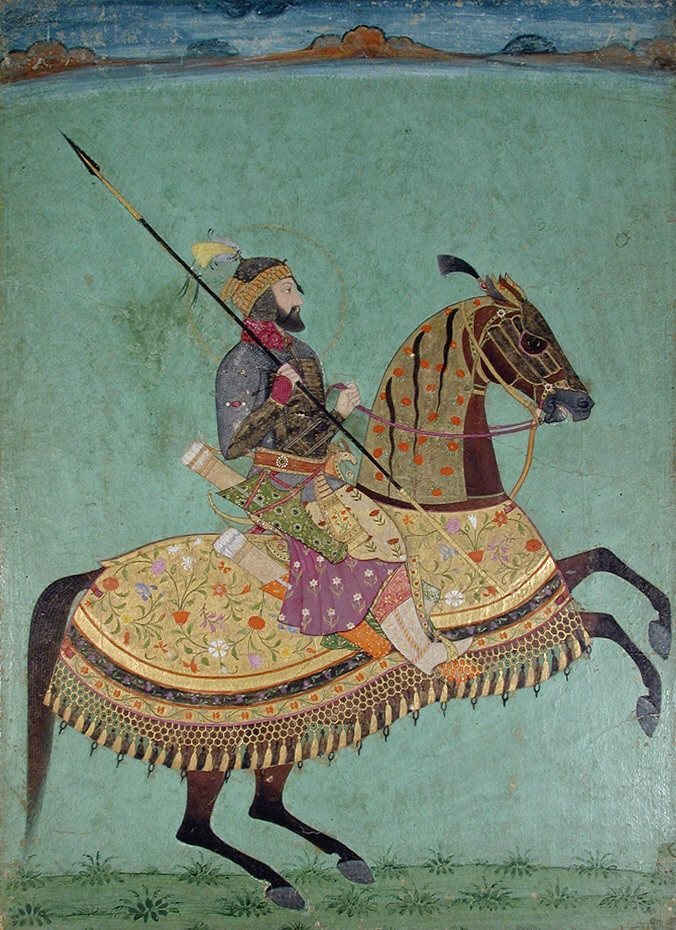
“The Hasty Genius of Aurangzeb”


Iqbal was incomparable as a political thinker, and I think a small paragraph on Aurangzeb in his Stray Reflections is a proof of his genius. It must be read by everyone who wants to understand Aurangzeb as a historical figure and his hasty genius. The demonisation of Aurangzeb has never allowed people to understand the crisis of the medieval times and the advent of colonial capitalism that shaped the specific characteristics of Indian modernity. In fact, it is in the interest of the right wing to anti-politicise the masses by devalorising the cosmopolitan contributions of ‘Muslim’ thinkers like Iqbal and political personalities like Aurangzeb, without whom the transition to capitalist modernity in India cannot be understood. The backward, conservative iconisation of (‘Hindu’ and ‘Sikh’) rulers can definitely serve the petty trading and even neoliberal interests in commodifying India’s exoticism…, but even the resistances and importance of those tribal leaders and rulers, despite their localist character, cannot be comprehensively grasped, unless we understand and give credibility to historical figures like Aurangzeb… You cannot understand your freedom struggle, the specific character of 1857 mutiny without this. Of course, you don’t expect this from RSS and RSS trained leaders who did not contribute in the freedom struggle – or those who do not look for parivartan, but sanatanta in the Indian society.

The political genius of Aurangzeb was extremely comprehensive. His one aim of life was, as it were, to subsume the various communities of this country under the notion of one universal empire. But in securing this imperial unity he erroneously listened to the dictates of his indomitable courage which had no sufficient background of political experience behind it. Ignoring the factor of time in the political evolution of his contemplated empire he started an endless struggle in the hope that he would be able to unify the discordant political units of India in his own lifetime. He failed to Islamise (not in the religious sense) India just as Alexander had failed to Hellenise Asia. The Englishman, however, came fully equipped with the political experiences of the nations of antiquity and his patience and tortoise-like perseverance succeeded where the hasty genius of Aurangzeb had failed. Conquest does not necessarily mean unity. Moreover, the history of the preceding Mohammedan dynasties had taught Aurangzeb that the strength of Islam in India did not depend, as his great ancestor Akbar had thought, so much on the goodwill of the people of this land as on the strength of the ruling race. With all his keen political perception, however, he could not undo the doings of his forefathers. Sevajee was not a product of Aurangzeb’s reign; the Maharatta owed his existence to social and political forces called into being by the policy of Akbar. Aurangzeb’s political perception, though true, was too late. Yet considering the significance of this perception he must be looked upon as the founder of Musalman nationality in India. I am sure posterity will one day recognise the truth of what I say. Among the English administrators of India, it was Lord Curzon who first perceived the truth about the power of England in India Hindu nationalism is wrongly attributed to his policy. Time will, I believe, show that it owes its existence to the policy of Lord Ripon. It is, therefore, clear that in their political purpose and perception both the Mughals and the English agree. I see no reason why the English historian should condemn Aurangzeb whose imperial ideal his countrymen have followed and whose political perception they have corroborated. Aurangzeb’s political method was certainly very rough; but the ethical worth of his method ought to be judged from the standpoint of the age in which he lived and worked.

http://www.iqbal.com.pk/allama-iqbal-prose-works/stray-reflections-the-private-notebook-of-muhammad-iqbal/982-prose-works/stray-reflections-the-private-notebook-of-muhammad-iqbal/2512-31-aurangzeb

Yakub Memon’s Impending Execution in the Light of a Passage from Foucault’s ‘Discipline and Punish’ Read through a Marxist Prism


“The public execution did not re-establish justice, it reactivated power. In the seventeenth century, and even in the early eighteenth century, it was not, therefore, with all its theatre of terror, a lingering hang-over from an earlier age. Its ruthlessness, its spectacle, its physical violence, its unbalanced play of forces, its meticulous ceremonial, its entire apparatus were inscribed in the political functioning of the penal system.”
–Michel Foucault, Discipline and Punish

Yakub Memon’s execution will, therefore, be no aberration of our penal system. It will be an exception that is meant precisely to enable the reproduction, through confirmation, of the norm of everydayness of terror that is modernity, and capital. Albeit one that now openly displays its irrational, exceptional and coercive kernel, thanks to this being its historically concrete moment of crisis.

This phenomenon is, therefore, nothing but the norm as an unconcealed and unconcealable neurotic symptom: the norm itself as the demonstration of the crisis of normativity and normalisation. As a result, it now comes across even in its appearance as the entirely arbitrary political functionality that founds, underpins and animates the economy/rationality of the modern penal system.

Hence, let not our outrage — that is produced by the scale and magnitude of the phenomenon at hand — blind us to that. For, that would also blind us to the reformist purport of liberal politics that lies at the heart of such outrage. Instead, let us temper that outrage into a steely resolve to exceed and abolish capital and the modern state — which is nothing but the grammar of capitalist social relations, or the qualitatively equalising and thus distributionist value-relation to be precise, in its institutional congealment. After all, it’s precisely this distributionist dimension of the law of value that, as far as the modern state in its liberal-democratic Indian specificity is concerned, is the objective material basis of the ideological dominance of, among other things, Islamophobia. The ideology that evidently informs the dogged pursuit of capital punishment for somebody such as Yakub Memon.

In other words, let the cry for the abolition of death penalty, which has been sparked off by Yakub Memon’s imminent execution, not remain a weak human rights-based reactive demand placed on the Indian state. Let us strive, instead, to transform that cry into a strong call for constructing a concretely collective political project that seeks, in the here and now, to determinately abolish the state. For, the modern state in being the embodiment and operationalisation of the rule of law is genetically programmed to do precisely that which it currently seeks to accomplish in the specificity of its Indian incarnation: reinforce its monopoly over violence by re-establishing the slave-morality of ressentiment (revenge) as justice.

This is, clearly, a juridico-legal morality that is, therefore, an inseparable and integral ideological dimension of the capitalist social formation constitutive of the structure of mutual competition for domination, and its reproduction. To not grasp that and to insist on envisaging the abolition of death penalty as a human rights-based demand amounts to a blundering failure to recognise that the Benjaminian “divine” or “law-unraveling violence” rests in an embryonic form within this cry for the abolition of death penalty. And to not recognise that is to already repress that potential and distort it into “lawmaking violence”, which faces off “law-preserving violence” of the state merely as its constitutive antithesis. Not for nothing does such human rights-based ‘politics’ presuppose the conceptual and thus concrete validity of the modern state — and the juridico-legal social formation of which such a state is both an effect and reinforcing cause — that it ‘confronts’ with its politics of demand. In the ultimate analysis, such politics ends up, not surprisingly, reinforcing and reproducing the condition of possibility of precisely those enormities it claims to want to eliminate.

So, let’s not allow our outrage to be a cathartic expenditure and exhaustion of politics. Rather, let it simmer like a slow fire over which we forge the concrete strategy of how (our) red ‘terror’ can emerge with full antagonistic force against the epochal social power that orientates and articulates the continuous norming and normalisation of (their) white terror.

The essence of what one has articulated here in a hurriedly clumsy manner is put forth with elegance and aphoristic precision by Walter Benjamin in the last two sentences of his VIII thesis on philosophy of history: “The current amazement that the things we are experiencing are ‘still’ possible in the twentieth century is not philosophical. This amazement is not the beginning of knowledge — unless it is the knowledge that the view of history which gives rise to it is untenable.”