Is the Maoist movement in India “pre-political”?


In a recent meeting our comrade, Saroj Giri called the recent Maoist upsurge “pre-political”, which makes both Maoists and those against them uncomfortable. Obviously, there can be an endless debate over the textual lineage and correctness of this usage, as some raised in the meeting, but that is not my concern. Before that in an article in EPW he said (more ironically):

“Today when the country is promoting itself as a modern global democracy, with technocratic, security-centric, good governance replacing populist, messy ways of governing the masses, the combination of Maoists, who are literally the adivasis (“old, obsolete ideology”) of left politics, with the adivasi masses, seems to give rise to not just an “undemocratic” force but something almost primordial, pre-political…”

I find this characterisation interesting. For me, the notion of “pre-political” as used for Maoist ‘politics’ has two definite connotations:

Firstly, it stresses on the organicity of this ‘politics’ – i.e., it is not something simply representative and thus external;

Secondly, this ‘politics’ is embedded in the subalternity of a particular section in the working class – which is subaltern in the sense, that it has not found its generalised political expression as that for the working class.

In this regard, one must remember that a political movement, in Marx’s understanding, is

“a movement of the class, with the object of achieving its interests in a general form, in a form possessing a general social force of compulsion.”

A ‘working-class’ movement is pre-political, if it is still jammed at an identitarian level, is sectional (“primordial”), i.e.,

“the working class is not yet far enough advanced in its organisation to undertake a decisive campaign against the collective power, i.e., the political power of the ruling classes”.

But these pre-political (“economic”) struggles are important because they train the various sections of the working class for that decisive campaign

“by continual agitation against and a hostile attitude towards the policy of the ruling classes”.

Whose puppet is the Nepal govt and what for?


Leave aside this talk about puppet, colonial, expansionist etc. They are mere rhetorics. India is clearly an imperialist country – a country which controls around 45 percent of FDI in Nepal has much on stake. You cannot appeal to India’s good conscience and put it on the ‘right’ track by sarcasm (just asking for “a paradigm shift in relations with India by recognizing the changed political context in Nepal”) . Only a popular unity of the working masses across boundaries can defeat this South Asian imperialism. However, this would require inculcating a Zimmerwaldian spirit among Indian comrades – and that is the most difficult task, indeed!!!

http://news.outlookindia.com/item.aspx?679967

Ahead of their planned massive show of strength against the “puppet” regime of Madhav Nepal on May 1, Nepalese Maoists have intensified their anti-India campaign by releasing posters and pamphlets against New Delhi.

The former rebels are planning a major rally on May 1 to demand the ouster of the 22-party coalition government headed by Madhav Kumar Nepal, calling it a “puppet” regime, coinciding with the International Labour Day.

Ten days before the rally, walls in capital Kathmandu adorn posters and paintings against India, which authorities feel would further fan anti-India sentiments in Nepal.

“Get rid of the puppet government”, “abrogate the Nepal India Peace and Friendship Treaty of 1950” and “Indian Army vacate Kalapani and Susta” are some of the slogans that have made way into the posters.

Some posters say the May one agitation is to protect “national independence and fight against colonial and expansionist forces.”

Maoists have been accusing India of interfering in Nepal’s internal affairs, but New Delhi has rejected it.

Last week, Indian Ambassador Rakesh Sood had met Maoist chief Prachanda to express concern that the rally would further fan anti-India sentiments in Nepal.

CPN-Maoist leader say the May 1 rally is to “fight against those forces which have been conspiring against the peace process and the process of drafting the constitution.”

The party has also appealed to labourers to participate in the rally.

Bondage, Vestiges and Capitalism


Following paragraphs are taken from a review that I wrote for Labour File in 2008:

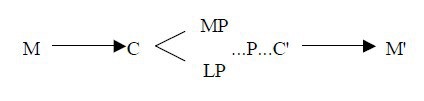
It is important to understand Marx’s conception of “wage slavery” here. The usage of this phrase was not at all allegorical or rhetorical, as many tend to believe. It conceptualised the unfreedom or coercion inherent in the dual freedom of labour (from physical compulsion and from the means of production). On one hand, this dual freedom creates an ambience that compels a labourer to sell his/her labour power. On the other hand, once labour power is sold for a period, the labourer has no control over its expenditure for that duration. It should be remembered though the custom is to pay the wages after labour-power is exercised, wages are, in fact, already advanced prior to the labour process not only for the purpose of records, but also as capital required for production – i.e., it constitutes variable capital that is required to buy labour-power and put it to work. In the circuit of capital given below, Money (M) is advanced to buy Means of Production (MP) and Labour Power (LP) before Production (P) can take place.

image

In fact, “whether money serves as a means of purchase or a means of payment, this does not alter the nature of the exchange of commodities”.(Karl Marx, Capital, Penguin, pp. 279) As “a means of purchase” money is advanced to the sellers of labour power prior to production, while as “a means of payment”, it remains as the worker’s “credit to the capitalist” until production is completed to be paid as wages afterwards. Functionally it hardly makes any difference – “this does not alter the nature of the exchange of commodities”. And both institutionalise labour vulnerabilities in their own way – advance (partial or whole) can easily be transformed into debt, creating liabilities that shape bondage, while wages can be delayed or even lost (when the capitalist goes bankrupt). In fact, the delay in receiving wages is a significant reason for indebtedness among workers. If in Marx’s England debt played a part in tying the worker more to a shop as a consumer, or to sustain the “truck system”, it can instigate other systems, too, to institute labour vulnerabilities. Ultimately the purpose is to increase these vulnerabilities and thus, reproduce the hegemony of capital over labour. The report remarkably succeeds in showing how this is done in various parts of India through debt bondage.

—————————————————————
Here are some more observations that I made during that time:

A. The process of proletarianisation to which the majority is subjugated, not the number of ‘ideal’ proletarians or wageworkers, defines capitalism. The actualisation of this process – and thus the degrees of proletarianisation or the “dual freedom of labour” differs according to the concrete contexts defined by the needs of capital and class struggle. More technically, this process is a long thread (not necessarily historical) between the formal subsumption to the actual subsumption of labour by capital – its two ends. At various junctures archaic unfreedom, like slavery, which generally characterised pre-capitalism is formally adopted (more aptly, exapted as explained in B) and transformed according to the conjunctural needs of capitalist accumulation. If we don’t recognise this processual aspect of capitalism, we will be lost in the miasma of overproduced forms and appearances in capitalism.

B. Stephen Jay Gould’s conception of exaptation, I believe, is very useful in understanding the dialectical internalisation of “vestiges” by new stages in evolution – both biological and social. Gould and Elisabeth S. Vrba in their 1982 paper defines exaptation as (i) “a character, previously shaped by natural selection for a particular function (an adaptation), is coopted for a new use”; and, (ii) “a character whose origin cannot be ascribed to the direct action of natural selection (a nonaptation), is coopted for a current use”. This concept allows us to comprehend the reproduction of “vestiges” as a process internal to the new stage in development, not as something hindering the ‘complete’ realisation of the new stage.

C. The “purist” idea that “vestiges” obstruct (not shape or contextualise) capitalist development has for a long time informed the theory and practice of Marxism in the so-called third world countries – engaging the revolutionaries in the fruitless exercise of fighting the “vestiges” before taking on the basic system, thus investing their revolutionary vigour in the reformist project of the capitalist development. It is interesting to note that this is not only true about the “Leninists” and “Maoists”, as some “anti-Leninists” allege. Many anti-Leninists and anti-Maoists present more vehement denial of the feasibility of any socialist project in “backward” countries. Their conceptualistion of revolution not only goes against the thesis of “revolution in permanence” – “the downfall of all the privileged classes, and the subjection of these classes to the dictatorship of the proletariat by maintaining the revolution in permanence until the realisation of Communism, which is the final form of organisation of human society” – but is also an unconscious reinforcement of the notion of “socialism in one country”, which they profess to hate.

Problems and prospect of the “Maoist” Strategy


Rural society and the market are so intertwined throughout India that you cannot squeeze the markets (or towns) off by abruptly cutting their connection with the villages (the logic of encirclement). In fact the opposite has occurred in most of the cases – in Bihar and many places in Jharkhand, ML groups couldn’t sustain their “zones” because the villages were squeezed off by the elongated disruption of their relationship with the market. They were successful and that too marvellously as long as people perceived “liberation” as “strikes”, i.e., as strategies for bargaining for prices – prices of labour and labour power (interestingly, Marx termed strikes as guerrilla attacks). When these “strikes” tend to create “liberated zones” – a semi-permanent rupture in the relationship between the larger market and local communities, the local support starts getting alienated and disgruntled.

At many places, the naxal movement has successfully opposed the oppressive “diku” intermediary system in Tendu-leaves type trades, but the impossibility of posing an alternative economic system in a piecemeal fashion within the isolated “liberated zones” (this is due to India’s political economy) helped reestablish the similar oppression, however, with a notable change that now we find locals (not dikus) for the role of mediating a more intense internalisation of capitalist relations – “mutually embedding” of the market (labour, capital and commodity) and communities. Hence, we see ex-comrades becoming part of the established political formations (as for instance during the last elections in Jharkhand) or as traders, contractors etc. It is this section, which was the immediate beneficiary of many local militant struggles and which became agencies of the status quo. The phenomenon of Salwa Judum can also be perhaps explained in this framework – it is constituted by those elements in the tribal communities who have benefited by the expulsion of diku intermediaries, and now they want an accommodation within the hegemonic establishment.

But all this demonstrates the success of the Naxal movement in developing right “tactics” for organising locally, but the problem comes when those tactics are institutionalised as strategies (when guerrilla battles are confused with the whole war). This is the problem of spatio-temporal overgeneralisation, of essentialising particular tactics beyond spatial and temporal contexts. This problem occurs due to a partial critique of India’s capitalist political economy – viewing particular/apparent forms that it takes in specific locations (according to which specific tactics are formulated) as the essence or the general reality. The lack of a comprehensive critique of India’s political economy in revolutionary practice (but “without revolutionary theory there can be no revolutionary practice”) has led to the cornering of “the political” and foregrounding of the voluntaristic military operations.

The ‘generalised’ guerrilla tactics that we saw in China (also in pre-republican Nepal) were conjunctural (based on the concrete analysis of concrete situations). If we go through Mao’s writings (not just those published officially), we can see self-organisation of the working population (even with their ‘unsophisticated’ consciousness) at the centre of his politics (see his Hunan report and intensive/extensive land investigations in which we find him engaging in throughout the revolutionary phases). In fact, the guerrilla tactics was organically grounded in this as a ‘specific’ vehicle to interconnect various locations of experiences. This specificity derived from a feudalised political economy that was present there (I am calling it thus, because the post-Qing Chinese state was virtually a network of local militarised (warlords) interests).

On Jairus Banaji’s response to Arundhati Roy


One point that interests me in Jairus Banaji’s post in Kafila and the subsequent debate on the post is his focus on labour as the centre of the movement. I think this focus is fundamental in order to ground various local/localised struggles in political economy (or rather in its critique) and to understand the underlying interconnections between them (whether the leadership of these struggles understand them in this manner is immaterial – did not Marx appreciate Paris Commune even when Blanquists were in hegemony?).

Marx’s conceptualisation of labour and of capital-labour relations is rich enough to provide tools for comprehending various struggles against capitalist accumulation (both primitive and normal). He understood subsumption of labour by capital as a process (not some particular fixed states), which starts from being formal to real – from a stage where labour is subsumed through non-capitalist “forms” of exploitation to the actual subsumption in “pure” wage-labour form. Between these two poles, subsumption can take a plethora of forms. Who knows better than Jairus that unwaged labour (reproductive or otherwise) is also part of the capitalist subsumption of labour.

So how do we understand tribals and “peasants” struggles against land and resource alienation within this framework? They are essentially fighting against capitalist efforts to alienate them from their resources, which create (or, better, reproduce) conditions for the subsumption of their labour by capital. Whether they will become wage labourers is not at all essential; if they are not employed, or even employable, they still remain labourers as part of the reserve army of proletarians or surplus population (stagnant, latent and floating) reproducing themselves on their small pieces of land, or by food gathering (in forests or trash cans). Their struggle, in a Marxist sense, can be understood as part of the anti-systemic working class struggle to control the conditions of production and, I stress, reproduction too.

Now coming to the forms of struggle (armed, unarmed, etc), I think we as Marxists (of all hues and colours) cannot act as idealists, by considering only those movements as working class movements or anti-capitalist movements, which are projected in our idioms, and are developing according to our framework of strategic-building. The working class can throw diverse forms of struggles according to its internal constituents or class composition. However, one must critique forms in order to show the limitations and problems of those forms, in order to avoid the problem of overgeneralisation of particular forms, and also in order to undertake the revolutionary task of generalisation seriously, which essentially means to see a revolutionary building up against capitalism within and through all forms of working-class struggles.

A general discomfort about Narayanpatna


1) The federal structure of India’s polity in the neoliberal phase has emerged as a unique mechanism to administer the internalisation and intensification of the general logic of capitalist accumulation at every location – with its great ability to subsume and network all forms of social relations under the command of this logic. The identitarian/territorial separations and exclusions are transformed into a differential inclusion within this logic forming the uneven terrain of the evolving capitalist geography in India. Commercialization and the subsumption of local social relations into this larger logic have recontextualised the social divisions through which the class struggle is refracted locally. So we find identity struggles… yet, they are class struggles!

2) The national club of Indian activists and intellectuals became aware of the movement at Narayanpatna only at the moment of its retreat. Even if they were aware of it, they hardly cared about it. There was nothing like another anti-land acquisition movement against the big “outside” of the corporates, which temporarily (if I may say so) almost seemed to homogenise the ‘affected’ village India against ‘non-Indian’ imperialism and its Indian agencies – a romantic India against the pragmatic world of capitalism (some name this, Bharat vs India) – a dream struggle for oneness with the pristine simplicity which capitalism wants to destroy.

3) However, at the time of its retreat, people inside and outside did try to paint the reality in Narayanpatna according to the images that sell today. But the truth is that Narayanpatna divides people – it represents that politics which emerges out of the divisions that constitute India, not just between the outside and the inside, the rural and the urban, not simply between the upper caste and the lower caste, but between the whole ‘glocal’ network of capital (which unites the global with the local, not just extensively, but intensively too) and the insistence of the indigenous section of the local labour to self-valorise, not to be subsumed by capital and its personified agencies.

4) The Narayanpatna movement was against both the asset-rich and the asset-poor who engaged in that grand network of capital. People were uncomfortable with this movement because it brought forth the fundamentals of the reality – of the deep divisions that constitute rural India. So in Narayanpatna all assumptions about rural movements went topsy-turvy – we saw intra-‘poor’ and community-level conflicts. This movement was against everybody that alienated and sought to alienate the forces of production and reproduction from the “tribals” – their labour, its means and its objects.

Revolutionary movement and the “spirit of generalisation”


RADICAL NOTES

“There are no miracles in nature or history, but every abrupt turn in history, and this applies to every revolution, presents such a wealth of content, unfolds such unexpected and specific combinations of forms of struggle and alignment of forces of the contestants, that to the lay mind there is much that must appear miraculous”. V.I. Lenin

Can there be a Maoist movement or for that matter, a Marxist movement? We have been using the phrase “Communist Movement” for a long time, but what does it signify? What is the utility of these phrases in the context of today’s people’s and working class struggle? In my view, these terms at best can help us identify particular ideological streams in that struggle. But to present them as “movements” themselves demonstrate a “sectist” tendency to extol or deprecate particular ideological currents within the larger people’s movement, separating them from class practices in which they are grounded.

I

There can be a Maoist current that represents a particular tenor emerging from a particular location within the working class politics. So are many other kinds of isms and the so-called “movements” – they represent diverse levels of consciousness (which include its absence too) within the working class movement.

Until and unless we locate these “ideological” currents in larger class processes or struggle, their critique will falter into futile exegetics of particular historical events or documents related to them. For example, much has been talked about Maoism in terms of what Maoists have done, or what Mao said, or what happened to the Maoist “movements” in China, Cambodia and Peru. In this critique, what is missed out is the very ground that they hold – the working masses who identified with these practices and who gave new meaning to Mao’s words. By locating Maoisms in class struggle, we provide scope for their critique too – of their programmes and their particular practices.

II

Karl Marx, during the First International, talked about “the spirit of generalisation and revolutionary passion” that constituted revolutionary subjectivity which could actualise the possibilities inherent in the objective conditions. He visualised the role of a party or organisation, which was for Marx at that time the International Workingmen’s Association itself, in incubating this spirit. As Henri Lefebvre once said, the task of the revolutionary political party is to recognise the spontaneity and revolutionary instinct of the working masses and unite them with the theoretical knowledge of larger processes elaborated by intellectuals organically grounded in the working class praxis.(1) The spirit of generalisation is based on self-emancipatory practices of the working class (at all levels). It is nothing more, nor less, than recognising and vocalising the evolving revolutionary class logic through and within diverse practices grounded in various spatio-temporal locations.

The problem occurs when instead of parties being founded and refounded in this conscious process of generalisation, their institutional logic overpowers and stunts this spirit – i.e., the forms that the working class movement takes at particular space-times are frozen and “extrapolated”. Thus in place of generalisation, over-generalisation of a particular class practice takes place, leading to sectism.

However, the critique of this over-generalisation cannot be done by externalising and then rubbishing these particular class practices as simply ideological problems or deviations. In fact, this so-called ‘critical’ current too is nothing but a representation of sectarianism. By naming movements in terms of ideologies articulated in particular locations of class struggle, rather than visualising those ideologies as simply symptomatic of those locations, we homogenise and externalise those locations, thus once again distorting the spirit of generalisation. Interestingly, unlike what various brands of Marxists do nowadays (leave aside the upcoming breed of civil society intermediaries, forget them “for they know not what they do”), Marx’s assessment of the Paris Commune as a revolutionary working class upsurge was not based on the counting of number of Marxists in that struggle. Lenin notes that before the Paris uprising, Marx warned the French workers that “insurrection would be an act of desperate folly”, but when it was unavoidable,

“Did he use it …to “take a dig” at his enemies, the Proudhonists and Blanquists who were leading the Commune? Did he begin to scold like a school mistress, and say: “I told you so, I warned you; this is what comes of your romanticism, your revolutionary ravings?” Did he preach to the Communards… the sermon of the smug philistine: “You should not have taken up arms?” No… And he has words of the highest praise for the “heroic” Paris workers led by the Proudhonists and Blanquists.”

III

The ideological externalisation of various political experiences of the working class is one of the most detrimental tendencies in its movement that thwarts the possibility of the emergence of revolutionary subjectivity in India today. It is not that this externalisation is done only by the critics, but more so by the admirers of the tendencies that dominate particular political experiences. Both do that by reducing the experiences’ particularity to either locational or ideological exclusivity. By relegating solidarity efforts to symbolic association with and external troubleshooting for the struggle going on ‘elsewhere’, the sympathisers too shirk the responsibility of politicising their own everyday life, and thus of generalising the movement.

At a critical juncture like today’s, despite a dramatic rise in local unrests throughout India, the ruling classes and the Indian state seem to be overconfident and increasingly becoming unilateral and authoritarian. It is only by constantly stereotyping the unrest, that they can delegitimize and pre-empt the efforts of revolutionary generalisation, for which the sectarian externalising / competitive tendencies within the movement itself have provided readymade vocabularies and agencies.

Now, the sense of being dispossessed is rampant among the rural poor, those who are ready to take up arms. Whatever be their identity, they come mostly under the class of allotment-holding workers, a term that Kautsky and Lenin used to characterise the majority of the so-called “peasantry” – land in whose possession is just for reproduction of their own labour-power. Hence, rural struggles today, including against land acquisition and those led by the Maoists, are not merely against threats to their livelihood but to life itself – to the very sphere of their reproduction.

Today, rural and urban workers are increasingly getting organised, becoming conscious and militant. Under neoliberalism, their footlooseness (beyond the urban/rural divide and other identitarian boundaries) is progressively making them realise the socialised nature of their labour, while encountering capital as social power in every facet of their lives.

These are the “objective conditions” in which various “forms of struggle” are evolving. What we need today is the urge to move beyond existentialist boundaries, of local and particular experiences, relocating them as diverse moments in the same struggle against capital. There must be a conscious realisation of “the spirit of generalisation” that can recognise the underlying unity between these forms and moments, and strategise on its revolutionary potential.

Reference:

(1) Henri Lefebvre (1969), The Explosion: Marxism and the French Upheaval, Monthly Review Press (Reprinted by Aakar Books, 2009), p.38-39

Sumit Sarkar on Ramachandra Guha’s “India After Gandhi”


Sumit Sarkar wrote a review of Guha’s India after Gandhi for New Left Review (56, March-April 2009), which he ends with an interesting comment:

“Welcome as India after Gandhi is for its initiation of a new field of contemporary historiography, one is left half-yearning for the book Guha did not write”.

I think Sarkar has sufficiently shown, despite his non-polemic sympathetic tone for a fellow historian, that Guha can never write “the book”. Sarkar does appreciate this “clear and comprehensive account of the course of events”. But

“Guha offers no overall theses as to how the India of 1947 became that of today. Instead he embarks on a narration of political events, deftly interwoven with socio-cultural and economic developments. Along the way he provides a set of individual political profiles, often interesting and amusingly drawn. One occasionally feels that he overuses this strategy, especially since, barring a few individuals—Nehru, Patel, Sheikh Abdullah, Indira Gandhi or Jayprakash Narayan—many were not as significant as the character-driven plot structure, weighted towards party leaders, makes them out to be. Other social forces and structures are inevitably downplayed”.

The narrative is “uncritical” based on “journalistic sources”.

“More broadly, what is missing in terms of Guha’s framing questions is any analysis of the tensions between national unity and democracy, and the ways in which the concerns of the former—military security, internal sovereignty—have not infrequently hollowed out the content of the latter”.

Sarkar finds many “large questions, which Guha does not address”. But why?

“This is not an incidental drawback, but flows from the liberal-Nehruvian nationalism that is the book’s chief ideological marker”.

HENCE, Ramachandra Guha’s book is more an exercise in story-telling – “a thoughtful survey of the period in fluent, lucid prose”.

Terrorism, Mass Hysteria and Hegemony in India


All incidents in India that have occurred recently, which go by a blanket name terrorist attacks, have been viewed as self-explanatory. A terrorist and his acts don’t need any explanation. A terrorist is like any other professional who is supposed to do what he is trained for. Why does he do that – is not a question to be asked. It is his own “free will” which clashes with others’ free will. Haven’t we been time and again accused of talking about the human rights of the “terrorists” while “ignoring” those of the soldiers and policemen who are “victims” of the terrorist attacks? Their opposite location with respect to the hegemonic centre does not mean anything.

I feel the post-modern capitalist celebration of relativism indicates towards an important aspect of the reconstruction of power, civil society and expression in the age of finance capital. The footlooseness of faceless finance capital characteristic of this age has intensified the process of solid melting into the air to an ever-increasing degree – every click on the keyboard makes, changes and destroys billions of lives every moment. This has led to a multiple crisscrossed entrenchment of every segment in the society trying to hold on to something solid – an identity or something… In the process, every ‘melting’ identity poses its own language which could not be understood beyond the space-time of its posing. This is what we can call a continuous process of subalternization, of manufacturing subalternities that cannot act, but simply react in the hegemonic paradigm. When useful things become commodities, their self-expression (through their own use-value) is incomprehensible in the market, they must express their worth through the hegemonic reactive monetary expression of exchange-value – a general form of value.

Thus, the resolution of “civilizational” conflicts (between various levels of subalternities) is possible in the within-the-system framework only through a generalized cutthroat competition or simply mutual annihilation – the well-armed and defiant robots clashing with each other – “the terrorists”, the security personnel etc. The only language that is mutually understandable is that of the guns and bombs… So the citizenry can’t empathize with the terrorists, they are always aliens. And so are the (counter)terrorists and their ‘innocent’ protégées for “them”. They are reduced to reactive agencies within the hegemonic game-plans. They can only react to each other’s moves.

Today’s terrorism is a desperate cry to make others’ listen to what subjects/terrorists are unable to express and what “others” either refuse to hear or are unable to understand. It is the failure and crisis of self-representation let out in the hegemonic language of coercion and terror. This seems absurd but this is as absurd as the absurdity of the conjuncture.

The whole arrogant security discourse that the media and security mafia in India pose is far more absurd than the defiant terrorist attacks. What can be more absurd than the astheticised victimhood of the “great” India that they sell while being slyly proud whenever a terrorist attack takes place in the country, as that makes them feel to be in the league of the greatest victims of global terrorism – the US, UK and Israel. So now we have our own 9/11. This is the level of discourse in the Indian media in the context of the Mumbai incidents.

The recent unabashed display of an elitist, confessedly, “anti-political” stress on security infrastructure and technology to resolve every conflict and the aim to put away politics on security matters are nothing but an insistent inability and a lack of will to understand conflicts. Nobody is asking for an everyday democratic control over every aspect of social life, rather what is being provoked by the panicky bourgeoisie and petty bourgeoisie in India is a hysteria in favour of a trans-political security and intelligence machinery – which can easily become a permanent coercive, of course, an efficient, bureaucracy which regulates the social life.

Terrorism in the present shape is not a threat for the system but like its counterpart is an opportunity for the hegemony to create consensus to (counter)terrorise (and subalternise) the alienated voices and stop them from becoming a meaningful and organised threat to the system by transcending their own subalternity. Anyway, as a prominent postmodernist, postcolonialist scholar categorically said, “Who the hell wants to protect subalternity? Only extremely reactionary, dubious anthropologistic museumizers. No activist wants to keep the subaltern in the space of difference… You don’t give the subaltern voice. You work for the bloody subaltern, you work against subalternity.” (“Interview With Gayatri Chakravorty Spivak”, Ariel: A Review of International English Literature (July 1992), 23(3):29-47)

Source of neoliberalization in India


“It was not the US, furthermore, that forced Margaret Thatcher to take the pioneering neoliberal path she took in 1979. Nor was it the US that forced China in 1978 to set out on a path of liberalization. The partial moves towards neoliberalization in India in the 1980s and Sweden in the early 1990s cannot easily be attributed to the imperial reach of US power. The uneven geographical development of neoliberalism on the world stage has evidently been a very complex process entailing multiple determinations and not a little chaos and confusion.”

(David Harvey – A Brief History of Neoliberalism, pp9)